


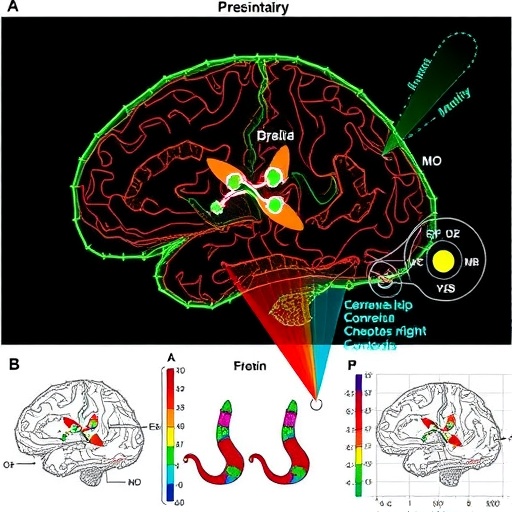
In a groundbreaking study poised to redefine our understanding of synaptic transmission in the cerebellum, researchers have elucidated the assembly and gating mechanisms of native AMPA receptors (AMPARs) with unprecedented detail. AMPARs, well known as the primary mediators of fast excitatory synaptic transmission across the central nervous system, reveal a captivating complexity within cerebellar circuits. Unlike the extensively studied GluA2-dominant AMPARs prevalent in the hippocampus and cortex, cerebellar AMPARs are distinguished by a notable enrichment of GluA4 subunits, a feature whose implications have remained largely enigmatic—until now.
The study, led by a team of neuroscientists and structural biologists, has employed a newly developed, highly specific antibody targeting the GluA4 subunit to isolate and analyze native AMPAR complexes from cerebellar tissue. This innovative approach, combined with antibodies selective for GluA1 and GluA2 subunits, has enabled the researchers to dissect the precise subunit compositions of both calcium-permeable and impermeable AMPAR populations within the cerebellum. These efforts illuminate the diversity of receptor assemblies contributing to cerebellar physiology and their distinctive functional roles.
One of the most remarkable findings centers on the calcium-permeable native AMPARs composed of both GluA1 and GluA4 subunits. The study reveals a sophisticated organization of these receptors, where GluA4 predominantly occupies the B and D subunit positions, while GluA1 is situated mainly in the A and C positions. Such spatial distribution within the tetrameric architecture is critical, as it influences the receptor’s permeability to calcium ions and its interaction with auxiliary proteins. Chief among these is cornichon 3 (CNIH3), an accessory protein found to be intimately associated with this receptor subtype, modulating its trafficking and gating behavior.
To delve deeper into the functional implications of this assembly, the researchers applied cutting-edge cryo-electron microscopy techniques, resolving the receptor’s structure in multiple conformational states: resting, activated, and desensitized. These snapshots provide a dynamic picture of the receptor’s functional cycle, exposing the structural transitions that facilitate rapid gating in response to synaptic glutamate release. Notably, during the desensitization phase, the ligand-binding domain (LBD) exhibits a unique pseudo-4-fold symmetric configuration, diverging from the canonical 2-fold symmetry typically observed in other AMPAR forms. This rearrangement may underpin the distinct desensitization kinetics observed in cerebellar circuits, with profound implications for synaptic plasticity and information processing.
The implications of understanding such nuanced gating mechanisms in native GluA1/GluA4 AMPARs extend well beyond molecular neurobiology, touching on fundamental aspects of cerebellar functions. Given the cerebellum’s pivotal role in motor learning, associative memory formation, and auditory processing, the elucidation of its AMPAR composition and gating properties offers new avenues for therapeutic strategies in neurological disorders where these processes are impaired. The calcium permeability characteristic of these receptors, a feature regulated by their subunit stoichiometry and auxiliary protein interactions, places them at a critical juncture for modulating synaptic strength and plasticity in this brain region.
Furthermore, the discovery that CNIH3 preferentially associates with GluA1/GluA4 heteromers highlights an intricate layer of regulation that could impact receptor trafficking and synaptic localization. As an auxiliary subunit, CNIH3 has previously been implicated in modulating AMPAR kinetics and pharmacology, but its specific role in cerebellar AMPAR complexes adds a new dimension to our understanding of receptor regulation in vivo. The ability of CNIH3 to influence receptor assembly and gating likely contributes to the finely tuned excitatory signaling required for cerebellar computations.
This study also underscores the importance of the GluA4 subunit, which until recently has been less characterized compared to its more ubiquitous paralogs such as GluA1 and GluA2. The development of the GluA4-specific antibody represents a significant technical advance, enabling precise biochemical purification and subsequent structural characterization of GluA4-containing AMPARs. This advancement opens the door for future studies aiming to elucidate the distinct physiological roles of GluA4 in different brain regions and its potential involvement in neurodevelopmental and neurodegenerative conditions.
Equally intriguing is the structural insight into the rearrangements that underlie receptor desensitization—an essential protective mechanism preventing overexcitation. The pseudo-4-fold symmetry of the LBD layer during desensitization may alter the receptor’s interactions with synaptic scaffolding proteins and intracellular signaling cascades, influencing the stability and plasticity of synaptic connections. Deciphering these conformational transitions enriches our understanding of how synaptic inputs are finely modulated in the cerebellar cortex.
In sum, the comprehensive structural and biochemical characterization of native cerebellar AMPARs provided by this study charts a new frontier in synaptic neuroscience. By revealing the unique subunit arrangement and distinct gating behaviors of GluA1/GluA4–CNIH3 complexes, the research offers a detailed blueprint for interpreting how excitatory signals are processed in the cerebellum. The convergence of advanced antibody engineering, high-resolution imaging, and functional analyses exemplifies the power of integrated approaches in unraveling the complexities of neuronal communication.
Moreover, these findings may have far-reaching implications for neurological disease research. Aberrations in AMPAR composition and function are linked to various disorders, including ataxias, epilepsy, and cognitive impairments. Clarifying the molecular underpinnings of AMPAR-mediated signaling in the cerebellum thus holds promise for identifying novel therapeutic targets, potentially enabling the development of drugs tailored to modulate specific receptor subtypes or their auxiliary partners.
Future research leveraging this foundational knowledge is poised to explore how AMPAR subunit composition and gating dynamics evolve during development and in response to experience. Additionally, investigating how pathological mutations in GluA4 or CNIH3 affect receptor function could provide critical insights into disease mechanisms and resilience. The methodological framework established in this study sets a precedent for dissecting receptor architectures in other brain regions and synaptic contexts, fostering a more granular understanding of excitatory neurotransmission.
Ultimately, this landmark work underscores the sophistication and diversity of native AMPAR assemblies, demonstrating that the cerebellum employs a unique molecular toolkit to fulfill its complex functional repertoire. The precise orchestration of subunit arrangement and auxiliary subunit interaction reveals a finely balanced system designed to regulate synaptic efficacy with remarkable fidelity. This new knowledge not only advances basic neuroscience but also paves the way for innovations in neuropharmacology and therapeutic intervention.
As neuroscientists continue to unravel the molecular intricacies of synaptic receptors, studies like this challenge long-held assumptions, showcasing the cerebellum’s distinct molecular landscape. The elucidation of native AMPAR subunit compositions, combined with detailed gating mechanism analyses, represents a significant leap forward in our quest to decode the language of the brain’s excitatory synapses. This elegant fusion of biochemistry, structural biology, and neurophysiology eloquently captures the dynamic complexity inherent to neuronal communication and learning paradigms.
Cite Scienmag News
Ophelia Keating. (March 16, 2026). Assembly and Gating of Native Cerebellar AMPA Receptors. Scienmag. https://scienmag.com/assembly-and-gating-of-native-cerebellar-ampa-receptors/
Ophelia Keating. "Assembly and Gating of Native Cerebellar AMPA Receptors." Scienmag, 16 March 2026, https://scienmag.com/assembly-and-gating-of-native-cerebellar-ampa-receptors/. Accessed 1 September 2026.
Ophelia Keating. "Assembly and Gating of Native Cerebellar AMPA Receptors." Scienmag. March 16, 2026. https://scienmag.com/assembly-and-gating-of-native-cerebellar-ampa-receptors/


