


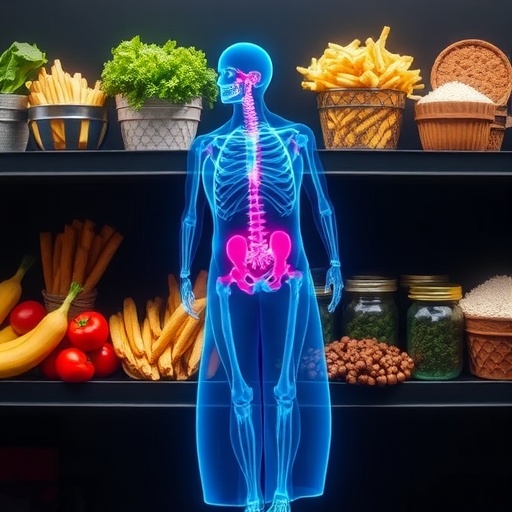
In recent decades, ultra-processed foods have become a pervasive cornerstone of many diets worldwide. These industrially manufactured food products—ranging from flavored yogurts and frozen pizzas to breakfast cereals and instant oats—have rapidly gained popularity due to their convenience and affordability. Designed to offer quick and easy meals or snacks, ultra-processed foods are typically characterized by high levels of salt, sugars, unhealthy fats, and an array of artificial additives. While they appeal to the time-pressed consumer, mounting evidence suggests that their regular consumption may carry significant health risks beyond the already known associations with obesity, diabetes, cardiovascular diseases, and certain cancers.
A newly published study from Tulane University, featured in The British Journal of Nutrition, sheds light on a previously underexplored dimension of ultra-processed foods: their impact on bone health. This groundbreaking research investigated the relationship between the intake of ultra-processed foods (UPFs) and bone mineral density (BMD), as well as the incidence of fractures, revealing a troubling correlation that raises concerns for global public health.
This extensive epidemiological study analyzed dietary data from over 160,000 participants enlisted in the UK Biobank—a comprehensive database that tracks diverse health metrics of individuals across the United Kingdom. On average, participants consumed approximately eight servings of ultra-processed foods daily, with an alarming finding that every additional 3.7 servings per day were associated with a 10.5% increase in the risk of hip fractures. To contextualize, this extra intake equates roughly to the combined consumption of a frozen dinner entree, a cookie, and a soda—items emblematic of typical ultra-processed meal choices.
The study’s co-corresponding author, Dr. Lu Qi, a distinguished professor at Tulane University’s Celia Scott Weatherhead School of Public Health and Tropical Medicine, emphasizes the significance of this research in human populations. While animal studies and smaller cohorts had hinted at the deleterious influence of UPFs on skeletal health, this investigation offers robust, longitudinal evidence linking high intake of these foods to reductions in bone mineral density across critical anatomical regions, including the upper femur and lumbar spine. Both locations are vital for mobility and structural integrity, making findings particularly relevant for fracture risk.
Ultra-processed foods are typically devoid of essential whole-food nutrients critical for bone metabolism. Their industrial-scale manufacture prioritizes flavor enhancement and shelf stability over nutritional integrity. High salt content, excessive sugars, and saturated or trans fats act synergistically to promote systemic inflammation and disrupt metabolic homeostasis. These dietary imbalances can impair calcium absorption, vitamin D metabolism, and the activity of osteoblasts and osteoclasts, the cellular architects of bone remodeling. Thus, these foods not only fail to supply bone-strengthening nutrients but may actively facilitate bone degradation.
Socioeconomic factors compound these nutritional challenges. As noted by the Centers for Disease Control and Prevention, lower- and middle-income households tend to consume a disproportionately higher percentage of calories from ultra-processed sources. In 2023 data, over half of the total caloric intake for youths and adults came from UPFs. This disparity signals a public health dilemma where vulnerable populations may be at increased risk for poor bone outcomes due to diet quality compounded by economic constraints.
Moreover, the study reveals that the adverse effects on bone density are particularly pronounced in individuals younger than 65 and those classified as underweight (BMI under 18.5). The enhanced digestive efficiency in younger populations may facilitate enhanced uptake of harmful food additives and unhealthy macronutrients, potentiating their negative impact on bone mineralization. Similarly, a low BMI is an established risk factor for osteoporosis, and when coupled with poor dietary quality, it exacerbates bone fragility and susceptibility to fractures.
This research aligns with a growing body of literature linking ultra-processed food consumption and skeletal disorders. A 2024 study corroborated these findings by demonstrating elevated osteoporosis risk in high UPF consumers. Furthermore, a 2016 cohort analysis of pregnant women and infants found that proximity to fast-food outlets correlated with reduced bone mineral content in newborns, underscoring intergenerational influences of diet and environment on skeletal health.
Dr. Qi articulates a broader concern—that the nutrition-related detriments of ultra-processed foods extend beyond conventional metabolic diseases to encompass bone integrity, a vital yet often overlooked aspect of health. Adequate nutrition is foundational to the maintenance of a healthy skeletal system, and diets overwhelmed by depleted, chemically engineered foods undermine this fundamental premise.
The study’s implications reach beyond individual health, signaling potential societal burdens as fracture rates and osteoporosis may rise alongside consumption trends. Given the aging global population, preserving bone health through dietary quality could alleviate healthcare costs and improve quality of life for millions. Public health initiatives must, therefore, intensify efforts to reduce ultra-processed food consumption and promote nutrient-dense alternatives rich in calcium, vitamin D, and other bone-supportive micronutrients.
In conclusion, the Tulane University study furnishes compelling evidence that ultra-processed foods jeopardize bone mineral density and heighten fracture risk. These findings advocate urgent reconsideration of dietary patterns favoring whole, minimally processed foods to safeguard skeletal health. The emerging nexus between industrial food processing and bone disease invites multidimensional research and policy interventions aimed at curbing the global rise of nutrition-linked bone disorders.
Web References:
– https://www.cambridge.org/core/journals/british-journal-of-nutrition/article/associations-of-ultraprocessed-food-intake-with-bone-mineral-density-and-fractures-in-the-uk-biobank/7CA7969F214AF653D5DDD3F5D35C2795
– http://dx.doi.org/10.1017/S0007114526106710
References:
– British Journal of Nutrition article DOI: 10.1017/S0007114526106710
– 2024 study on osteoporosis risk linked to UPFs (PubMed ID: 39180053)
– 2016 study linking proximity to fast food outlets and infant bone mineral content (PubMed ID: 26458387)
Cite Scienmag News
Daisy Hatcher. (March 12, 2026). Study Finds Higher Consumption of Ultra-Processed Foods Associated with Decline in Bone Health. Scienmag. https://scienmag.com/study-finds-higher-consumption-of-ultra-processed-foods-associated-with-decline-in-bone-health/
Daisy Hatcher. "Study Finds Higher Consumption of Ultra-Processed Foods Associated with Decline in Bone Health." Scienmag, 12 March 2026, https://scienmag.com/study-finds-higher-consumption-of-ultra-processed-foods-associated-with-decline-in-bone-health/. Accessed 3 September 2026.
Daisy Hatcher. "Study Finds Higher Consumption of Ultra-Processed Foods Associated with Decline in Bone Health." Scienmag. March 12, 2026. https://scienmag.com/study-finds-higher-consumption-of-ultra-processed-foods-associated-with-decline-in-bone-health/


