


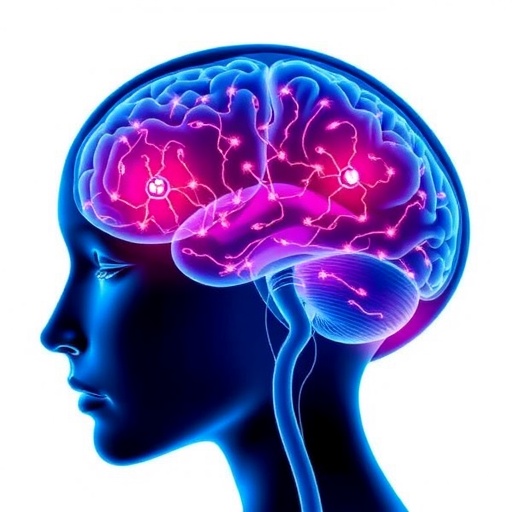
In a groundbreaking study published in Nature Communications, researchers have unveiled critical insights into how a specific subset of neurons within the amygdala governs stress responses and reproductive functions in female mice. This discovery opens new avenues for understanding the neural basis of stress and fertility interplay, potentially revolutionizing therapeutic approaches for stress-induced reproductive disorders.
The amygdala, a key brain region involved in emotional processing, has long been recognized for its role in mediating fear and anxiety. However, this study zeroes in on GABAergic neurons within the amygdala, revealing their pivotal function in modulating both stress and reproductive physiology. GABA (gamma-Aminobutyric acid) is the primary inhibitory neurotransmitter in the mammalian brain, crucial for dampening neuronal excitability and maintaining neural circuit balance.
Researchers utilized an array of cutting-edge neurogenetic tools to selectively manipulate the activity of GABA neurons in the amygdala of female mice. By employing optogenetics, which allows for the precise control of neuron firing with light, they were able to activate or silence these neurons and observe resulting changes in stress-related behaviors and reproductive hormone levels. This dual-control mechanism within the amygdala may underpin the complex interaction between environmental stressors and reproductive capability.
Chronic stress is known to disrupt reproductive function, but the underlying neural pathways have remained elusive. This study elucidates that activation of inhibitory amygdala GABA neurons reduces stress-induced suppression of gonadotropin-releasing hormone (GnRH), a critical hormone driving ovulation and fertility. Conversely, suppressing these neurons exacerbates stress responses and dampens reproductive hormone secretion, highlighting their protective, modulatory role.
The team also conducted detailed electrophysiological recordings, revealing how amygdala GABA neurons modulate downstream hypothalamic circuits involved in hormonal regulation. They identified synaptic connections that link amygdala activity to the arcuate nucleus, a hypothalamic structure fundamental to reproductive hormonal cascades. This neural circuitry offers mechanistic insight into how emotional stress signals directly influence endocrine outputs.
Behavioral experiments demonstrated that female mice with optogenetically stimulated amygdala GABA neurons displayed reduced anxiety-like behaviors when exposed to stress paradigms. There was a concomitant restoration of estrous cyclicity, indicating functional recovery of reproductive processes often impaired under stress. These findings underscore the importance of inhibitory amygdala neurons in maintaining homeostasis across emotional and reproductive domains.
Interestingly, these investigations also highlighted sex-specific neural mechanisms. While the amygdala’s role in stress is well documented, this study provides one of the first demonstrations that its GABAergic neurons distinctly regulate female reproductive function, a nuance with profound implications for gender-tailored medical interventions. It suggests the female brain possesses specialized circuitry for integrating stress and fertility via inhibitory control.
Molecular profiling of amygdala GABA neurons revealed expression of key receptors sensitive to stress hormones, such as glucocorticoid receptors, which modulate neuronal responsiveness during chronic stress exposure. This sensitivity provides a physiological basis for how systemic stress signals influence local inhibitory networks, balancing emotional regulation with reproductive needs—a complex neuroendocrine feedback loop.
The research team postulates that dysfunction or maladaptation of these amygdala GABA neuron circuits may contribute to clinical conditions like stress-related infertility or mood disorders linked with reproductive challenges, such as premenstrual dysphoric disorder (PMDD) or postpartum depression. Future therapeutic strategies might aim to restore or mimic the inhibitory tone within this circuitry to alleviate such disorders.
Technological advances played a major role in enabling this discovery. Combining viral vectors for precise genetic labeling, optogenetic manipulation, and in vivo calcium imaging, the researchers tracked real-time neuronal activity linked to stress and reproduction. This integration of multidisciplinary techniques represents a new standard for dissecting complex brain-behavior relationships.
Moreover, the translational potential of this work cannot be overstated. Understanding the amygdala’s inhibitory control mechanisms offers promising targets for pharmacological intervention. Drugs designed to enhance GABAergic signaling or modulate glucocorticoid receptor activity within these neurons could provide novel treatments for patients suffering from stress-induced reproductive dysfunctions.
This study also invites further questions about how environmental and psychosocial stressors differentially impact these circuits. Are there critical developmental windows when amygdala GABA neuron function is set, affecting lifelong stress resilience and fertility? How do other neuromodulatory systems interact with this inhibitory network? These unanswered questions pave the way for future inquiries.
Importantly, while the study focuses on female mice, the revealed principles may inform broader mammalian neurobiology, including humans. The amygdala’s conserved role in emotional regulation combined with these newly described inhibitory mechanisms suggests a fundamental biological process governing the mind-body interface, bridging psychological stress and endocrine function with precision.
In summary, this landmark research delivers a vital piece of the complex puzzle linking emotional stress with reproductive health through the amygdala’s GABAergic neurons. By illuminating these inhibitory circuits, the authors offer unprecedented mechanistic clarity and hopeful avenues for combating stress-related reproductive disorders that affect millions globally. This work represents a significant leap forward in neuroscience and reproductive biology.
Cite Scienmag News
Cassandra Pierce. (March 11, 2026). Amygdala GABA Neurons Regulate Stress, Reproduction in Females. Scienmag. https://scienmag.com/amygdala-gaba-neurons-regulate-stress-reproduction-in-females/
Cassandra Pierce. "Amygdala GABA Neurons Regulate Stress, Reproduction in Females." Scienmag, 11 March 2026, https://scienmag.com/amygdala-gaba-neurons-regulate-stress-reproduction-in-females/. Accessed 3 September 2026.
Cassandra Pierce. "Amygdala GABA Neurons Regulate Stress, Reproduction in Females." Scienmag. March 11, 2026. https://scienmag.com/amygdala-gaba-neurons-regulate-stress-reproduction-in-females/


