


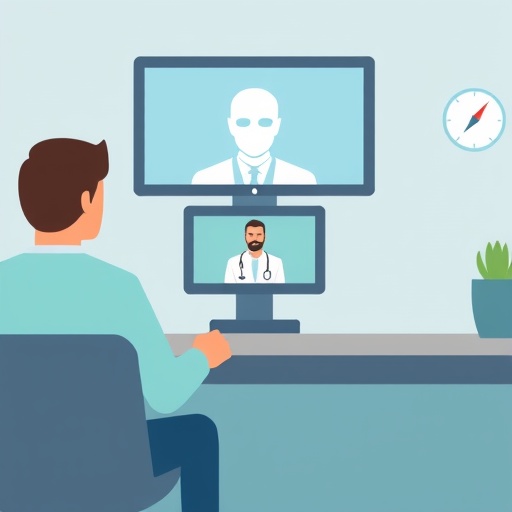
The COVID-19 pandemic triggered a remarkable surge in the adoption of telemedicine, reshaping the landscape of healthcare delivery worldwide. While telehealth was initially embraced as an essential tool to mitigate the spread of the virus, its utilization has persisted at significantly elevated levels long after the immediate crisis waned. Recent research conducted by Penn Medicine investigators provides an in-depth statistical exploration of telemedicine usage trends, revealing nuanced disparities across demographic and socioeconomic patient groups. These findings, published in the Journal of General Internal Medicine, shed light on the evolving realities of healthcare accessibility and the structural factors influencing remote medical consultations.
A pivotal observation from this study highlights that the elderly population remains consistently less inclined to adopt telemedicine solutions compared to their younger counterparts. Quantitatively, older adults are over 50 percent less likely to opt for telehealth encounters, favoring traditional in-office consultations instead. This raises important considerations related to digital literacy, comfort with technology, and possibly the complexity of managing comorbidities that may necessitate physical examinations or diagnostics unavailable remotely.
The analysis further illustrates that telemedicine utilization is disproportionately higher within primary care settings. This trend underscores the adaptability of telehealth platforms in managing routine consultations, chronic disease follow-ups, and preventive care, where physical examinations might be less crucial. These domains allow providers to leverage virtual visits to maintain continuity of care while reducing burdens on healthcare facilities and minimizing patient exposure risks.
Socioeconomic factors also play a significant role in determining telemedicine uptake. Intriguingly, individuals from lower income brackets exhibit a 6 percent higher propensity to engage in telehealth visits relative to in-person appointments. This could reflect the removal of economic and logistical barriers such as transportation costs, time off work, or childcare needs, which traditionally impede access to in-office care.
Ethnic and racial disparities persist in telemedicine adoption, with white patients exhibiting the highest usage rates. Asian patients are 18 percent less likely to utilize telemedicine platforms, while Black patients demonstrate a 12 percent reduced likelihood, and Hispanic patients are 6 percent less likely to engage in virtual consultations. These discrepancies point towards systemic inequities encompassing factors like technology access, cultural attitudes towards healthcare modalities, trust in medical systems, and language barriers, all of which merit targeted interventions.
Geographical distance sharply influences telemedicine engagement. Patients residing more than 15 miles from their nearest healthcare provider are 42 percent more inclined to choose telemedicine over face-to-face encounters. This highlights the utility of remote care in bridging gaps created by physical remoteness, potentially improving health outcomes in rural or underserved regions where healthcare infrastructure is limited.
Moreover, prior interaction with healthcare technology significantly predicts telemedicine utilization. Patients who already accessed online patient portals displayed a 44 percent higher likelihood of opting for telehealth services. This signals the critical role of digital health literacy and familiarity with electronic health platforms as facilitators of telemedicine adoption.
According to Yong Chen, PhD, a professor of Biostatistics and the senior author of the study, telemedicine has transcended its initial function as a crisis workaround and has established itself as an integral aspect of modern healthcare delivery systems. However, Dr. Chen acknowledges that this transformation mandates deliberate efforts to ensure equitable access. Addressing the heterogeneous adoption patterns requires strategies that reduce digital divides, accommodate diverse patient needs, and embrace culturally sensitive approaches.
The research methodology was grounded in a rigorous data and statistical analysis framework focusing on patient behaviors and demographics in relation to telehealth usage. By dissecting patterns over multiple years post-pandemic onset, the study offers valuable longitudinal insights rather than mere snapshots, strengthening the conclusions’ relevance for policy and clinical practice.
Telemedicine’s sustained prominence presents opportunities to revolutionize how health services are accessed and administered. For clinicians, it offers enhanced flexibility and efficiency in managing patient loads and monitoring chronic conditions. For patients, virtual care can translate into reduced travel times, decreased absenteeism from work or school, and improved continuity in managing health.
Nonetheless, technological infrastructure remains a cornerstone that determines telemedicine viability. Reliable internet connectivity, user-friendly digital interfaces, and data security protocols are non-negotiable prerequisites for effective virtual care environments. Investment in these areas, coupled with training initiatives aimed at increasing digital competence among both patients and providers, will be critical to dismantling current barriers.
Furthermore, the social determinants of health extend beyond income and race to include education level, language proficiency, and trust in technology, all of which intersect to influence telemedicine acceptance. Holistic policies must therefore integrate social and cultural dimensions to foster inclusivity and reduce disparities.
In conclusion, the post-pandemic healthcare ecosystem is witnessing an irreversible integration of telemedicine into routine care delivery. This evolution holds the promise of greater convenience and access but simultaneously demands vigilant attention to equity and structural challenges. Continued research and adaptive strategies will be instrumental in harnessing telehealth’s full potential while ensuring it benefits all segments of the population equally.
News Publication Date: (Not provided)
Web References:
- Journal of General Internal Medicine article: https://link.springer.com/article/10.1007/s11606-025-09964-y#Sec2
- DOI link: http://dx.doi.org/10.1007/s11606-025-09964-y
References: Penn Medicine researchers, Journal of General Internal Medicine, Yong Chen, PhD
Cite Scienmag News
Ophelia Keating. (March 10, 2026). Telemedicine Usage Varies Widely Despite Its Ongoing Popularity. Scienmag. https://scienmag.com/telemedicine-usage-varies-widely-despite-its-ongoing-popularity/
Ophelia Keating. "Telemedicine Usage Varies Widely Despite Its Ongoing Popularity." Scienmag, 10 March 2026, https://scienmag.com/telemedicine-usage-varies-widely-despite-its-ongoing-popularity/. Accessed 4 September 2026.
Ophelia Keating. "Telemedicine Usage Varies Widely Despite Its Ongoing Popularity." Scienmag. March 10, 2026. https://scienmag.com/telemedicine-usage-varies-widely-despite-its-ongoing-popularity/


