


In recent years, pay range transparency laws have emerged as a promising tool aimed at fostering wage equity and narrowing the persistent pay gaps in the workforce, particularly those grounded in gender discrepancies. However, groundbreaking research from Cornell University indicates that these well-intended regulations may inadvertently contribute to perpetuating the very inequalities they seek to dismantle. By dissecting the nuanced behavioral responses of job seekers to pay range disclosures, this research sheds light on the complexities underlying salary transparency initiatives and their impact on job application preferences and salary negotiations.
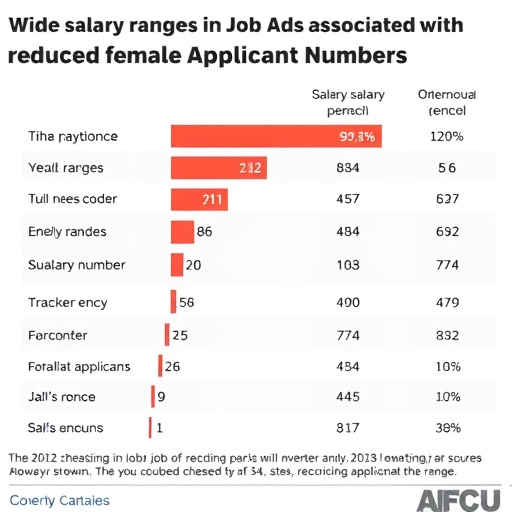
The cornerstone of this research effort, led by Alice Lee, assistant professor of organizational behavior at Cornell, examines the psychological and behavioral mechanisms influencing how women and men respond to different widths of salary ranges disclosed in job postings. Across a suite of four robust studies employing a synthesis of large-scale archival analyses and controlled field experiments, Lee’s team consistently observed that women exhibit a marked preference for job ads advertising narrower salary ranges compared to their male counterparts.
This preference for narrow salary ranges among women links closely to less assertive negotiation behaviors, manifesting in lower tendencies to negotiate starting salaries and diminished demands during negotiation. The research highlights a critical paradox wherein transparency laws, which are structurally neutral and designed to illuminate pay scales, unintentionally signal constraints that shape applicants’ wage negotiation strategies differently by gender, potentially reinforcing the entrenched wage disparities.
A striking implication of these findings is the demonstration that job seekers who opted for positions featuring narrow salary bands were satisfied with offers closer to the midpoint of the stated range and generally chose not to push aggressively for higher starting pay. This behavioral pattern is particularly consequential because starting salaries serve as compounding anchors for future wage growth, bonuses, promotions, and professional advancement opportunities. Thus, even subtle shifts in initial negotiation dynamics exert a ripple effect, magnifying gender wage gaps over the course of careers.
To unpack these complex dynamics, the Cornell research team undertook a comprehensive, multi-method investigation. Their initial archival study mined a colossal dataset comprising nearly 10 million U.S. job postings, quantitatively charting how pay range widths varied and correlating these variations with female representation in targeted occupations. This large-scale data analysis embedded the labor market’s structural context, framing how organizational practices on salary transparency intersect with gendered labor market participation.
Complementing this macro-level investigation, the second study applied an experimental framework examining upper-level undergraduates on the cusp of entering the labor market. This cohort provided insights into nascent negotiation preferences and their psychological underpinnings, notably exploring whether inherent risk preferences could account for gendered differences in salary range tolerances. The results revealed that risk-averse behavior among women partially explained their inclination toward jobs advertising narrower pay bands, aligning with existing behavioral economic theories predicting negotiation aversion in the presence of uncertainty.
Expanding the inquiry from hypothetical scenarios to real-world decision-making, the researchers conducted a third study involving actual job seekers evaluating genuine job postings under controlled experimental conditions. Here, pay range disclosures varied, and the job applicants’ application choices and negotiation behaviors were meticulously tracked. This approach provided ecological validity, highlighting how nuanced contextual cues embedded in pay disclosure shapes real labor market behaviors.
Remarkably, the studies uncovered a design principle with practical policy implications: when job ads provided supplemental context—detailing typical starting salaries and clarifying how final offers were calibrated—women’s proclivity for narrower salary ranges diminished. Moreover, under these enriched information conditions, the gender gap in both job application preferences and negotiation assertiveness virtually vanished. This suggests that the structure and content of salary information delivery wield a powerful influence in mitigating gender-biased behavioral responses.
The findings underscore the necessity for policymakers and employers to move beyond mere compliance with transparency mandates and toward thoughtful implementation strategies. The research advocates for salary disclosures that provide balanced, contextualized information rather than simple numerical ranges. This nuanced communication can alleviate anxieties around negotiation and empower candidates to engage more confidently, leveling the playing field.
Importantly, Lee’s team warns against treating pay transparency as a panacea. Transparency alone does not automatically dismantle systemic inequities. Without guidance on how employers should calculate or frame salary ranges, the variability in disclosed pay bands can obscure rather than illuminate fair compensation, thereby entrenching disparities under the guise of openness.
This research contributes to an expanding body of work interrogating behavioral economics within labor markets, particularly as it concerns gender. It resonates with theories emphasizing the role of information framing, negotiation dynamics, risk preferences, and social cues in shaping wage outcomes. By rigorously combining observational data with experimental methodologies, the study offers a comprehensive, evidence-based blueprint for effective policy design.
Given the increasing adoption of pay transparency laws—with over 15 U.S. states and Washington, D.C. requiring salary range disclosures starting in 2025—this research is both timely and consequential. As more organizations follow suit, understanding the psychological impacts of pay range width and disclosure framing is critical to crafting equitable hiring and compensation practices.
The Cornell investigators urge stakeholders in human resources, organizational leadership, and labor policy to use these insights to refine pay transparency frameworks. Designing salary disclosure practices that both promote transparency and account for differential applicant responses has the potential to dismantle persistent gender gaps, fostering a more inclusive workforce built on fairness and confidence.
Ultimately, this research challenges a prevailing assumption that transparency straightforwardly yields equity. Instead, it reveals a complex interplay between information presentation, individual psychology, and negotiation behaviors, illuminating pathways for smarter policy and more effective corporate practice to ensure transparency achieves its goals of justice and inclusivity.
News Publication Date: 16-Feb-2026
Web References: http://dx.doi.org/10.1037/apl0001360
Cite Scienmag News
Courtney Benton. (March 6, 2026). Wide Salary Ranges in Job Ads Associated with Reduced Female Applicant Numbers. Scienmag. https://scienmag.com/wide-salary-ranges-in-job-ads-associated-with-reduced-female-applicant-numbers/
Courtney Benton. "Wide Salary Ranges in Job Ads Associated with Reduced Female Applicant Numbers." Scienmag, 6 March 2026, https://scienmag.com/wide-salary-ranges-in-job-ads-associated-with-reduced-female-applicant-numbers/. Accessed 3 September 2026.
Courtney Benton. "Wide Salary Ranges in Job Ads Associated with Reduced Female Applicant Numbers." Scienmag. March 6, 2026. https://scienmag.com/wide-salary-ranges-in-job-ads-associated-with-reduced-female-applicant-numbers/


