


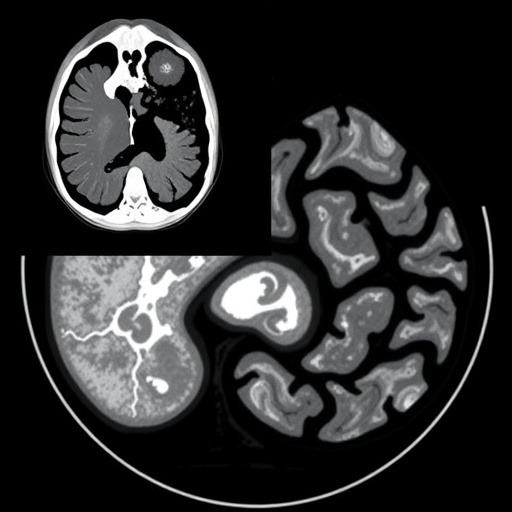
In a remarkable advancement in the understanding of rare pancreatic tumors, a comprehensive case study published in the prestigious journal Oncoscience sheds light on a massive calcified solid pseudopapillary neoplasm (SPN) located in the pancreatic head. This report, led by Dr. Faten Limaiem from Hospital Mongi Slim La Marsa in Tunisia, details the clinical course, intricate pathology, and successful surgical management of a young woman afflicted with this unusual neoplasm, underscoring the critical importance of integrated diagnostic approaches.
Solid pseudopapillary neoplasms are uncommon exocrine pancreatic tumors, representing less than 3% of all pancreatic neoplasms. Predominantly affecting young women in their third decade, these tumors characteristically exhibit low malignant potential. The presented case involved a 31-year-old female patient who experienced progressive right-upper quadrant abdominal pain. Subsequent imaging revealed an exceptionally large mass measuring approximately 12.5 by 9 by 8 centimeters, located in the head of the pancreas, demonstrating a lobulated contour with solid and cystic elements intermixed with coarse calcifications—an uncommon feature in SPN pathophysiology.
Radiologic assessment employed contrast-enhanced computed tomography (CT) and magnetic resonance imaging (MRI) to elucidate tumor characteristics. Imaging depicted a well-encapsulated heterogeneous lesion that abutted but did not infiltrate adjoining organs or major vascular structures. Intriguingly, tumor markers such as carcinoembryonic antigen (CEA) and carbohydrate antigen 19-9 (CA 19-9) remained within normal parameters, casting further doubt on malignancy and reinforcing the suspicion of SPN, which often manifests without elevation of traditional pancreatic tumor markers.
Surgical intervention entailed a cephalic pancreaticoduodenectomy, commonly known as the Whipple procedure. The choice of complete surgical resection reflects current consensus that this remains the gold standard for treatment, even for large tumors demonstrating extensive calcification. Resected specimens revealed a tumor with mixed solid and cystic architecture, areas of hemorrhagic degeneration, and striking coarse calcifications amidst hyalinized fibrous stroma, which histopathological examination extraordinaire highlighted.
Microscopically, the classic features of SPN were evident—pseudopapillary structures composed of uniform monomorphic cells with low mitotic activity. Special histologic findings included basophilic calcifications within fibrous zones, focal infiltration by foamy histiocytes, and cholesterol clefts surrounded by multinucleated giant cells, demonstrating complex tumor-host interactions. Immunohistochemical staining was pivotal, with neoplastic cells showing strong nuclear expression of β-catenin and positivity for CD10, confirming the molecular profile aligned with solid pseudopapillary neoplasms.
From a biological standpoint, SPNs harbor mutations in the Wnt/β-catenin pathway, a finding consistent with this patient’s tumor exhibiting nuclear localization of β-catenin protein. This immunohistochemical hallmark is a defining feature that helps differentiate SPNs from other pancreatic neoplasms such as neuroendocrine tumors or ductal adenocarcinomas. It also provides insight into the neoplasm’s indolent biology despite considerable tumor size and calcified components, which have historically been misinterpreted as indicators of aggressive malignancy.
The postoperative course was notably uneventful, with the patient demonstrating no complications and remaining free of tumor recurrence over a five-month follow-up period. Such outcomes illustrate the excellent prognosis associated with complete surgical resection of SPNs, even those with atypical radiographic features like heavy calcifications. This evidence supports existing clinical recommendations advocating rigorous multidisciplinary evaluation encompassing radiologists, pathologists, and surgeons for optimal patient management.
This case amplifies awareness that calcification, while uncommon in SPNs, does not necessarily correlate with aggressiveness or malignancy. Instead, it should be recognized as part of the diverse morphological spectrum of this tumor type. The juxtaposition of large tumor size and extensive calcification against the benign histological behavior exemplifies the diagnostic challenges encountered in clinical practice and emphasizes the necessity for comprehensive histopathological and molecular studies.
In the broader landscape of pancreatic pathology, early and accurate diagnosis of SPN is crucial given its favorable prognosis post-resection. This is starkly contrasted with pancreatic ductal adenocarcinoma, a highly lethal malignancy with vastly different therapeutic implications. Therefore, the integration of advanced imaging modalities, detailed histological examination, and immunohistochemical profiling becomes indispensable for tailoring appropriate treatment strategies.
Furthermore, the report advocates for prolonged surveillance following resection—recommendations suggest at least five years of follow-up to monitor for the rare instances of recurrence or metastasis. While the indolent nature of SPNs may tempt premature cessation of clinical monitoring, the nuanced behavior of these tumors warrants vigilance, especially in large lesions with atypical features.
The publication of this study in Oncoscience, an open-access platform promoting equitable dissemination of oncology research, reinforces the value of transparent, comprehensive case documentation for rare malignancies. The article highlights not only clinical success but also advances scientific understanding of SPN pathogenesis, diagnostic markers, and treatment paradigms, offering critical reference points for clinicians worldwide.
In summary, this landmark case elucidates the complex interplay of imaging, pathology, and molecular diagnostics in delineating solid pseudopapillary neoplasms marked by massive calcifications. It reaffirms the paramount role of radical surgical resection in achieving durable remission while deepening our grasp of pancreatic tumor heterogeneity. These findings together pave the way for enhanced diagnostic accuracy and improved patient outcomes in pancreatic oncology.
Cite Scienmag News
Ophelia Keating. (March 6, 2026). Distinctive Calcification Patterns Identified in Rare Solid Pseudopapillary Neoplasm of the Pancreas. Scienmag. https://scienmag.com/distinctive-calcification-patterns-identified-in-rare-solid-pseudopapillary-neoplasm-of-the-pancreas/
Ophelia Keating. "Distinctive Calcification Patterns Identified in Rare Solid Pseudopapillary Neoplasm of the Pancreas." Scienmag, 6 March 2026, https://scienmag.com/distinctive-calcification-patterns-identified-in-rare-solid-pseudopapillary-neoplasm-of-the-pancreas/. Accessed 3 September 2026.
Ophelia Keating. "Distinctive Calcification Patterns Identified in Rare Solid Pseudopapillary Neoplasm of the Pancreas." Scienmag. March 6, 2026. https://scienmag.com/distinctive-calcification-patterns-identified-in-rare-solid-pseudopapillary-neoplasm-of-the-pancreas/


