


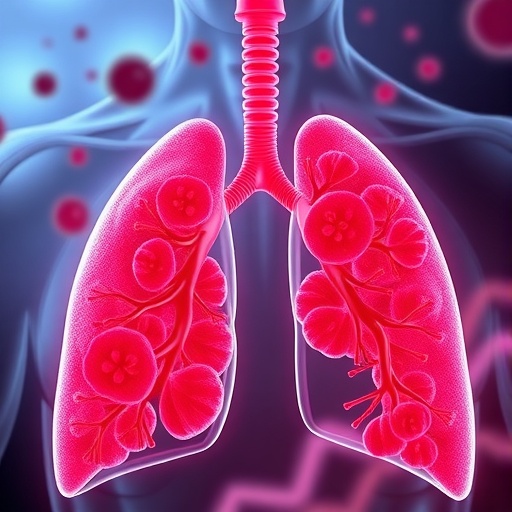
In a groundbreaking advance that could reframe how we confront stubborn bacterial lung infections, a collaborative team of researchers has unveiled a novel therapeutic strategy centered on harnessing the body’s own immune cell death mechanisms. The study, led by Zhang, Li, Jia, and colleagues and published in Nature Communications, explores the therapeutic potential of silencing Tudor domain-containing protein 9 (TDRD9) in combating lung injuries caused by the notoriously resilient pathogen Pseudomonas aeruginosa. By deploying siRNA nanoparticles designed to target TDRD9, the researchers provide compelling evidence of alleviated lung injury via the induction of a newly characterized form of immune cell death termed neutrophil cuproptosis.
Pseudomonas aeruginosa is a formidable gram-negative bacterium frequently implicated in hospital-acquired pneumonia and chronic lung infections, particularly among immunocompromised patients and those with cystic fibrosis. Its affinity for the pulmonary environment and ability to form biofilms lends the bacterium high levels of antibiotic resistance, complicating treatment regimens. Facing burgeoning antibiotic resistance, new therapeutic modalities beyond traditional antimicrobials are urgently needed. This study’s focus on modulating immune cell fate introduces a pivotal avenue for therapeutic intervention by leveraging the body’s intrinsic defense mechanisms rather than direct bacterial targeting.
Central to this research is the protein Tudor domain-containing protein 9, which has recently captured scientific attention due to its enigmatic role in cellular regulation, specifically within immune cells. TDRD9 has been shown to interact with diverse molecular pathways, though its role in neutrophils during bacterial infections remained unclear until now. Neutrophils, as frontline soldiers of the innate immune system, execute rapid responses to invading pathogens; however, excessive or dysregulated neutrophil activity can paradoxically contribute to tissue damage and worsen disease outcomes. The current study expertly delineates how targeting TDRD9 modulates neutrophil function in the face of bacterial challenge.
The authors engineered siRNA nanoparticles capable of selectively downregulating TDRD9 expression within neutrophils in vivo. Nanoparticles serve as an advanced delivery platform, protecting siRNA from degradation and enabling precise targeting to immune cells in the lung microenvironment. This technological feat ensures maximum impact with minimal systemic side effects—a key hurdle in the clinical translation of RNA interference therapies. The ability to fine-tune neutrophil gene expression marks a significant step forward in immune modulation strategies.
Intriguingly, the silencing of TDRD9 precipitated a previously uncharacterized mode of neutrophil cell death dubbed ‘cuproptosis’—a form of programmed cell death driven by copper-dependent mechanisms. Unlike apoptosis or known variants of programmed necrosis, cuproptosis involves toxic accumulation of copper ions affecting metabolic enzymes, culminating in cell demise. This mechanistic insight not only expands our understanding of immune cell regulation but also reveals cuproptosis as a potentially exploitable process to curb detrimental inflammation while preserving host defense.
Experimental verification spanned several preclinical models, including murine infection systems and ex vivo human lung tissue cultures. These models replicated the complex immune microenvironment encountered during actual P. aeruginosa infections. Following administration of the siRNA nanoparticles, researchers observed a marked reduction in neutrophil infiltration and lung tissue damage, accompanied by decreased bacterial loads. This dual benefit of lessened immunopathology and improved bacterial clearance underscores the therapeutic promise of inducing neutrophil cuproptosis.
Molecular analyses delineated the cascade of events downstream of TDRD9 knockdown, highlighting significant shifts in mitochondrial activity and copper ion transport pathways within neutrophils. Mitochondria, well-known as cellular energy hubs, are now appreciated as critical regulators of cell death modalities, including cuproptosis. By disrupting mitochondrial function through altered copper homeostasis, TDRD9 suppression effectively triggers neutrophil self-elimination, thereby attenuating the excessive inflammatory milieu that otherwise exacerbates tissue injury.
This discovery holds particular significance in the broader context of immune modulation during bacterial infections. Neutrophils’ swift response and potent antimicrobial arsenal are essential to pathogen clearance; however, sustained activation paradoxically inflicts collateral damage on lung tissue, aggravating respiratory distress and impairing recovery. By promoting a controlled elimination of hyperactivated neutrophils, TDRD9-targeting strategies offer a refined balance—preserving antibacterial activity while mitigating inflammatory injury.
From a translational research perspective, the versatility of siRNA nanoparticle platforms offers scalability and adaptability across a spectrum of diseases. Beyond Pseudomonas infections, the mechanistic insights gained here could spur innovative therapies targeting pathological neutrophil activation seen in autoimmune diseases, acute respiratory distress syndrome, and beyond. Moreover, the identification of cuproptosis opens avenues for drug development aimed at manipulating this novel death pathway for therapeutic gain.
The safety profile of these siRNA nanoparticles also presents optimism. While RNA interference therapeutics have faced challenges related to off-target effects and immune stimulation, this study’s targeted delivery mechanism minimizes systemic exposure and adverse reactions. Preclinical toxicity assessments revealed no significant alterations in liver or renal function, supporting the feasibility of clinical trials to explore efficacy and safety in humans.
While the findings are promising, the authors acknowledge limitations that warrant further investigation. The complexity of inflammatory responses in human patients, who often present with comorbidities and polymicrobial infections, requires validation in diverse clinical contexts. Long-term studies are also needed to evaluate possible impacts on immune memory and host resistance to recurrent infections following neutrophil depletion via cuproptosis induction.
The novel interface between immunology, nanotechnology, and cell death biology exemplified in this work represents a paradigm shift—promising therapeutic interventions that modulate immune cell lifecycle rather than relying solely on antimicrobial compounds. Such approaches are essential to outpace the relentless evolution of microbial resistance and address the unmet needs of patients suffering from chronic and severe lung infections.
As the burden of antibiotic-resistant infections intensifies worldwide, this research delineates a visionary pathway toward harnessing endogenous immune regulatory circuits in clinically relevant contexts. Infectious diseases have historically been combated through direct pathogen eradication; now, the frontier expands to include nuanced control of host immunity to achieve durable therapeutic outcomes.
Given the trajectory of personalized medicine and molecularly targeted therapies, the integration of siRNA-based interventions tailored to immune regulators could transform treatment algorithms for pulmonary infections and inflammatory diseases, heralding an era where controlled immune cell turnover mitigates pathology without compromising defense.
In summary, Zhang et al.’s seminal discovery of TDRD9-targeting siRNA nanoparticles inducing neutrophil cuproptosis asserts a compelling new frontier in infection biology and immunotherapy. This innovative strategy offers hope for mitigating the damaging consequences of Pseudomonas aeruginosa-induced lung injury, leveraging the elegant complexity of the immune system’s own death pathways to pioneer next-generation treatments. As clinical pathways evolve to incorporate such advanced molecular techniques, the prospects for overcoming elusive bacterial pathogens and their deleterious impacts on human health grow ever brighter.
Cite Scienmag News
Kristina Jarvis. (March 6, 2026). siRNA Nanoparticles Combat Lung Injury via Neutrophil Cuproptosis. Scienmag. https://scienmag.com/sirna-nanoparticles-combat-lung-injury-via-neutrophil-cuproptosis/
Kristina Jarvis. "siRNA Nanoparticles Combat Lung Injury via Neutrophil Cuproptosis." Scienmag, 6 March 2026, https://scienmag.com/sirna-nanoparticles-combat-lung-injury-via-neutrophil-cuproptosis/. Accessed 4 September 2026.
Kristina Jarvis. "siRNA Nanoparticles Combat Lung Injury via Neutrophil Cuproptosis." Scienmag. March 6, 2026. https://scienmag.com/sirna-nanoparticles-combat-lung-injury-via-neutrophil-cuproptosis/


