


As artificial intelligence continues to advance at an unprecedented pace, reshaping not only industries but also societal expectations, an essential pillar of education is being reevaluated. The longstanding principle that all students should be educated to meet a standardized set of achievements—the archetype of the “ideal graduate”—faces new scrutiny. The rapid rise of AI, with its capability to outperform human cognition in routine tasks, demands a fresh conceptual framework that balances societal needs with the individuality of learners.
In a provocative new article set to appear in the ECNU Review of Education on February 17, 2026, educational theorists Ruojun Zhong and Yong Zhao challenge the dominant paradigm. Their work introduces the innovative Double-Helix Logic of Curriculum, a structural theory that reframes how universality and personalization coexist within modern education systems. This theoretical model aims to harmonize collective educational goals and unique learner characteristics in an AI-empowered world.
For decades, global education reforms have broadened the understanding of student success by listing competencies extending beyond traditional academic skills. Landmark initiatives, from the U.S. Common Core standards to comprehensive competency frameworks across Asia and Europe, have progressively emphasized a more holistic concept of achievement. Nevertheless, these frameworks have maintained an implicit universalist assumption—that excellence can be distilled into a standardized profile applicable to all. Zhong and Zhao argue this model is outdated and potentially counterproductive in an era where AI excels at many cognitive tasks but cannot replicate intrinsically human traits.
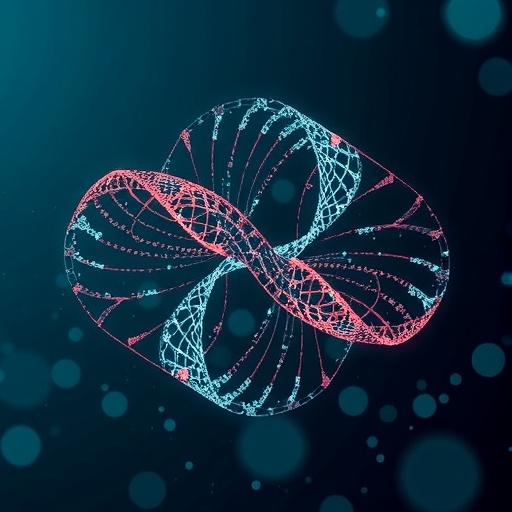
The core of the Double-Helix Logic draws inspiration from the molecular biology of DNA. Just as DNA’s intertwined strands encode life’s complexity, the authors propose viewing curriculum as two interdependent strands that together compose a dynamic educational structure. The first is the Template Strand, representing universality. This strand encompasses foundational societal literacies, including shared knowledge of civic engagement, ethical reasoning, and essential digital competencies. It forms the stable backbone that maintains social cohesion and collective understanding.
Complementing this is the Coding Strand, embodying personalization. This strand captures the individualized strengths, passions, and learning trajectories of each student. Unlike the Template Strand, it resists standardization, allowing for organic expressions of creativity, empathy, and entrepreneurial imagination—human qualities beyond the replication reach of AI systems. The interplay between these strands creates a curriculum architecture that evolves rather than enforces conformity.
Significantly, the Double-Helix theory rejects the conventional dichotomy that pits universality against personalization as oppositional. Instead, it reconceptualizes them as mutually constitutive processes. Universality provides the shared language and frameworks necessary to interpret personal differences and make them socially meaningful. Conversely, personalization safeguards against the ossification of universality into rigid sameness, ensuring diversity thrives within coherent structures. This continuous dynamic interaction forms what the authors describe as the “evolutionary engine” driving curriculum adaptation.
Zhong and Zhao further situate their framework within a transformative shift from competition-based meritocracy towards what they term the Human Interdependence Paradigm (HIP). This emerging paradigm replaces traditional ranking systems with principles emphasizing diversity, collaboration, and interdependent success. In this new model, educational purpose transcends sorting students on a linear scale; instead, it facilitates environments where distinct human strengths amplify and complement one another through cooperative engagement.
From a technical perspective, deploying the Double-Helix Logic demands re-engineering curriculum design and assessment systems. Algorithms and analytics must be adapted to measure not just mastery of narrow learning outcomes but also the growth of personalized learner profiles against a shared societal foundation. This poses challenges for policymakers and educators alike, necessitating flexible frameworks that accommodate complexity and emergent traits over fixed benchmarks.
Moreover, integrating this double-stranded curriculum invites a reevaluation of instructional methodologies. Teaching must shift from uniform delivery towards differentiated, adaptive pedagogies that nurture both fundamental literacies and individual idiosyncrasies. Educators become facilitators of learning environments tailored to intertwining collective knowledge with personal agency—thus preparing learners for a world where AI covers routine tasks and human ingenuity drives innovation.
Importantly, the theory addresses equity concerns by ensuring the Template Strand establishes a minimum shared foundation essential for social participation and digital citizenship. Simultaneously, the Coding Strand empowers marginalized voices and underrepresented talents to flourish without being forced into one-size-fits-all molds. This dual commitment enhances both access and opportunity within increasingly automated societies.
The Double-Helix Logic heralds a bold reimagining for the age of artificial intelligence. By moving beyond the expansion of competency lists, it frames curriculum as a living architecture—able to sustain societal coherence while fostering vibrant human diversification. Zhong and Zhao’s vision provides fertile ground for future research, policy innovation, and educational practice designed to thrive amid accelerating technological transformations.
As the AI revolution continues to upend conventional labor markets and social structures, this foundational reconceptualization prompts urgent dialogue among educators, policymakers, and technologists. The challenge lies not only in integrating AI tools effectively but also in preserving and cultivating the unique human capacities that machines cannot emulate. The proposed Double-Helix Logic of Curriculum offers a promising blueprint for education systems committed to this delicate balance.
Ultimately, this approach aspires to prepare learners not for a world dominated by AI but for one where human-machine synergy unlocks unprecedented possibilities. By anchoring societal universality alongside dynamic personalization, it facilitates an educational ecosystem conducive to holistic development, ethical stewardship, and collective progress—ensuring the future belongs to those who can navigate and shape the complexities of an AI-infused world.
News Publication Date: 17-Feb-2026
Web References:
https://doi.org/10.1177/20965311261421970
Cite Scienmag News
Courtney Benton. (March 6, 2026). Unraveling the Double-Helix Logic of Curriculum: A New Educational Theory for the AI Era. Scienmag. https://scienmag.com/unraveling-the-double-helix-logic-of-curriculum-a-new-educational-theory-for-the-ai-era/
Courtney Benton. "Unraveling the Double-Helix Logic of Curriculum: A New Educational Theory for the AI Era." Scienmag, 6 March 2026, https://scienmag.com/unraveling-the-double-helix-logic-of-curriculum-a-new-educational-theory-for-the-ai-era/. Accessed 4 September 2026.
Courtney Benton. "Unraveling the Double-Helix Logic of Curriculum: A New Educational Theory for the AI Era." Scienmag. March 6, 2026. https://scienmag.com/unraveling-the-double-helix-logic-of-curriculum-a-new-educational-theory-for-the-ai-era/


