


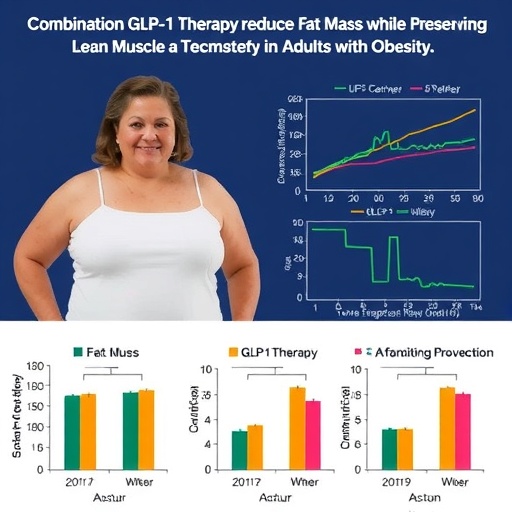
A groundbreaking clinical trial has revealed that combining the glucagon-like peptide-1 (GLP-1) receptor agonist semaglutide with bimagrumab, a monoclonal antibody that inhibits activin signaling pathways, produces remarkable synergistic effects in the treatment of obesity. This innovative approach not only delivers pronounced weight loss but also crucially preserves lean body mass, including skeletal muscle and connective tissues, marking a pivotal advancement in obesity therapeutics. The findings from the BELIEVE study, a phase 2 randomized clinical trial led by Dr. Steven Heymsfield at the Pennington Biomedical Research Center, were published in the prestigious journal Nature Medicine.
GLP-1 receptor agonists, such as semaglutide, have revolutionized obesity management by effectively reducing body weight predominantly through appetite suppression and improved glycemic control. However, a significant limitation of this class of drugs is their associated loss of lean mass—up to 40% of total weight lost during treatment can be from muscle tissue, which may compromise patients’ metabolic health and physical function. The introduction of bimagrumab, which antagonizes the activin type II receptors to promote muscle growth and inhibit muscle wasting, offers a compelling solution to this challenge.
The BELIEVE study meticulously evaluated the efficacy and safety of semaglutide alone, bimagrumab alone, and their combination, over a sustained treatment period of 72 weeks. Participants were randomly assigned to one of nine groups, encompassing two dosages of bimagrumab (10 mg/kg and 30 mg/kg administered every 12 weeks) combined with two dosages of semaglutide (1.0 mg and 2.4 mg administered weekly), or the individual administration of each agent. This robust design enabled a comprehensive assessment of dose-dependent responses and the additive impact on body composition.
Remarkably, individuals treated solely with bimagrumab experienced an average weight loss of 10.8%, which was exclusively attributed to fat mass reduction, paralleled by an unexpected 2.5% increase in lean mass. Conversely, participants receiving semaglutide alone shed an average of 15.7% of their body weight, with 71.8% of this loss derived from fat mass, indicating that lean mass depletion was still a concern. Most notably, the cohort administered the combination therapy demonstrated an impressive average weight loss of 22.1%, with a predominant 92.8% of weight loss from fat mass, while lean mass was substantially preserved.
These findings underscore the potential of the combination therapy to circumvent the deleterious loss of skeletal muscle commonly seen with GLP-1 receptor agonists, thereby optimizing metabolic outcomes and physical functionality among patients with obesity. Dr. Heymsfield emphasized, “Our data reveal that bimagrumab and semaglutide operate through distinct yet complementary biological pathways. When combined, they maximize fat loss and for the first time in large clinical trials, demonstrate significant lean mass retention alongside profound weight reduction.”
Beyond weight loss metrics, the study elucidated systemic metabolic improvements associated with the treatment regimens. Participants showed up to an 83% reduction in high-sensitivity C-reactive protein (hsCRP), a robust biomarker for systemic inflammation and cardiovascular risk. Furthermore, there was a substantial elevation in adiponectin levels, a hormone intimately involved in enhancing insulin sensitivity, fostering lipid metabolism, and exerting anti-inflammatory effects, which collectively contribute to cardiometabolic health.
In a clinically relevant subgroup exhibiting prediabetic markers at baseline, the combination therapy achieved a 100% reversion rate to normoglycemia among some dosing groups, effectively normalizing glucose homeostasis in this at-risk population. This result highlights the potential utility of the drug duo not only in weight management but also in the prevention of type 2 diabetes progression.
Safety and tolerability profiles were largely consistent with prior experience of the individual agents. Adverse events reported in the bimagrumab arms, such as mild-to-moderate acne and muscle spasms, warrant further investigation to optimize dosing and minimize side effects. The study’s double-blind, placebo-controlled design lends strong credibility to these conclusions while advocating continued clinical exploration to refine this promising therapeutic strategy.
Importantly, these results advocate for a paradigm shift in obesity treatment evaluation, moving beyond conventional weight and body mass index (BMI) metrics toward more precise assessments of body composition. Emphasizing lean body mass preservation in clinical outcomes acknowledges the multidimensional complexity of obesity and the metabolic consequences of tissue-specific weight changes.
Funded by Eli Lilly and Company and orchestrated under the auspices of Versanis Bio—a Lilly subsidiary—this trial signifies a collaboration between industry and academic research, fostering innovation in metabolic medicine. The Pennington Biomedical Research Center continues to spearhead multidisciplinary investigations into metabolic disorders, leveraging extensive clinical infrastructure and expertise.
As obesity prevalence escalates globally and current therapeutic options grapple with limitations, the synergistic administration of semaglutide and bimagrumab offers renewed hope for patients and clinicians alike. This approach, combining an appetite-suppressing incretin analog with a muscle-preserving activin antagonist, may redefine standards of care, emphasizing both fat mass reduction and muscle conservation.
Future research trajectories will focus on long-term durability of these effects, mechanistic insights into tissue-specific pathways modulated by the drug combination, and broader evaluations in diverse patient populations. As personalized medicine evolves, therapies targeting multiple biological axes might emerge as indispensable tools in tackling obesity’s multifaceted challenges.
The clinical implications of this study extend beyond weight metrics, encompassing cardiovascular risk mitigation, inflammation reduction, and diabetes prevention. It heralds a new era where preserving metabolic health and functionality through tailored pharmacological combinations becomes paramount in obesity management.
In conclusion, the BELIEVE phase 2 trial’s compelling demonstration that semaglutide and bimagrumab, alone but particularly in concert, yield significant and sustained weight loss with preservation of lean mass marks a critical milestone. This dual-action therapy holds transformative promise and is poised to influence future discourses and treatments in metabolic health sciences.
News Publication Date: March 5, 2026
Web References:
– https://www.nature.com/articles/s41591-026-04204-0
– http://www.pbrc.edu
References:
Heymsfield, S.B., et al. “Bimagrumab and semaglutide alone or in combination for the treatment of obesity: a phase 2 randomized clinical trial.” Nature Medicine, 2 March 2026, DOI: 10.1038/s41591-026-04204-0.
Cite Scienmag News
Daisy Hatcher. (March 6, 2026). Combination GLP-1 Therapy Reduces Fat Mass While Preserving Lean Muscle in Adults with Obesity. Scienmag. https://scienmag.com/combination-glp-1-therapy-reduces-fat-mass-while-preserving-lean-muscle-in-adults-with-obesity/
Daisy Hatcher. "Combination GLP-1 Therapy Reduces Fat Mass While Preserving Lean Muscle in Adults with Obesity." Scienmag, 6 March 2026, https://scienmag.com/combination-glp-1-therapy-reduces-fat-mass-while-preserving-lean-muscle-in-adults-with-obesity/. Accessed 3 September 2026.
Daisy Hatcher. "Combination GLP-1 Therapy Reduces Fat Mass While Preserving Lean Muscle in Adults with Obesity." Scienmag. March 6, 2026. https://scienmag.com/combination-glp-1-therapy-reduces-fat-mass-while-preserving-lean-muscle-in-adults-with-obesity/


