

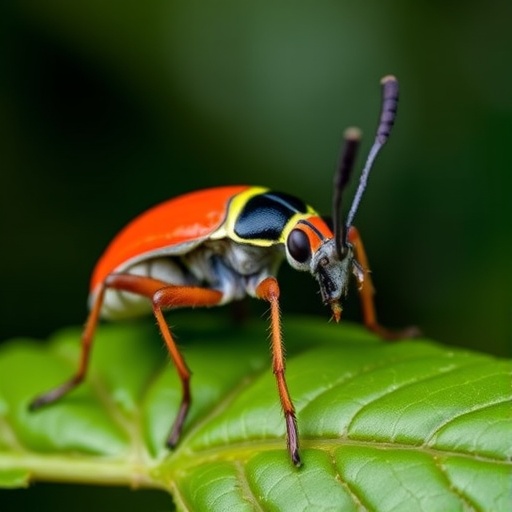
Insects inhabiting the tropical lowlands are rapidly approaching the upper limits of their thermal tolerance, signaling an alarming implication for biodiversity and ecosystem stability under escalating climate change scenarios. Recent research has revealed a saturation point in the ability of these species to adapt to rising temperatures, particularly evident across elevational gradients from cold highlands to warm lowlands. This discovery shakes foundational assumptions about the evolutionary flexibility of tropical insects amidst the planet’s warming trajectory.
The study, which meticulously analyzed thermal tolerance traits across multiple insect populations in Afrotropical and Neotropical regions, uncovered a pattern of narrow thermal safety margins particularly pronounced at lower elevations. This indicates that many tropical lowland insects currently exist perilously close to their maximum survivable temperatures. Unlike species at higher altitudes that still retain some capacity to endure temperature increases, lowland species displayed negligible phenotypic plasticity or hardening potential—a physiological inability to acclimate to heat stress through reversible mechanisms.
Delving deeper, the research team explored the molecular underpinnings of this thermal constraint. Proteins critical for maintaining metabolic function were examined through their melting temperatures, revealing a stark genomic signature: a large proportion had melting points alarmingly close to the insects’ current surface and air temperature regimes. This finding highlights a biochemical bottleneck where essential proteins are inherently vulnerable to denaturation under increased thermal conditions. Evolutionary shifts to higher melting temperatures or enhanced expression of heat shock proteins—which could stabilize protein structure—were deemed improbable without incurring substantial metabolic costs, rendering such adaptations unlikely in the foreseeable future.
The phylogenetic analyses further supported these conclusions, demonstrating that upper thermal tolerance limits are deeply conserved traits within tropical insect lineages. This evolutionary constraint suggests a limited capacity for rapid adaptation to sudden temperature spikes brought on by climate change. Such conserved physiological ceilings intensify the vulnerability of tropical insect communities, especially given the accelerated pace of warming projected in equatorial zones compared to temperate regions.
Particularly worrying insights arose from the Amazonian lowlands, where temperature anomalies are expected to be more extreme and escalate due to feedback mechanisms like increasingly frequent droughts and rainforest degradation. Projections indicate that both surface and ambient air temperatures in these regions will surpass the currently observed upper thermal limits of many insect species. This temperature overshoot not only threatens individual survival but portends cascading effects on the intricate trophic interactions and pollination networks dependent on these insects.
Ecological relief via microhabitat selection offers limited respite because the availability of thermal refuges is diminishing. Strategies such as vertical migration to higher, cooler elevations or entering diapause phases to evade heat stress may become the only options. However, these responses are contingent upon the connectivity and integrity of forest ecosystems, which are under rapid threat from deforestation, logging, and climate-induced mortality. The fragmentation of habitats severely limits dispersal opportunities, exacerbating vulnerabilities.
Importantly, the study underscores the critical role of intact tropical rainforests as buffers against climate extremes. These environments offer shaded, thermally heterogeneous microhabitats that can moderate temperature fluctuations, providing vital refugia during heatwaves. Yet, as deforestation advances and canopy gaps proliferate, these thermal sanctuaries are being eroded, further exposing lowland insect populations to lethal heat stress.
The researchers emphasize the urgent need for conservation strategies that maintain and restore forest connectivity along elevational gradients. Such corridors would facilitate altitudinal migration, enabling insect species to escape thermal extremes and maintain viable populations. Connectivity is paramount not just for survival but for preserving the biodiversity richness characteristic of tropical regions, intricately tied to global ecological functions.
While thermal extremes pose an existential threat to tropical insects, the impending challenge includes an increase in both heat waves and cold snaps due to climate variability. Such temperature extremes compound stress, potentially disrupting life cycles and reproductive success. This dual thermal instability presents a complex challenge for predicting insects’ future distribution and abundance.
The findings have profound implications beyond ecology, touching on agriculture, disease transmission, and ecosystem services, all reliant on insect activity. The decline or local extinction of key species could ripple across food webs and alter nutrient cycling, threatening the sustainability of tropical ecosystems which billions of humans depend upon. It is a stark reminder that thermal physiology, molecular biology, and climate science are inextricably linked in forecasting biodiversity futures.
Ultimately, this groundbreaking research reveals a sobering picture: thermal tolerance evolution in tropical insects has reached near its maximum limits due to physiological, molecular, and evolutionary constraints. Without immediate global and regional actions addressing climate mitigation and habitat conservation, we risk losing vast insect diversity with unknown but likely severe consequences. Tropical forests’ resilience and, by extension, planetary health hinge on preserving these intricate thermal safety margins.
Subject of Research:
Thermal tolerance limits and evolutionary constraints in tropical insects under climate change.
Article Title:
Limited thermal tolerance in tropical insects and its genomic signature.
Article References:
Holzmann, K.L., Schmitzer, T., Abels, A. et al. Limited thermal tolerance in tropical insects and its genomic signature. Nature (2026). https://doi.org/10.1038/s41586-026-10155-w
Image Credits:
AI Generated


