


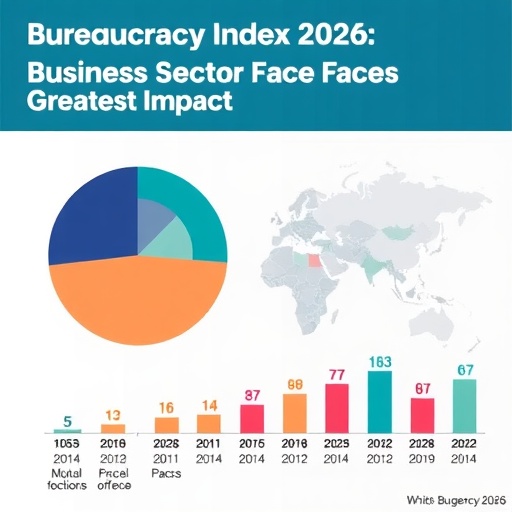
The Bureaucracy Index, a meticulous measure tracking the proliferation of German federal legislation, has reported yet another record-breaking increase in the complexity and volume of laws. Over the past 15 years, despite multiple governmental changes and steadfast political commitments to streamline regulatory frameworks, the volume of legislation measured in standard pages has surged relentlessly. In 2026, the index exceeded its 2010 baseline by more than 62%, rising from 24,765 standard pages in 2010 to a staggering 40,270 pages in 2025, signaling a sustained upward trend with no indication of structural regression.
Compiled collaboratively by Dr. Stefan Wagner, a distinguished professor at the University of Vienna, alongside ESMT Berlin and the regulatory database buzer.de, the Bureaucracy Index is founded on a systematic and comprehensive evaluation of all applicable federal federal laws. Each law’s scope is quantified using so-called normative pages, defined as pages containing 1,500 characters including spaces, thereby offering a standardized metric for legislative density and magnitude. This data-driven approach reveals an unyielding expansion of legislative content that transcends cyclical political changes, suggesting deeply rooted systemic growth rather than transient legislative fluctuations.
A longitudinal analysis of federal election years illustrates that this upward trajectory in legislation volume persists irrespective of the ruling party, confirming that the regulatory growth is embedded in the structural fabric of governance. Political shifts fail to reverse or even pause this trend, emphasizing that commitments to reduce bureaucracy remain largely symbolic rather than substantively transformative. Dr. Wagner underscores this phenomenon by highlighting the absence of cyclical dips, instead pointing to an unremitting climb in the volume and intricacy of federal laws.
Delving deeper, the growth in legislation is discernibly uneven across various legal sectors. Commercial or business law, in particular, has exhibited an above-average expansion rate, emerging as the most rapidly increasing domain in recent years. From 2021 to 2025, this sector alone has accumulated an addition of 1,542 pages—equivalent to a 16.5% growth—thus positioning commercial law at the apex of regulatory augmentation. This segment’s rapid expansion underlines the escalating complexity faced by enterprises operating within Germany, as legal obligations and compliance requirements intensify.
A parallel elevation is observable within the financial sector, another field of paramount importance for the nation’s economic landscape. Alongside commercial law, financial regulations constitute some of the most voluminous and impactful legislative clusters shaping the operational environment for businesses. The regulatory emphasis on these economically crucial areas indicates a policy direction wherein governmental oversight and control become increasingly pervasive, potentially impeding business dynamism and innovation due to heightened legal complexity.
Strikingly, the defense sector records the most pronounced relative growth in recent years, a reflection of shifting geopolitical dynamics and evolving national security imperatives. Since the onset of Russia’s war against Ukraine, Germany’s security posture has undergone fundamental recalibration, necessitating an expansion and modernization of the armed forces. The legislative increase in procurement and defense laws directly mirrors these developments, as the government authorized significant budget allocations for military modernization, leading to numerous legal adjustments. This surge embodies a tangible alignment of legislation with emergent strategic priorities.
Contrasting these trends, certain legal fields such as labor law and public administration have witnessed a modest deceleration in legislative growth. Nonetheless, even in these areas, a decline remains elusive. While the pace has tapered compared to previous periods, the accumulated volume of laws continues to ascend, underscoring the pervasive nature of bureaucratic expansion in Germany’s federal legal system without any substantive reversal.
The Bureaucracy Index draws its insights from the expansive database buzer.de, covering all relevant and current federal laws. With its foundation in comprehensive normative page counts, the index offers a singularly objective gauge of regulatory growth over time. By quantifying complexity and legislative density, it uniquely illuminates the structural tendencies within Germany’s legal landscape and provides a critical diagnostic tool assessing the efficiency and manageability of the legislative corpus.
Dr. Wagner emphasizes the crucial implications of these findings for Germany’s economic competitiveness and policy effectiveness. The mounting legislative burden, particularly in sectors integral to entrepreneurial activity, imposes significant constraints on investment, innovation, and overall economic agility. If policymakers are earnest about catalyzing new growth momentum, regulatory overhaul must commence with simplifying and streamlining business-related laws. A reduction in legal complexity could unleash considerable economic vitality, offering a clarion call for targeted deregulation.
Moreover, the index highlights a paradox where political rhetoric advocating deregulation is consistently undercut by sustained legislative accretion. Despite proclaimed ambitions, successive governments have been unable to arrest or reverse the entrenched trend towards greater bureaucratic density. This suggests systemic inertia where legislative expansion is self-perpetuating, driven by complex governance needs, stakeholder demands, and institutional mechanisms that favor added regulation over simplification.
The heightened legislative activity in defense also signals an adaptation of legal frameworks in response to external security challenges, marking a shift where geopolitical tensions directly affect domestic legislative priorities. This nexus between international developments and national lawmaking underscores the multifaceted drivers of bureaucracy—extending beyond domestic policy preferences to encompass global strategic imperatives.
In summary, the Bureaucracy Index for 2026 paints a detailed portrait of persistent legislative growth in Germany, revealing an intricate regulatory environment that continues to intensify despite political change and deregulation pledges. This trend, particularly pronounced in commercial, financial, and defense laws, poses both challenges and opportunities for policymakers charged with balancing governance complexity against economic vitality. Streamlined, targeted deregulation focused on entrepreneurial domains is imperative to mitigate bureaucratic burdens and stimulate sustainable growth in the future.
Cite Scienmag News
Courtney Benton. (March 5, 2026). Bureaucracy Index 2026: Business Sector Faces Greatest Impact. Scienmag. https://scienmag.com/bureaucracy-index-2026-business-sector-faces-greatest-impact/
Courtney Benton. "Bureaucracy Index 2026: Business Sector Faces Greatest Impact." Scienmag, 5 March 2026, https://scienmag.com/bureaucracy-index-2026-business-sector-faces-greatest-impact/. Accessed 4 September 2026.
Courtney Benton. "Bureaucracy Index 2026: Business Sector Faces Greatest Impact." Scienmag. March 5, 2026. https://scienmag.com/bureaucracy-index-2026-business-sector-faces-greatest-impact/


