

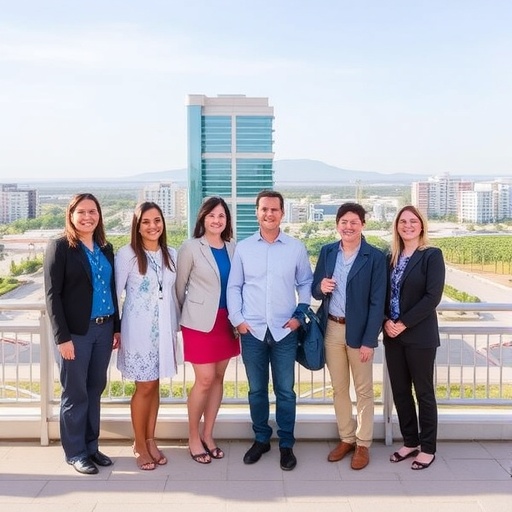
In a groundbreaking advance at the intersection of molecular medicine and bioengineering, an international consortium led by Dr. Ludmil Alexandrov, professor at the University of California San Diego, has secured a prestigious Cancer Grand Challenges award worth $25 million. Over the next five years, this multinational effort will rigorously investigate mutational signatures—unique, intricate patterns etched into DNA as a direct consequence of environmental exposures and endogenous cellular mechanisms. These signatures, akin to molecular fingerprints, hold the promise of fundamentally reshaping the scientific community’s understanding of cancer’s origins, with profound implications for future prevention, diagnosis, and therapy.
Mutational signatures arise from various biological and chemical processes that damage DNA, leaving behind distinctive alteration patterns. Decoding these signatures requires sophisticated integration of bioinformatics, molecular biology, and epidemiology, to trace back the causative agents and molecular events responsible. Dr. Alexandrov’s team, known as Team CAUSE, integrates expertise from premier institutions across the United States, the Netherlands, and the United Kingdom. Their mission transcends mere observation, aiming to dissect the biochemical underpinnings and causal pathways that inscribe these mutational imprints within the genome.
The $25 million grant, funded collaboratively by Cancer Research UK, the National Cancer Institute, and the KWF Dutch Cancer Society, underscores the strategic importance of this endeavor within the global cancer research landscape. Cancer Grand Challenges, a visionary international initiative, rigorously selects high-impact, high-risk projects that could pivotally influence cancer science. This cycle attracted an unprecedented 227 submissions worldwide, with Team CAUSE among five teams ultimately awarded substantial funding, reflecting the initiative’s commitment to transformative innovations.
Understanding mutational signatures is more than an academic pursuit; it is essential to uncover how specific exposures—from chemical carcinogens to viral infections—initiate or accelerate oncogenesis. These molecular patterns enable scientists to reconstruct a tumor’s “exposure history,” revealing the environmental and endogenous factors that have contributed to its genetic alteration burden. By identifying DNA adducts—the initial chemical modifications caused by carcinogens that precede mutations—Team CAUSE hopes to bridge the critical knowledge gap between exposure and genetic consequence.
This comprehensive interrogation promises to pioneer new diagnostic biomarkers capable of detecting cancer susceptibility or early oncogenic events before clinical symptoms manifest. In parallel, elucidating the biochemical pathways generating these mutational footprints could inform novel therapeutic targets that disrupt carcinogenic processes at their inception. The potential clinical impact spans early detection, tailored prevention strategies, and precision medicine-based treatments fueled by an enhanced mechanistic understanding of tumor etiology.
Dr. Pradeep K. Khosla, Chancellor of UC San Diego, heralded this achievement as a testament to the institution’s leadership in pioneering solutions for urgent medical challenges. The collaboration epitomizes the power of interdisciplinary research, uniting cellular biology, bioengineering, epidemiology, and computational sciences. Such cross-pollination of ideas is crucial when addressing a disease as complex and multifactorial as cancer.
Previously, Dr. Alexandrov’s work within Team Mutographs, itself a Cancer Grand Challenges awardee, helped establish the emerging discipline of mutational epidemiology. This field combines genome sequencing with population-level exposure data to delineate mutation-causing agents and processes. Notably, Mutographs revealed that early childhood exposure to a specific bacterial toxin imprints a unique mutational signature on colonic DNA, linked to an increased incidence of colorectal cancer under age 50. The new CAUSE team now broadens and deepens this investigative scope under Alexandrov’s leadership.
Technically, the project will employ cutting-edge genomic sequencing platforms, enhanced computational algorithms for pattern recognition, and innovative chemical assays to identify and characterize DNA adducts. A challenging aspect is accurately attributing mutational signatures to distinct exposures in the context of confounding biological variables and overlapping processes. Team CAUSE’s integrated approach, combining experimental validation with statistical inferences across diverse human cohorts and model systems, aims to surmount these complexities.
This initiative also exemplifies the strategic value of large-scale, international cooperation in tackling cancer’s most elusive puzzles. By integrating diverse datasets spanning multiple populations and environments, the team aspires to uncover universally applicable mutational signatures alongside region-specific carcinogenic mechanisms. Such insights will be crucial for developing globally relevant prevention and treatment protocols, particularly for cancers with rising incidence rates linked to newly recognized environmental or lifestyle factors.
Cancer Grand Challenges director Dr. David Scott emphasized that the initiative’s generous funding enables risk-taking and ambitious collaborative science rarely achievable by conventional grants. The freedom afforded by this model encourages exploratory, interdisciplinary “team science” that has the potential to deliver paradigm-shifting breakthroughs. Team CAUSE’s project exemplifies this ethos by confronting a fundamental, unresolved cancer biology question through innovative, integrative methodologies.
Dr. Alexandrov remarked on the unique opportunity this grant provides to merge computational innovations with experimental biology and translational medicine. The ability to decode cancer’s “molecular fingerprints” at such depth could transform prevention strategies and therapeutic development, moving the field beyond descriptive genomics towards actionable knowledge. With this level of support and international expertise pooled, the project is poised to unlock novel mechanisms that have remained hidden for decades.
In summary, the work led by Dr. Ludmil Alexandrov and Team CAUSE represents a landmark investment in decoding cancer’s covert molecular signatures. Their systematic efforts to link mutational patterns with causal DNA damage events promise to illuminate the complex interplay between environment, genome, and tumor formation. Success in this endeavor could herald a new era in cancer research—one characterized by predictive precision, early intervention, and tailored treatment designed to outmaneuver cancer at its genetic root.
—
Subject of Research: Mutational Signatures and DNA Adducts in Cancer Development
Article Title: Decoding the Fingerprints of Cancer: An International Team Advances Understanding of Mutational Signatures
News Publication Date: 2025
Web References:
– https://today.ucsd.edu/story/childhood-exposure-to-bacterial-toxin-may-be-triggering-colorectal-cancer-epidemic-among-the-young
– https://mediasvc.eurekalert.org/Api/v1/Multimedia/fa355f13-aa9d-4d0b-a81d-8271b44c6bfa/Rendition/low-res/Content/Public (image source)
Image Credits: UC San Diego Health Sciences
Keywords: Cancer Research, DNA Mutational Signatures, DNA Adducts, Cancer Grand Challenges, Molecular Epidemiology, Genomic Sequencing, Environmental Carcinogens, Cancer Prevention, Precision Medicine, Bioengineering, Interdisciplinary Research, Oncogenesis


