


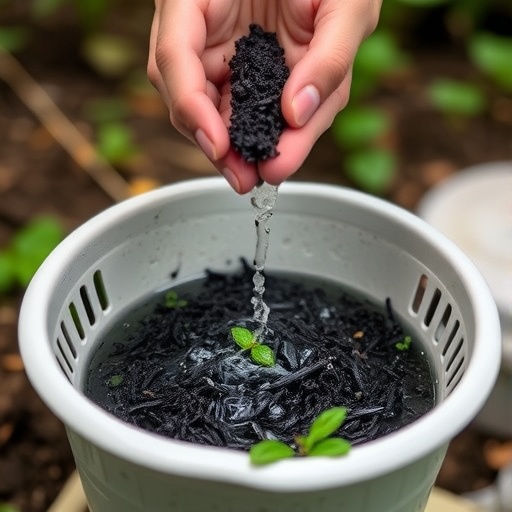
In a groundbreaking review published in the journal Biochar, scientists have unveiled a promising strategy to address two pressing global challenges: the disposal of vast amounts of herbal residues from the booming traditional Chinese medicine (TCM) industry and the urgent need for effective removal of toxic pollutants from water and soil. The study emphasizes the conversion of medicinal herb waste into engineered biochar materials that exhibit exceptional capabilities in adsorbing hazardous contaminants, potentially revolutionizing waste management and environmental remediation efforts.
The rapid expansion of the TCM sector has generated an unprecedented volume of leftover herbal biomass. Historically, these residues have been treated as waste—disposed of via landfilling, incineration, or mere accumulation—thereby causing environmental degradation and squandering a valuable resource. Simultaneously, environmental pollution with heavy metals such as lead and chromium, along with persistent organic pollutants like antibiotics, dyes, and pesticides, poses severe risks to ecosystems and human health worldwide. This dual pressure underscores the critical importance of innovative, sustainable solutions that leverage circular economy principles.
At the heart of this innovative approach lies biochar, a carbon-rich substance produced by pyrolyzing biomass under oxygen-limited conditions. Unlike conventional biochars derived from agricultural or forestry waste, TCM herb residues are intrinsically rich in complex organic constituents, including cellulose, hemicellulose, lignin, and a suite of bioactive compounds. When pyrolyzed at controlled temperatures, these components contribute to the formation of highly porous structures with abundant surface functional groups, endowing the resulting biochar with superior adsorptive properties that selectively trap diverse pollutants.
The review meticulously catalogs the mechanisms underpinning pollutant capture by herb-residue biochar. For heavy metals, adsorption occurs primarily through surface complexation, where metal ions bind to functional oxygen-containing groups on the biochar surface. Ion exchange processes further facilitate replacement of biochar-bound ions with contaminant metals. Intriguingly, redox reactions can reduce toxic high-valence metal species into inert or less soluble forms, immobilizing them within the biochar matrix. Conversely, organic pollutants are sequestered via electrostatic attraction, hydrogen bonding, pore-filling within the biochar’s porous network, and π-π interactions arising from the aromatic structures present in the biochar.
Empirical data compiled within the review highlight the remarkable adsorption capacities achievable. In optimized laboratory settings, TCM herb-derived biochars have adsorbed lead ions at concentrations nearing 600 milligrams per gram of biochar. Even more impressively, tetracycline—an antibiotic notorious for environmental persistence—has been adsorbed at levels surpassing 900 milligrams per gram. These figures not only match but frequently exceed the performance of traditional activated carbons and commercial adsorbents, underscoring the potential of TCM waste as a premium raw material.
The review also explores advanced biochar engineering techniques developed to amplify pollutant removal efficacy and operational practicality. Among these, incorporation of magnetic iron oxides into the biochar matrix stands out, enabling facile magnetic retrieval of the adsorbent post-treatment, which addresses challenges associated with secondary pollution and material recovery. Additionally, doping biochar with nitrogen and other heteroatoms introduces catalytic sites capable of activating oxidants, thereby transforming biochar beyond a passive adsorbent into an active catalyst that degrades contaminants through advanced oxidation processes involving reactive oxygen species, thus breaking down recalcitrant molecules into benign end-products.
Notwithstanding the promising laboratory performance, the authors caution that significant hurdles remain before large-scale field application can become routine. Real-world wastewater typically contains complex mixtures of contaminants, variable pH, and competing ions, all of which can modulate biochar adsorption efficacy. Moreover, ensuring the long-term environmental stability of modified biochars, preventing leaching of adsorbed pollutants or engineered components, and thoroughly assessing ecotoxicological impacts are essential steps to guarantee safety and reliability in practical use.
The review emphasizes the necessity of holistic life cycle assessments incorporating carbon footprint analysis, economic feasibility, and potential environmental trade-offs. Such interdisciplinary frameworks will be crucial to integrating TCM biochar technologies within existing waste management infrastructures and regulatory environments. The promising synergy between pollution mitigation and carbon sequestration provided by biochar aligns well with global sustainability goals and the circular economy paradigm, wherein waste streams are valorized into valuable materials with extended lifecycle utility.
Beyond environmental remediation, the study hints at broader implications for biochar sourced from TCM residues, potentially fostering new industrial sectors dedicated to the valorization of traditional medicine byproducts. This innovation offers a vision wherein herb wastes—once discarded as burdens—are reframed as strategic assets addressing water and soil contamination challenges. This shift from linear disposal models to closed-loop resource recovery exemplifies transformative potential at the interface of traditional herbal industries and modern material science.
In sum, the review lays a comprehensive foundation for future research and development efforts. It invites collaboration across disciplines, including chemistry, environmental engineering, materials science, toxicology, and policy-making, to mature this nascent technology. As the global community intensifies its search for low-cost, renewable, and effective environmental solutions, the biochar derived from traditional medicine residues emerges as a versatile and powerful tool with both ecological and economic benefits.
The study ultimately redefines the narrative of herbal residue—from problematic waste to multifunctional environmental material. With continued innovation and strategic implementation, this approach could reshape pollution remediation landscapes globally and advance sustainable management of natural and industrial resources alike.
News Publication Date:
27-Feb-2026
Web References:
DOI: 10.48130/bchax-0026-0006
References:
Tan Y, Liu Y, Chu T, Wang C, Gu Y, et al. 2026. From waste to resource: TCM herb residue-derived biochar as a multifunctional material for environmental remediation. Biochar X 2: e010 doi: 10.48130/bchax-0026-0006
Cite Scienmag News
Ophelia Keating. (March 4, 2026). Transforming Herbal Waste into Advanced Biochar for High-Performance Water Purification. Scienmag. https://scienmag.com/transforming-herbal-waste-into-advanced-biochar-for-high-performance-water-purification/
Ophelia Keating. "Transforming Herbal Waste into Advanced Biochar for High-Performance Water Purification." Scienmag, 4 March 2026, https://scienmag.com/transforming-herbal-waste-into-advanced-biochar-for-high-performance-water-purification/. Accessed 4 September 2026.
Ophelia Keating. "Transforming Herbal Waste into Advanced Biochar for High-Performance Water Purification." Scienmag. March 4, 2026. https://scienmag.com/transforming-herbal-waste-into-advanced-biochar-for-high-performance-water-purification/


