


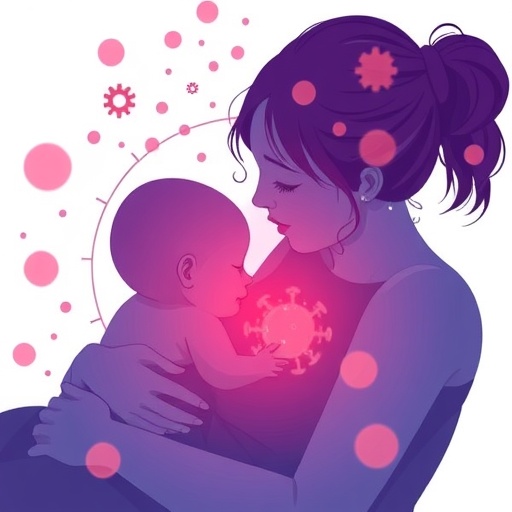
In a groundbreaking study published in Translational Psychiatry, researchers Santoni, Mastio, Concas, and colleagues have unveiled critical insights into how maternal immune activation (MIA) using high molecular weight polyinosinic:polycytidylic acid [poly(I:C)] can selectively induce depressive-like behaviors in adult offspring. This cutting-edge research sheds new light on the intricate interplay between prenatal environmental factors and the long-term neuropsychiatric outcomes in progeny, potentially revolutionizing our understanding of depression’s etiology.
Maternal immune activation, a phenomenon characterized by the activation of the maternal immune system during pregnancy, has emerged as a pivotal factor influencing neurodevelopmental trajectories in offspring. Previous studies have established links between MIA and disorders such as autism spectrum disorder and schizophrenia, yet the specific pathways leading to depression have remained elusive. By employing high molecular weight poly(I:C), a synthetic analog mimicking viral double-stranded RNA, the research team has simulated prenatal viral infections with remarkable specificity, allowing detailed exploration of downstream neuroimmune consequences.
The study meticulously demonstrated that administration of high molecular weight poly(I:C) during critical gestational periods initiates a cascade of maternal immune responses, prominently involving pro-inflammatory cytokines like interleukin-6 and tumor necrosis factor-alpha. These cytokines cross the placental barrier, signaling to the developing fetal brain and altering its microenvironment. These inflammatory mediators disrupt critical neurodevelopmental processes such as synaptogenesis, neurogenesis, and neuronal migration, effectively rewiring neural circuits implicated in mood regulation.
Utilizing robust murine models, the research team conducted comprehensive behavioral assays on adult offspring exposed prenatally to maternal poly(I:C) administration. Remarkably, these offspring exhibited a selective depressive-like phenotype, characterized by anhedonia, decreased motivation, and passive coping behaviors without concomitant anxiety or psychosis-related symptoms. This specificity underscores the nuanced effects of MIA depending on the nature, timing, and intensity of the immune challenge.
Neurobiological analyses provided profound insights, revealing that the induced depressive-like phenotype correlated with enduring changes in the hippocampus and prefrontal cortex, brain regions integral to emotional regulation and cognitive function. Electrophysiological studies noted altered synaptic plasticity, while molecular assays uncovered dysregulation of brain-derived neurotrophic factor (BDNF) and glutamate receptor expression. These alterations contribute to impaired neuronal resilience and connectivity, fundamental hallmarks of depression.
Importantly, the study highlighted that only high molecular weight poly(I:C) produced these specific depressive phenotypes, whereas lower molecular weight variants failed to induce such effects. This distinction emphasizes the critical role of the molecular structure and potency of the immune stimulant in shaping neurodevelopmental and behavioral outcomes. The findings suggest that the severity and duration of prenatal immune activation are crucial determinants for the offspring’s susceptibility to depression.
The implications of these findings extend far beyond preclinical models. They point to a plausible etiological link between maternal viral infections during pregnancy and the increased risk of depression in adult humans, potentially accounting for epidemiological observations that connect prenatal infections to mood disorders. This work advocates for heightened surveillance and preventive strategies in pregnant individuals to mitigate immune challenges that might predispose their children to psychiatric illnesses later in life.
Mechanistically, this research enriches the burgeoning field of neuroimmunology by delineating the molecular mediators that bridge maternal inflammation and fetal brain remodeling. The identification of critical cytokines and neurotrophic factors involved in depressive phenotypes presents promising therapeutic targets. Future interventions may focus on modulating the maternal immune response or bolstering fetal neuroprotection to prevent depression’s onset.
Moreover, the selective nature of the depressive-like effects observed encourages a personalized medicine approach to psychiatric disorders. Understanding that distinct maternal immune stimuli lead to discrete neuropsychiatric outcomes underlines the necessity for precision diagnostics and tailored therapeutic regimens in managing developmental psychiatric conditions. This could transform clinical paradigms by integrating perinatal immunological history into psychiatric risk assessments.
The study also raises provocative questions about the timing and dosage of immune activation during gestation. It suggests a critical window where immune perturbations exert maximal influence on the fetal brain, marking a period for potential intervention. Longitudinal studies tracing immune markers and brain developmental milestones in humans could validate these preclinical insights and pave the way for novel preventive measures.
Furthermore, dissecting the cellular and molecular crosstalk between maternal immune signaling and fetal brain development reveals myeloid cell activation, microglial priming, and astrocyte dysfunction as converging pathways. These glial cells play instrumental roles in synaptic pruning and neuroinflammation, which are implicated in depression pathophysiology. Targeting glial modulation during pregnancy might emerge as a future frontier in preventing affective disorders.
In light of the COVID-19 pandemic and increasing recognition of viral infections’ impact on maternal-fetal health, this study offers timely relevance. It underscores the necessity of understanding how prenatal immune challenges from diverse pathogens affect offspring’s mental health. This awareness could influence public health policies regarding infection control and maternal vaccination programs during pregnancy.
Further explorations prompted by this study might include investigating genetic susceptibilities that modulate the effects of MIA, as well as postnatal environmental factors that might exacerbate or mitigate depressive phenotypes. Identifying epigenetic modifications induced by prenatal inflammation could also illuminate how transient maternal immune responses produce enduring behavioral changes.
Altogether, Santoni and colleagues’ research delivers a compelling narrative that maternal immune environment is a determinative factor in shaping offspring mental health, particularly in governing vulnerability to depression. By precisely unraveling how high molecular weight poly(I:C)-induced maternal immune activation sculpts neural pathways related to mood, this work elevates the discourse on prenatal origins of psychiatric disease and offers promising avenues for early intervention.
As the scientific community strives to decode the complex etiology of depression, the recognition of maternal immune activation as a key determinant stands to catalyze transformative research and therapeutic innovation. This study not only enriches our understanding of developmental neuropsychiatric mechanisms but also emphasizes the profound implications maternal health holds for future generations’ psychological well-being.
Cite Scienmag News
Glenn Wilkins. (March 4, 2026). Maternal Immune Activation Triggers Adult Depressive Behavior. Scienmag. https://scienmag.com/maternal-immune-activation-triggers-adult-depressive-behavior/
Glenn Wilkins. "Maternal Immune Activation Triggers Adult Depressive Behavior." Scienmag, 4 March 2026, https://scienmag.com/maternal-immune-activation-triggers-adult-depressive-behavior/. Accessed 4 September 2026.
Glenn Wilkins. "Maternal Immune Activation Triggers Adult Depressive Behavior." Scienmag. March 4, 2026. https://scienmag.com/maternal-immune-activation-triggers-adult-depressive-behavior/


