


In the relentless pursuit of more effective cancer therapies, researchers have long grappled with the formidable challenge of delivering anticancer drugs precisely to their intracellular targets. Central to this conundrum is the cell nucleus, a pivotal site where many chemotherapeutic agents must arrive to execute their cytotoxic actions. Despite advancements in drug design, intracellular delivery remains hindered by multiple biological barriers that limit the ability of these agents to reach the nucleus, thereby compromising therapeutic outcomes.
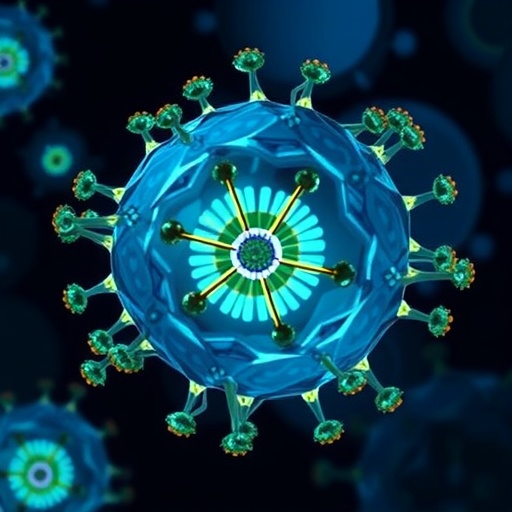
Addressing this critical obstacle, a pioneering team of scientists has engineered an innovative light-responsive supramolecular nanoassembly designed for on-demand, highly controlled drug delivery within tumor cells. This breakthrough technology synergistically combines the advantages of phototherapy and chemotherapy by integrating a polymeric prodrug form of camptothecin—a potent anticancer alkaloid—with an amphiphilic photosensitizer molecule. The resulting nanoassembly exhibits exceptional stability under physiological conditions, ensuring systemic safety and reducing premature drug release.
Upon exposure to near-infrared (NIR) light, the nanoassembly undergoes activation, triggering a cascade of intracellular events. The photosensitizer generates reactive oxygen species (ROS), potent bioactive molecules capable of disrupting cellular membranes. This ROS generation facilitates the escape of the nanoassembly from endosomal and lysosomal compartments—common intracellular vesicles that otherwise sequester and degrade therapeutic agents. Consequently, the drug is released in a spatially and temporally controlled manner into the cytosol, enhancing bioavailability.
Notably, ROS-mediated modifications also transiently increase the permeability of the nuclear envelope. This subtle yet strategic disruption accelerates the translocation of camptothecin-derived drugs into the nucleus. Such targeted nuclear delivery is critical, given camptothecin’s mechanism of action as a topoisomerase I inhibitor, where interference with DNA replication induces cancer cell apoptosis. By improving nuclear accumulation, the nanoassembly amplifies the compound’s cytotoxic efficacy while minimizing off-target effects.
The self-accelerating nature of the system is central to its therapeutic advantage. As light triggers drug release and concurrently facilitates nuclear entry, photodynamic therapy couples synergistically with chemotherapy, resulting in a pronounced anticancer response. Experimental models of triple-negative breast cancer—a notoriously aggressive and treatment-resistant subtype—demonstrate profound tumor growth inhibition. Remarkably, this enhanced efficacy does not come at the cost of systemic toxicity, underscoring the nanoassembly’s precision and biocompatibility.
This research signifies a paradigm shift in the strategic design of nanomedicine platforms. By harnessing external stimuli such as NIR light, which penetrates tissue with minimal damage, the mode of delivery achieves spatiotemporal precision otherwise unattainable with conventional chemotherapeutics. This controlled activation mechanism allows physicians to tailor treatment regimens dynamically, potentially improving patient outcomes and reducing side effects.
Beyond its immediate clinical implications, the study contributes valuable mechanistic insights into intracellular trafficking and drug delivery dynamics. It elucidates how supramolecular assemblies can overcome cellular barriers, such as endosomal entrapment and nuclear membrane impermeability, which have historically limited drug efficacy. These insights pave the way for next-generation nanoassemblies customized for diverse therapeutic agents and disease contexts.
Furthermore, the advanced polymeric prodrug approach serves dual functions: stabilizing the drug during circulation and enabling controlled release upon activation. This contrasts with standard formulations where drugs often degrade or induce systemic toxicity before reaching diseased cells. The amphiphilic photosensitizer’s role in ROS generation integrates seamlessly with the polymeric design, exemplifying elegant molecular engineering.
The translational potential of this technology is underscored by comprehensive in vivo studies demonstrating not only tumor suppression but also prevention of metastasis, a critical factor in cancer lethality. The ability to inhibit tumor spread represents a substantial advance, affirming the therapeutic strategy’s robustness and multifaceted impact.
Looking forward, the framework established by this research invites further exploration into combinatorial therapies that exploit multiple activation triggers or incorporate immunomodulatory components. The modular nature of the supramolecular nanoassembly allows for customization that could address tumor heterogeneity and resistance mechanisms more effectively.
In summary, this cutting-edge platform heralds a new era in cancer nanomedicine. The precise, controllable delivery of chemotherapeutics empowered by NIR light activation innovatively bridges the gap between molecular targeting and clinical practicality. Through sophisticated molecular design and mechanistic finesse, the approach maximizes therapeutic efficacy while minimizing systemic harm, holding promise for transforming standard-of-care in oncology.
The study exemplifies the critical intersection of chemistry, materials science, and medicine, illustrating how interdisciplinary approaches drive impactful biomedical innovation. As the landscape of cancer therapy continues to evolve, light-responsive supramolecular assemblies stand out as a versatile and powerful tool poised to improve patient survival and quality of life significantly.
News Publication Date: Information not specified.
Web References: http://dx.doi.org/10.1016/j.scib.2026.01.002
Cite Scienmag News
Nathaniel Bowman. (March 3, 2026). Light-Activated Nanoassembly Surmounts Intracellular Barriers to Precisely Deliver Anticancer Drugs into the Cell Nucleus. Scienmag. https://scienmag.com/light-activated-nanoassembly-surmounts-intracellular-barriers-to-precisely-deliver-anticancer-drugs-into-the-cell-nucleus/
Nathaniel Bowman. "Light-Activated Nanoassembly Surmounts Intracellular Barriers to Precisely Deliver Anticancer Drugs into the Cell Nucleus." Scienmag, 3 March 2026, https://scienmag.com/light-activated-nanoassembly-surmounts-intracellular-barriers-to-precisely-deliver-anticancer-drugs-into-the-cell-nucleus/. Accessed 3 September 2026.
Nathaniel Bowman. "Light-Activated Nanoassembly Surmounts Intracellular Barriers to Precisely Deliver Anticancer Drugs into the Cell Nucleus." Scienmag. March 3, 2026. https://scienmag.com/light-activated-nanoassembly-surmounts-intracellular-barriers-to-precisely-deliver-anticancer-drugs-into-the-cell-nucleus/


