


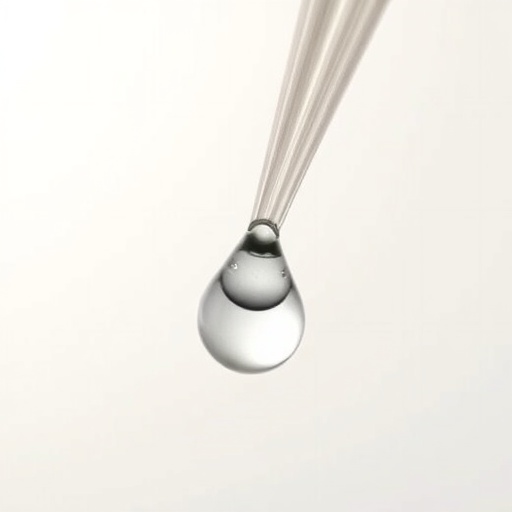
In a groundbreaking advancement poised to revolutionize the field of biomedical sensing, researchers at Jilin University have engineered a highly miniaturized optical fiber probe capable of detecting the electrical conductivity of biological fluids in volumes as minuscule as 50 nanoliters. This innovation marks a significant stride toward enabling real-time monitoring of vital physiological indicators within extremely limited fluid samples, a challenge that has long stymied engineers striving to translate chemical signals from trace amounts of fluids such as tears, cerebrospinal fluid, and prostate secretions into actionable medical data.
Traditionally, electrical conductivity measurements rely on electrodes immersed in fluids to gauge ion concentrations, yet these metal-based sensors are inherently limited by their physical size, sensitivity to fouling, and signal instability over time. Such limitations are particularly pronounced when attempting to analyze extremely small fluid volumes available in many clinical scenarios. The Jilin team’s novel solution circumvents these bottlenecks by harnessing the power of light and advanced microfabrication technologies, transforming conductivity detection from an electrical domain into an optical one.
Central to this new device is a microscopic Fabry-Perot (F-P) cavity meticulously constructed at the tip of a standard optical fiber through an advanced laser-based 3D printing technique called two-photon polymerization. This method enables submicron precision fabrication, producing a nanostructured cavity that acts as a resonant optical sensor, exquisitely sensitive to the refractive index of the fluid surrounding it. Since the refractive index closely correlates with ion concentration — and thus electrical conductivity — slight fluctuations in ion levels induce detectable shifts in the wavelength of light reflected by the cavity, providing a robust optical signal directly tied to conductivity.
To facilitate fluid delivery into this sensing zone, the researchers ingeniously incorporated a microcapillary channel alongside a thin filter membrane at the probe tip. The microcapillary leverages capillary forces to spontaneously draw fluids as small as 50 nanoliters into the sensor region without mechanical assistance. Meanwhile, the filtering membrane sieves out larger biological molecules such as proteins and cells, ensuring that the optical response specifically reflects the ionic content rather than confounding biological debris. This dual mechanism guarantees precise, repeatable measurements even in the challenging milieu of complex bodily fluids.
Laboratory validation of the probe demonstrated remarkable stability and sensitivity when exposed to tiny sample volumes, a range unattainable by conventional sensors. The design’s reliance on optical phenomena sidesteps common pitfalls of electrode-based devices, including polarization effects, electrochemical degradation, and signal drift, thereby enabling reliable and continuous monitoring over time. Furthermore, the probe’s diameter is comparable to that of a human hair, making it eminently suitable for minimally invasive applications where space constraints and patient comfort are paramount.
The optical fiber probe’s ability to maintain high-fidelity conductivity measurements despite variations in temperature and pH is particularly noteworthy. Biological environments present relentless challenges due to fluctuating conditions that often distort sensor readings; the robustness of this optical approach therefore signifies a meaningful leap forward for in vivo diagnostic instrumentation. This resilience to environmental interferences opens pathways for diverse clinical contexts, including tracking electrolyte imbalances, hydration status, inflammatory responses, and potentially even early signs of disease through conductivity signatures alone.
Perhaps the most exciting aspect of this research lies in its modularity and adaptability. By altering the materials or the nanostructural configurations at the fiber tip, similar sensor platforms could be tailored to detect a broad spectrum of biochemical and biophysical parameters. This versatility could expand the probe’s applicability beyond conductivity to include measurements of temperature, pH, or specific biomolecule concentrations, positioning it as a multifunctional tool for next-generation personalized medicine.
The implications for patient care are profound. Real-time conductivity monitoring from infinitesimal fluid volumes promises earlier and more dynamic insights into physiological changes, thereby guiding timely therapeutic interventions. The probe’s slender architecture is well-suited to navigating constricted anatomical passages — such as the cerebrospinal fluid channels or the gastrointestinal tract — facilitating direct sampling from hard-to-access bodily compartments without the need for large, invasive instruments.
This cutting-edge marriage of precision microfabrication and biomedical sensing exemplifies how techniques first cultivated in photonics and materials science can seed innovations with far-reaching health impacts. As wearable and implantable diagnostic devices evolve toward less intrusive, continuously monitoring formats, tools like this laser-printed fiber probe could redefine how clinicians and researchers capture and interpret chemical information at the microscale.
While in vivo testing remains a future milestone, the current findings establish a promising foundation for integrating nanoliter-scale fluid monitoring directly within living systems. Such a capability holds tremendous potential for enabling continuous physiological surveillance, enhancing diagnostic accuracy, and ultimately improving patient outcomes in a wide array of medical contexts.
This pioneering work represents a leap toward sensors that merge exceptional miniaturization with robust, real-time functionality. It underscores a paradigm shift in which the smallest drops of human fluid, once inaccessible to routine analysis, become vital windows into our body’s health, monitored seamlessly and with unprecedented precision.
Keywords
Nanoliter detection, biological fluids, optical fiber sensor, Fabry-Perot cavity, two-photon polymerization, electrical conductivity, microcapillary, filter membrane, biomedical sensing, miniaturized sensors, refractive index sensing, real-time monitoring
Cite Scienmag News
Denise Maddox. (March 2, 2026). Hair-Thin Fiber Detects Chemistry of a Single Drop of Body Fluid. Scienmag. https://scienmag.com/hair-thin-fiber-detects-chemistry-of-a-single-drop-of-body-fluid/
Denise Maddox. "Hair-Thin Fiber Detects Chemistry of a Single Drop of Body Fluid." Scienmag, 2 March 2026, https://scienmag.com/hair-thin-fiber-detects-chemistry-of-a-single-drop-of-body-fluid/. Accessed 5 September 2026.
Denise Maddox. "Hair-Thin Fiber Detects Chemistry of a Single Drop of Body Fluid." Scienmag. March 2, 2026. https://scienmag.com/hair-thin-fiber-detects-chemistry-of-a-single-drop-of-body-fluid/


