


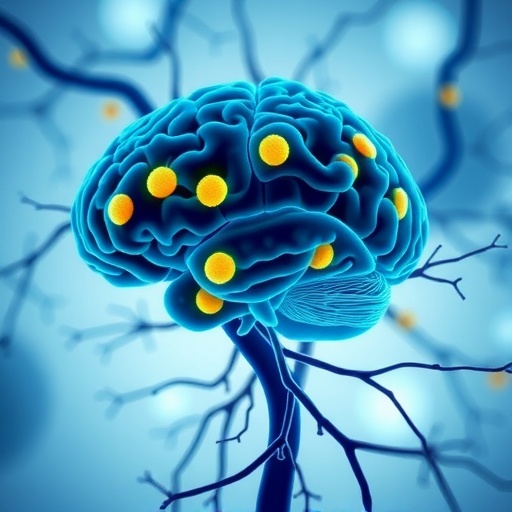
In a groundbreaking advancement poised to redefine treatment approaches for the notoriously difficult brain metastases originating from lung cancer, scientists at Wake Forest University School of Medicine have engineered a protein-targeted immunotherapy that penetrates the brain’s defense mechanisms with unprecedented precision. These novel immune cells, termed CAR macrophages or CARMA, represent a transformative leap forward, potentially overcoming the persistent challenges posed by the blood-brain barrier and the limited efficacy of current therapeutic regimens.
Brain metastases constitute one of the deadliest complications for lung cancer patients, occurring in approximately one-third of diagnosed cases. Historically, the inaccessibility of therapeutic agents across the blood-brain barrier has severely constrained effective intervention options. Traditional methods such as surgical resection and radiotherapy offer limited survival benefits and often fail to address microscopic tumor spread or multiple metastatic sites within the brain. The complex interplay of brain immunology and tumor biology has posed a significant obstacle to the development of systemic therapies that can effectively target these lesions.
Recognizing the innate ability of macrophages to traverse the blood-brain barrier, the research team ingeniously reprogrammed these versatile immune cells by endowing them with chimeric antigen receptors (CAR) specific to mesothelin, a glycoprotein highly expressed on lung cancer cells metastasized to the brain. This targeted approach empowers macrophages to identify and seek out malignant cells selectively, thus enhancing the immune surveillance capacity within an otherwise immunoprivileged environment.
Further augmenting their cytotoxic potential, the scientists incorporated a signaling domain known as MyD88 into the CAR construct. MyD88 serves as a pivotal adaptor molecule within innate immune signaling cascades, amplifying macrophage activation and promoting robust phagocytic and pro-inflammatory responses. This enhancement transforms CARMA into an aggressive, multifaceted effector cell capable not only of direct tumor cell eradication but also of orchestrating an amplified immune milieu within the tumor microenvironment.
Preclinical evaluations employing sophisticated in vitro and in vivo models that replicate lung cancer brain metastases demonstrated the remarkable efficacy of these engineered macrophages. The CARMA cells exhibited proficient translocation across the blood-brain barrier and preferential homing to intracranial tumor sites. Upon arrival, they engaged tumor cells via mesothelin recognition, effectuating robust phagocytosis and triggering localized inflammatory responses crucial for sustained antitumor activity.
Particularly noteworthy was the superior performance of the MyD88-enhanced CARMA variant, which showed enhanced cytolytic function and durable tumor suppression compared to non-modified counterparts. These cells secreted elevated levels of tumor necrosis factor-alpha (TNF-α) and other cytokines, mediating a bystander killing effect even against tumor cells lacking direct antigen expression. This feature may address common challenges related to tumor heterogeneity and antigen escape mechanisms.
Longitudinal monitoring of treated animal models revealed substantial attenuation of tumor progression within the brain parenchyma, accompanied by significant extensions in survival outcomes. Such findings underscore the potential of CAR macrophages to alter disease trajectories in a condition that traditionally portends dismal prognoses. Importantly, comparative analyses highlighted a markedly lower toxicity profile in CARMA-treated subjects relative to conventional CAR-T cell therapies, suggesting a favorable therapeutic window and reduced risk of immune-mediated adverse events.
Beyond inherent cytotoxicity, CARMA cells reshaped the immune landscape by activating and recruiting endogenous immune effectors, including resident microglia and peripheral lymphocytes. This immunomodulatory capacity fosters a sustained and concerted antitumor immune response rarely achieved by current monotherapies. The ability to modify the tumor microenvironment within the brain, a sanctuary site typically resistant to immunotherapy, represents a pivotal breakthrough with broad translational implications.
The strategic engineering of CAR macrophages capitalizes on the unique migratory and phagocytic properties of these innate immune cells while integrating state-of-the-art synthetic biology techniques to target tumor-specific antigens. This innovative fusion signifies a paradigm shift, moving away from relying solely on cytotoxic lymphocytes toward a more diverse and potentially more effective cellular immunotherapy landscape.
As lung cancer remains a leading cause of cancer-related mortality worldwide, and with brain metastases frequently dictating clinical outcomes, this technology heralds a new frontier. Researchers are now committed to refining CARMA constructs and advancing toward early-phase clinical trials, aiming to establish safety, dosing parameters, and efficacy benchmarks in human patients. This forward momentum aligns with an urgent unmet need to improve survival and quality of life for individuals afflicted with metastatic brain tumors.
The promising data elucidated in this study, recently published in Nature Biomedical Engineering, offer a glimpse into future therapeutic modalities synergizing immune engineering, oncology, and neurology. If successfully translated to clinical practice, CAR macrophages could dismantle the formidable barriers posed by brain metastases and inaugurate durable, targeted cancer control within this critical organ.
By harnessing the intrinsic properties of macrophages while augmenting them with precision genetic modifications, Wake Forest researchers have laid the foundation for a revolutionary treatment avenue. The implications extend beyond lung cancer, potentially influencing therapeutic strategies across a spectrum of malignancies characterized by brain involvement and limited treatment options.
As the scientific community follows the development and clinical translation of CAR macrophages, there is cautious yet optimistic anticipation. The confluence of bioengineering innovation and immunological insight reflected in this work exemplifies the next wave of personalized medicine — where cellular therapies are custom-tailored to overcome the unique biological hurdles presented by each tumor type and anatomical site.
In summary, this pioneering research is not just a step forward but a potential leap toward solving one of oncology’s most intractable problems. It represents a testament to the power of interdisciplinary collaboration, innovation, and the relentless pursuit of more effective, safer cancer treatments that can profoundly impact patients’ lives.
News Publication Date: March 2, 2026
Web References:
- Wake Forest University School of Medicine: https://school.wakehealth.edu/
- Original Article DOI: http://dx.doi.org/10.1038/s41551-026-01613-x
References:
- Published study in Nature Biomedical Engineering, March 2, 2026
Cite Scienmag News
Cassandra Pierce. (March 2, 2026). Engineered Immune Cells Demonstrate Potential in Combating Brain Metastases: Insights from Preclinical Research. Scienmag. https://scienmag.com/engineered-immune-cells-demonstrate-potential-in-combating-brain-metastases-insights-from-preclinical-research/
Cassandra Pierce. "Engineered Immune Cells Demonstrate Potential in Combating Brain Metastases: Insights from Preclinical Research." Scienmag, 2 March 2026, https://scienmag.com/engineered-immune-cells-demonstrate-potential-in-combating-brain-metastases-insights-from-preclinical-research/. Accessed 6 September 2026.
Cassandra Pierce. "Engineered Immune Cells Demonstrate Potential in Combating Brain Metastases: Insights from Preclinical Research." Scienmag. March 2, 2026. https://scienmag.com/engineered-immune-cells-demonstrate-potential-in-combating-brain-metastases-insights-from-preclinical-research/


