


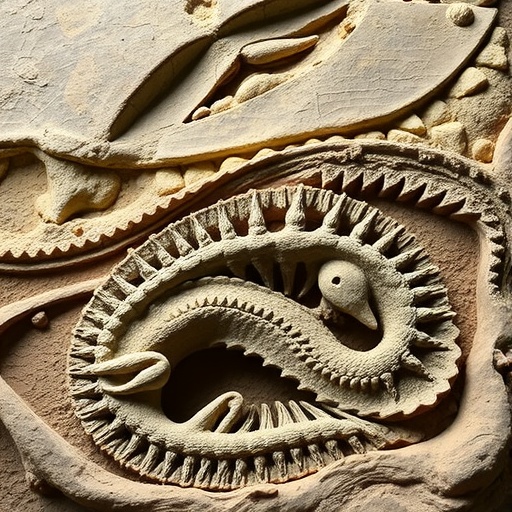
A groundbreaking discovery from Argentina is radically reshaping the evolutionary narrative of alvarezsauroids, a peculiar group of small-bodied theropod dinosaurs previously thought to be predominantly Cretaceous denizens of Asia and South America. Long enigmatic due to their scarce and fragmentary fossil record, these diminutive predators have offered tantalizing glimpses into unique adaptations, including specialized forelimbs for digging and evidence of sensory specializations suggestive of an insectivorous lifestyle. The new findings, detailed in a recent study published in Nature, cast fresh light on their origins, biogeography, and body size evolution, contradicting longstanding hypotheses and inviting a comprehensive reevaluation of this dinosaur clade’s evolutionary trajectory.
Alvarezsauroids first piqued scientific curiosity decades ago, with fossils primarily unearthed from Jurassic and Cretaceous deposits in Asia and South America, regions once connected via prehistoric landmasses. Historically, South American alvarezsauroids have been viewed as a paraphyletic assemblage—a grade of species that do not include all descendants of their most recent common ancestor—serving as precursors to the more derived, specialized Asian subclade known as Parvicursorinae. This distribution pattern spurred hypotheses invoking complex dispersal events to explain their biogeographical incongruities. However, the discovery of a remarkably complete skeleton of Alnashetri cerropoliciensis in Argentina challenges this conventional framework. This specimen is currently the most complete and smallest alvarezsauroid identified from South America, allowing unprecedented comparative analysis.
The significance of Alnashetri extends beyond its completeness. Phylogenetic analysis situates this taxon amongst basal non-alvarezsaurid members, disrupting the notion of South American alvarezsauroids as a monolithic, paraphyletic grade leading directly to Asian relatives. Instead, the research reveals a polyphyletic grouping within South American taxa, indicating multiple evolutionary lineages rather than a single ancestral radiation. This paradigm shift demands a reevaluation of alvarezsauroid dispersal patterns, suggesting an ancestral distribution spanning the supercontinent Pangaea before continental fragmentation shaped current distributions.
Such insights emerge from a comprehensive phylogenetic framework integrating newly recognized taxa within historic Northern Hemisphere records. This inclusive approach enables a more holistic biogeographical analysis, revealing vicariance as the dominant driver shaping early alvarezsauroid evolutionary history. Vicariance refers to the geographical separation of populations through physical barriers such as tectonic shifts, in this case the breakup of Pangaea, which constrained gene flow and shaped diversification patterns. Such findings underscore the pivotal role of Earth’s changing landmasses in steering dinosaur evolution and distribution during critical periods of the Mesozoic.
Beyond biogeography, the study fundamentally revisits assumptions about alvarezsauroid body size dynamics. Previous models postulated a trend towards evolutionary miniaturization coinciding with dietary specialization, particularly myrmecophagy—the consumption of ants or termites—supported by skeletal adaptations such as digging forelimbs and reduced dentition. Contradicting this narrative, the current research suggests repeated evolution within a relatively narrow body size range without clear evidence for progressive miniaturization. This reshapes our understanding of the selective pressures and morphological constraints that governed alvarezsauroid size and ecological roles over millions of years.
Critical to this reinterpretation is the early branching placement of Alnashetri among body size relatives that are larger, suggesting a more complex pattern of evolutionary experimentation with size than previously appreciated. The fossil record indicates that alvarezsauroids retained a degree of morphological conservatism regarding their body plan, which may have facilitated their specialized insectivorous behaviors over protracted evolutionary intervals. Such findings emphasize the importance of comprehensive fossil datasets in disentangling evolutionary trends that may be obscured by fragmentary evidence or biased sampling.
The specialized forelimbs characteristic of Late Cretaceous alvarezsauroids, adapted for digging, have long intrigued paleontologists. Minuteness of supernumerary teeth coupled with enhanced sensory capabilities point to a highly refined ecological niche. Morphofunctional analyses suggest these adaptations were finely tuned for myrmecophagy, involving excavation of insect nests and precise prey detection. The new fossil evidence from Argentina offers a valuable glimpse into the morphological diversity underpinning these capabilities, adding depth to evolutionary models of functional specialization in vertebrates.
Interestingly, the biogeographical history hinted at by the new fossils implies Pangaean distribution before the breakup of this ancient supercontinent resulted in vicariant speciation events. This challenges models that relied heavily on dispersal scenarios involving oceanic crossings or prolonged migration corridors. Instead, alvarezsauroids likely underwent divergence primarily due to geological separation, with lineages evolving independently on emerging continents. This pattern aligns with broader Mesozoic dinosaur biogeographic frameworks emphasizing vicariance but presents a nuanced narrative of alvarezsauroid origins and diversification.
Integration of new taxa identified within historic Northern Hemisphere fossil records reinforces this comprehensive perspective, showcasing the importance of reexamining legacy collections with modern phylogenetic methodologies and analytical techniques. The study’s interdisciplinary approach—combining detailed morphological assessments with advanced computational phylogenetics and biogeographical modeling—exemplifies the progressive fusion of paleontology and evolutionary biology that heralds new frontiers in understanding dinosaur evolution.
These revelations bear broad implications not only for alvarezsauroid paleobiology but also for evolutionary theory concerning the roles played by continental drift, ecological specialization, and morphological constraint in shaping vertebrate diversification. By rewriting the narrative of alvarezsauroid evolution, this research underscores how fossil discoveries continue to challenge established paradigms and illuminate the dynamic processes underlying the history of life on Earth.
As paleontologists deepen their exploration of South American fossil beds, especially locales yielding high-quality specimens like Alnashetri cerropoliciensis, further discoveries are anticipated to refine and possibly revise interpretations presented here. Such continued interdisciplinary research promises to elucidate unanswered questions about how ancient ecosystems functioned, how niche specialization influenced dinosaur evolutionary pathways, and how global geological processes sculpted the biotic landscapes of the past.
Ultimately, the Argentine fossil discovery is a testament to the transformative power of paleontological research at the intersection of fieldwork, cutting-edge technology, and evolutionary synthesis. It opens a vibrant chapter in understanding one of the most baffling theropod dinosaur clades, inviting scientists and enthusiasts alike to reimagine the intricate evolutionary dance of morphology, ecology, and Earth’s shifting continents that gave rise to the alvarezsauroids.
Cite Scienmag News
Gavin Prescott. (February 27, 2026). Argentine Fossil Redefines Dinosaur Evolution History. Scienmag. https://scienmag.com/argentine-fossil-redefines-dinosaur-evolution-history/
Gavin Prescott. "Argentine Fossil Redefines Dinosaur Evolution History." Scienmag, 27 February 2026, https://scienmag.com/argentine-fossil-redefines-dinosaur-evolution-history/. Accessed 2 September 2026.
Gavin Prescott. "Argentine Fossil Redefines Dinosaur Evolution History." Scienmag. February 27, 2026. https://scienmag.com/argentine-fossil-redefines-dinosaur-evolution-history/


