


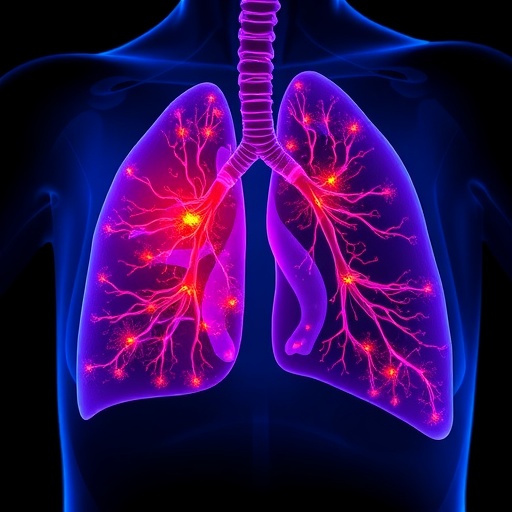
In a groundbreaking new study, researchers have unveiled a pivotal mechanism by which adenoid cystic carcinoma, a rare and aggressive form of cancer, spreads to the lungs. This discovery shines a new light on the molecular crosstalk driving metastasis and opens avenues for targeted therapeutic interventions. At the heart of this process lies a protein called S100A9, which is packaged within cancer cell-derived exosomes and acts to orchestrate a metastatic niche, ensuring cancer cells find a hospitable environment far from their origin.
Adenoid cystic carcinoma (ACC) poses a significant clinical challenge due to its proclivity for distant metastases, particularly to the lungs. Until now, the precise pathways through which ACC cells metastasize and thrive in secondary sites have remained elusive. The team, led by Chen, Cw., Zhang, Sr., Yan, Ym., and collaborators, embarked on a comprehensive investigation to delineate how tumor-derived exosomal components influence the lung microenvironment to favor metastatic colonization.
Exosomes are nano-sized vesicles secreted by cells, functioning as intercellular messengers carrying various bioactive molecules including proteins, lipids, and RNAs. In cancer, exosomes can modify the distant tissue microenvironment, a concept known as pre-metastatic niche formation, effectively preparing ‘soil’ for disseminated tumor ‘seeds’. Focusing on ACC, the researchers identified S100A9 as a highly expressed protein in tumor-derived exosomes. This finding was significant because S100A9 has been implicated in inflammation and tumor progression in other cancers but had not been linked to ACC metastasis previously.
The researchers meticulously isolated exosomes from ACC cell lines and patient plasma, confirming elevated exosomal S100A9 levels compared to controls. Using state-of-the-art proteomic analysis, they established S100A9 as a dominant exosomal factor involved in intercellular communication. Functional assays revealed that these S100A9-rich exosomes had a pronounced effect on the behavior of stromal cells within the lung microenvironment, particularly cancer-associated fibroblasts (CAFs).
CAFs are a major component of the tumor stroma, known to support tumor growth, invasion, and immune evasion. The team demonstrated that exosomal S100A9 activates CAFs, inducing their transformation into a pro-metastatic phenotype. These activated fibroblasts, in turn, secrete extracellular matrix components and growth factors that create a nurturing scaffold, facilitating tumor cell survival and expansion within the lung tissue.
This interplay was shown to be critical for ACC lung metastasis using in vivo models. Mice injected with S100A9-enriched exosomes exhibited a significant increase in lung metastatic burden compared to those receiving exosomes depleted of S100A9. Importantly, pharmacologic inhibition or genetic knockdown of S100A9 abrogated the activation of CAFs and markedly suppressed metastatic colonization, highlighting its therapeutic potential.
From a molecular standpoint, the researchers identified signaling pathways downstream of S100A9 engagement with receptor complexes on fibroblasts. Activation of the NF-κB pathway was noted, which is a central regulator of inflammatory responses and fibroblast activation. This not only supports a pro-inflammatory microenvironment conducive to metastasis but also aligns with the well-established role of NF-κB in cancer progression and stromal remodeling.
The study further delved into clinical correlations, analyzing patient samples to validate the translational relevance of their findings. Elevated circulating exosomal S100A9 levels were associated with worse clinical outcomes and increased incidence of lung metastases in ACC patients. These data underscore the potential for S100A9 to serve as both a biomarker of metastatic risk and a candidate for targeted therapy.
Beyond basic science, the implications of this work are profound. Current treatment options for metastatic ACC are limited and often ineffective, with lung metastasis significantly reducing survival. Targeting exosomal S100A9 or its downstream signaling pathways could offer a novel strategy to disrupt the metastatic cascade at the interface between tumor and stroma, potentially improving patient prognosis.
Moreover, this research enriches our understanding of the tumor microenvironment as an active player in cancer biology, rather than a passive backdrop. The activation of CAFs by tumor-derived factors exemplifies the dynamic reciprocity that molds metastatic niches, emphasizing the need for therapies that address both cancer cells and their supporting stroma.
The use of cutting-edge exosome isolation techniques combined with proteomic profiling and in vivo validation provides a robust framework for further exploration. Future studies may investigate pharmacologic agents able to inhibit S100A9 secretion, block exosome uptake by fibroblasts, or disrupt downstream signaling cascades. Furthermore, the role of exosomal S100A9 in other cancer types and metastatic sites warrants examination to assess the broader applicability of these findings.
This pioneering work not only deciphers an intricate molecular dialogue but also holds promise for translational advances. Precision medicine approaches tailored to intercept exosomal communication may transform the management paradigm of ACC and metastatic cancers at large.
In conclusion, the study by Chen and colleagues marks a seminal advance in our comprehension of ACC metastasis. By spotlighting exosomal S100A9 as a principal mediator of lung colonization through CAF activation, they reveal a molecular vulnerability ripe for therapeutic exploitation. As research progresses, targeting the tumor microenvironment could decisively tilt the balance against metastatic cancer, heralding a new era of metastasis-directed cancer therapy.
Cite Scienmag News
Nathaniel Bowman. (February 27, 2026). Exosomal S100A9 Drives Lung Metastasis in Cancer. Scienmag. https://scienmag.com/exosomal-s100a9-drives-lung-metastasis-in-cancer/
Nathaniel Bowman. "Exosomal S100A9 Drives Lung Metastasis in Cancer." Scienmag, 27 February 2026, https://scienmag.com/exosomal-s100a9-drives-lung-metastasis-in-cancer/. Accessed 31 August 2026.
Nathaniel Bowman. "Exosomal S100A9 Drives Lung Metastasis in Cancer." Scienmag. February 27, 2026. https://scienmag.com/exosomal-s100a9-drives-lung-metastasis-in-cancer/


