


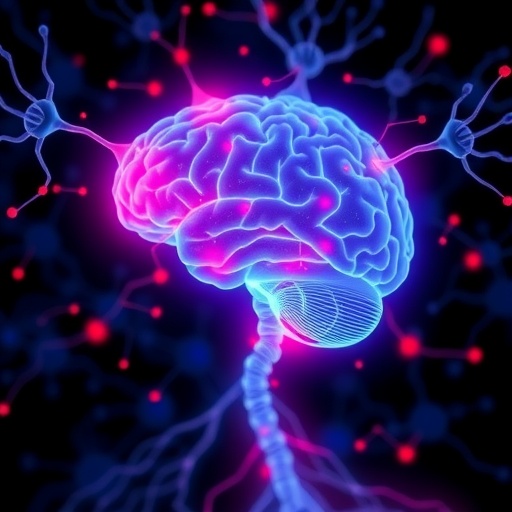
In a groundbreaking study that has rapidly captured the attention of neuroscientists and clinicians worldwide, researchers have elucidated the complex neurochemical underpinnings of impulse control disorders (ICDs) in Parkinson’s disease (PD). This remarkable investigation, led by Terenzi, Metereau, Lamberton, and colleagues, employs a sophisticated combination of positron emission tomography (PET) and functional magnetic resonance imaging (fMRI) to reveal the intricate dysfunctions in serotonergic cortico-limbic and executive networks. The findings break new ground in our understanding of the neural substrates that fuel these debilitating behavioral abnormalities, offering not only fresh insights into PD pathology but also heralding a potential paradigm shift in therapeutic strategies.
Parkinson’s disease, traditionally characterized by the progressive loss of dopaminergic neurons and resultant motor impairment, has long been recognized for its multifaceted non-motor symptoms. Among these, impulse control disorders such as pathological gambling, hypersexuality, and compulsive shopping have emerged as profoundly disruptive complications, particularly in patients receiving dopaminergic replacement therapies. The neurobiological mechanisms governing these ICDs have remained enigmatic, with previous hypotheses focusing primarily on dopaminergic dysfunction. The current study pivots the spotlight toward the serotonergic system, unveiling how its dysfunction within key brain networks orchestrates the emergence of such compulsive behaviors.
This research represents one of the first to integrate PET imaging of serotonergic receptors with resting-state fMRI connectivity analyses in patients with PD experiencing ICDs. By tracing the binding potential of serotonin receptors across various cortical and limbic areas and correlating these data with functional connectivity maps, the investigators provide compelling evidence for a serotonergic disruption that transcends isolated brain regions, implicating widespread networks implicated in both emotional regulation and executive control. This dual-approach methodology underscores the necessity of viewing ICDs through a network-based lens rather than a simplistic, region-specific perspective.
The cortico-limbic circuit, encompassing the prefrontal cortex, amygdala, hippocampus, and related medial temporal structures, has long been recognized as vital in modulating emotional responses and reward processing. The study’s PET imaging reveals that PD patients with ICDs show marked reductions in serotonergic receptor availability within these areas, suggesting a compromised serotonergic tone that could facilitate aberrant reward-seeking behaviors. Complementary fMRI analyses demonstrate altered connectivity patterns within these same regions, indicative of impaired synchronization and communication in circuits known to gate impulsive actions and emotional salience.
Intriguingly, the researchers also identify dysfunction within executive control networks, particularly in prefrontal regions implicated in inhibitory control, decision-making, and behavioral flexibility. The convergence of serotonergic abnormalities with altered functional connectivity in these executive networks suggests a failure of top-down regulatory mechanisms that normally suppress undue impulsivity. In other words, the serotonergic deficit weakens the brain’s capacity to restrain maladaptive urges, effectively ‘releasing the brake’ and allowing compulsive behaviors to surface unchecked.
The study further explores how these serotonergic perturbations correlate with clinical metrics of ICD severity, revealing a statistically significant association between receptor downregulation and the intensity of impulse control symptoms. Such correlations bolster the argument that serotonergic dysfunction is not merely a bystander but a critical driver of pathological impulsivity in PD. This granular linkage between molecular imaging biomarkers and behavioral phenotypes has profound implications for the development of diagnostic tools and personalized intervention strategies.
From a methodological standpoint, the use of simultaneous PET-fMRI is particularly noteworthy, providing a multidimensional view of both neurochemical alterations and their functional network repercussions. By leveraging the spatial precision of PET and the temporal sensitivity of fMRI, the team achieves a comprehensive portrait of serotonergic system dysfunction within the dynamic architecture of brain networks. This multimodal integrative imaging approach sets a new benchmark for future studies seeking to unravel the neurobiological fabric of complex neuropsychiatric conditions.
One of the key takeaways of this study is the dynamic interplay between dopamine and serotonin systems in modulating behavior. While dopaminergic therapies remain the cornerstone of PD treatment, the identified serotonergic deficits highlight a critical, less-explored neurotransmitter axis contributing to neuropsychiatric sequelae. This understanding opens the door to novel pharmacological avenues targeting serotonergic receptors or transporters, potentially mitigating ICD symptoms without compromising dopaminergic motor benefits.
The clinical relevance of these findings extends beyond Parkinson’s disease, given that serotonergic dysfunction and executive network abnormalities are implicated in a variety of psychiatric disorders marked by impulsivity and compulsivity. The insights gained could therefore inform a broad spectrum of neuropsychiatric research and therapeutic development, from obsessive-compulsive disorder to substance use disorders, underscoring the wide-reaching impact of this study.
Moreover, the study’s focus on cortico-limbic and executive control networks helps to elucidate the neurobiological substrate of a phenomenon that has previously been considered a mere side effect of medication or disease progression. By identifying a distinct serotonergic pathology underlying ICDs, this research challenges existing clinical paradigms and advocates for routine neurochemical and functional assessment in patients exhibiting these symptoms, fostering more informed clinical decision-making.
In addition to deepening our mechanistic understanding, the study provides a critical framework for biomarker discovery. The quantification of serotonergic receptor availability and connectivity disruptions offers promising candidate markers for early detection of ICD risk in PD. Such predictive biomarkers would be invaluable in stratifying patients for tailored treatment regimens, ideally minimizing the emergence or severity of impulse control problems.
The implications for therapeutic innovation are equally compelling. Targeting the serotonergic system could complement dopaminergic therapies or provide alternative treatment modalities for ICDs. Emerging pharmacotherapies aimed at modulating serotonin receptor subtypes, such as 5-HT1A and 5-HT2A, may be repurposed or optimized for PD patients, representing a novel class of agents that specifically address the neurochemical abnormalities delineated in this work.
Collaboration across disciplines has been pivotal in achieving the depth of insight presented in this study. By uniting expertise in molecular imaging, neuropsychiatry, neurology, and network neuroscience, the research team has crafted a holistic model of ICD pathogenesis. This integrative approach exemplifies the future of neuroscience research, wherein converging technologies and frameworks unravel the complexity of human brain disorders.
Looking forward, the authors advocate for longitudinal studies to track serotonergic network changes over the disease course and in response to therapeutic interventions. Such investigations are essential to determine causality, temporal dynamics, and reversibility of network dysfunction, ultimately guiding more effective clinical management of ICDs in PD.
In conclusion, the seminal work by Terenzi and colleagues represents a quantum leap in our understanding of impulse control disorders in Parkinson’s disease. By harnessing the power of PET-fMRI to expose serotonergic cortico-limbic and executive network dysfunction, the study furnishes a robust neurobiological account of compulsivity that holds immense promise for transforming diagnosis, treatment, and prognosis. As the field embraces this novel framework, patients burdened by ICDs may soon benefit from more precise, mechanism-driven care.
This landmark study not only resolves longstanding questions about the origins of impulse control problems in Parkinson’s but also charts an exciting path toward bridging molecular neuroscience and clinical psychiatry. It stands as a testament to the power of cutting-edge neuroimaging and collaborative science to illuminate the shadowed corridors of the brain, offering hope for improved quality of life in a disease defined by disruption and loss.
Cite Scienmag News
Cassandra Pierce. (February 27, 2026). Serotonin Network Dysfunction Links Parkinson’s Impulse Disorders. Scienmag. https://scienmag.com/serotonin-network-dysfunction-links-parkinsons-impulse-disorders/
Cassandra Pierce. "Serotonin Network Dysfunction Links Parkinson’s Impulse Disorders." Scienmag, 27 February 2026, https://scienmag.com/serotonin-network-dysfunction-links-parkinsons-impulse-disorders/. Accessed 3 September 2026.
Cassandra Pierce. "Serotonin Network Dysfunction Links Parkinson’s Impulse Disorders." Scienmag. February 27, 2026. https://scienmag.com/serotonin-network-dysfunction-links-parkinsons-impulse-disorders/


