


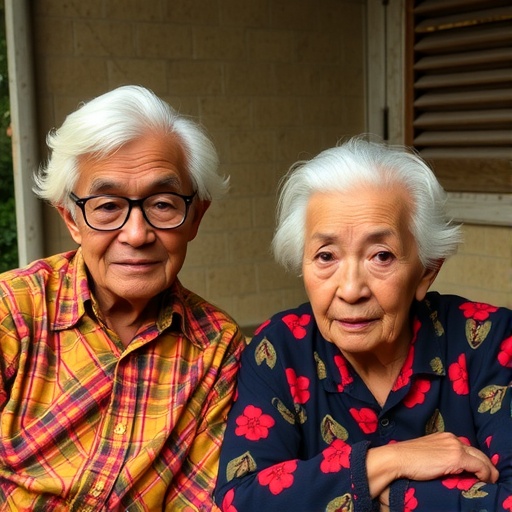
In the world of longevity research, the quest to decipher the secrets behind the remarkable lifespan of centenarians has taken a new and compelling turn. A groundbreaking study conducted in Colombia, recently published in BMC Geriatrics, grants us unprecedented insights into the health status and aging determinants of individuals who have surpassed 100 years of age. This expanded cohort profile unearths critical biological, environmental, and social factors that collectively shape the unique experience of aging in centenarians.
Centenarians embody the extreme edge of human survival, offering a natural laboratory for studying the mechanisms that allow for prolonged healthspan and lifespan. The Colombian study distinguishes itself by leveraging real-life data gathered from an extensive cohort of exceptionally aged individuals, incorporating robust health assessments to characterize their physiological and functional status. By analyzing these facets in detail, researchers aim to move beyond anecdotal evidence and contribute empirical data that can elucidate the interplay of genetics, lifestyle, and healthcare delivery.
What sets this research apart is its comprehensive approach to profiling centenarians within the Colombian demographic context. The country’s diverse population, varying environmental exposures, and evolving healthcare systems create a unique backdrop for examining how these factors might influence late-life health outcomes. The research team meticulously evaluated a spectrum of health indicators, including cardiovascular status, cognitive function, mobility, sensory capacities, and chronic disease prevalence, among others. Such an integrative methodology provides a multifaceted understanding of what it means to age healthily into the tenth decade and beyond.
Cardiovascular health in centenarians emerges as a particularly intricate domain. While the general population experiences a marked decline due to arterial stiffness, hypertension, and ischemic events, many centenarians reveal preserved vascular function. The Colombian cohort study reinforces this observation, uncovering a notable incidence of well-maintained cardiac health parameters that contribute crucially to sustained vitality. This phenomenon might be attributable to genetic factors that modulate lipid metabolism or systemic inflammation pathways, offering promising avenues for targeted therapeutic development.
Cognitive resilience is another cornerstone of exceptional aging. Cognitive decline, ranging from mild impairment to various dementia types, typically escalates with advancing age. The study’s detailed neurocognitive assessments illuminated that a subset of Colombian centenarians retain high cognitive capacity, challenging prevailing assumptions about inevitable cognitive deterioration. The revelation emphasizes the potential impact of lifelong educational attainment, social engagement, and possibly neuroprotective genetic variants. These findings highlight that cognitive aging is a dynamic process influenced by a constellation of factors beyond chronological age alone.
Mobility and functional independence encapsulate another crucial dimension. Maintenance of physical performance not only predicts quality of life but also correlates closely with survival outcomes. The Colombian cohort demonstrated diverse trajectories of mobility retention, with some centenarians showcasing fully independent ambulation. The study contributes to accumulating evidence that physical activity, nutritional factors, and musculoskeletal health preservation are vital contributors. Moreover, the research underscores the importance of tailored rehabilitation strategies to support aging populations in maintaining physical autonomy.
Sensory functionality, encompassing vision and hearing capabilities, also presents significant variability within the centenarian population. The capability to interact effectively with the environment profoundly influences psychosocial well-being and neuronal stimulation. In the Colombian cohort, researchers identified patterns of relatively preserved sensory functions in a subset of centenarians, correlating with enhanced social participation and mental health. Protection against sensory degradation may involve multifactorial elements, such as reduced exposure to environmental toxins, access to healthcare, and genetic predisposition.
Chronic disease prevalence naturally escalates with age, yet centenarians often defy patterns observed in younger elderly demographics. This paradox, often termed “compression of morbidity,” indicates a shorter duration of illness and disability near the end of life. The Colombian study elucidates how, despite the presence of diseases such as hypertension, diabetes, and osteoarthritis, many centenarians maintain stable physical and mental health, likely due to a complex interplay of compensatory physiological mechanisms and effective disease management. These insights challenge healthcare systems to pivot toward not only prolonging life but enhancing health quality at advanced ages.
Another compelling discovery lies in the emotional and psychological well-being of centenarians. Longevity studies frequently emphasize biological factors, but the Colombian research highlights robust emotional health as an underappreciated determinant of extended life. Variables such as reduced stress levels, resilience, optimism, and a strong sense of purpose were prevalent among the studied individuals, echoing psychosomatic theories that posit mental health as a critical mediator of physiological aging. Such findings advocate for holistic aging paradigms embedding psychological support within elderly care frameworks.
The socio-demographic context provides an essential lens through which aging patterns must be viewed. In Colombia, the unique blended heritage and socio-economic heterogeneity offer fertile ground for assessing how community structures, family support, and social capital influence centenarian health. The study delineates that centenarians often benefit from active social networks and community belonging, which buffer against loneliness and social isolation—known risk factors for morbidity and mortality. This reinforces the paradigm that healthy aging transcends biology, rooting deeply in social environment and cultural dynamics.
Importantly, the expanded cohort approach embraced by the researchers enhances statistical robustness and generalizability of findings. Prior studies often suffered from small sample sizes and limited diversity. By contrast, this comprehensive dataset enables more granular stratifications and multivariate analyses, unraveling nuanced correlations and potential causal pathways. In doing so, the research paves the way for predictive models that could foresee individual aging trajectories and inform personalized interventions for healthy longevity.
The integration of advanced biomarker analyses within this study also adds a critical dimension. Biomarkers of systemic inflammation, oxidative stress, telomere length, and metabolic health were systematically measured, providing mechanistic insights into aging biology at the cellular level. Correlations between biomarker profiles and functional health outcomes underscore the potential for developing diagnostic tools capable of early detection of deleterious aging processes and guiding tailored preventive strategies in clinical practice.
Given the accelerating global demographic shift toward older populations, comprehending the determinants of extreme longevity has profound implications for public health policy and healthcare infrastructure. The Colombian centenarian study signals the urgency of shifting investment toward geriatric care models emphasizing resilience, multi-system health preservation, and social integration. Furthermore, the research highlights that disparities in access to care remain a critical bottleneck, even for those who achieve extreme age, underscoring the need for equitable healthcare strategies.
Whilst the study makes remarkable contributions, it also opens numerous avenues for future inquiry. Genetic analyses could be deepened to identify protective polymorphisms, while longitudinal studies may clarify causal links between early-life exposures and late-life outcomes. Additionally, cross-cultural comparisons might delineate universal versus population-specific aging mechanisms, enabling scalable interventions. The Colombian centenarian profile provides an essential piece of this puzzle but is part of a broader global effort to decode the biology of exceptional aging.
In summation, the 2026 publication of this expanded cohort profile represents a landmark in aging research. By providing a rich, data-driven portrait of Colombian centenarians, the study pushes the boundaries of our understanding regarding the complex mosaic of physical health, cognitive function, emotional wellbeing, and social determinants that dictate human longevity. Ultimately, these insights challenge researchers and policymakers alike to envision a future where extreme old age is not only possible but accompanied by sustained quality of life and autonomy.
Cite Scienmag News
Julian W. (February 27, 2026). Colombian Centenarians: Aging Traits and Health Insights. Scienmag. https://scienmag.com/colombian-centenarians-aging-traits-and-health-insights/
Julian W. "Colombian Centenarians: Aging Traits and Health Insights." Scienmag, 27 February 2026, https://scienmag.com/colombian-centenarians-aging-traits-and-health-insights/. Accessed 29 August 2026.
Julian W. "Colombian Centenarians: Aging Traits and Health Insights." Scienmag. February 27, 2026. https://scienmag.com/colombian-centenarians-aging-traits-and-health-insights/


