


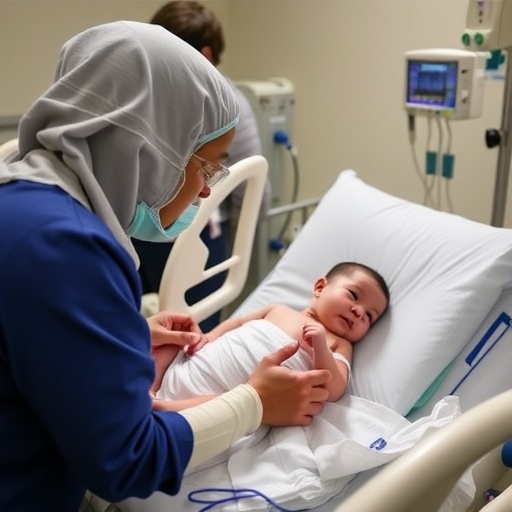
In the delicate landscape of neonatal care, preterm infants born before 34 weeks of gestation represent one of the most vulnerable populations managed in modern medicine. The intensive care they receive in neonatal intensive care units (NICUs) can be a matter of survival, but what happens when these fragile lives transition from hospital settings to home environments is critically important yet often underemphasized. A groundbreaking 2026 study by Slagle et al., published in the Journal of Perinatology, delves into the crucial area of kidney care at NICU discharge and outlines comprehensive follow-up recommendations tailored specifically for these preterm infants.
The kidneys, vital for maintaining systemic homeostasis through waste elimination and fluid balance, are particularly susceptible to developmental challenges in preterm infants. When birth occurs before 34 weeks, nephrogenesis—the development of nephrons, the kidney’s functional units—is incomplete. This incomplete maturation predisposes these infants to an increased risk of acute kidney injury (AKI) during their NICU stay and potentially chronic kidney disease (CKD) later in life. Consequently, understanding and optimizing kidney care during the transition out of NICU and in subsequent outpatient management have become critical areas of focus.
Slagle and colleagues began their investigation by analyzing the current practices surrounding kidney evaluation at discharge from NICUs across multiple institutions. Their findings indicated a lack of standardized protocols to assess renal function in preterm infants before discharge. The researchers emphasize that this gap could lead to missed early signs of renal impairment, thereby delaying necessary interventions that could dramatically alter health trajectories for these vulnerable neonates. Through multi-center data collection, the investigators highlighted a significant variability in renal function monitoring, underscoring an urgent need for systematic approaches.
A key technical aspect addressed in their study revolves around biomarkers for kidney injury and function. Traditional metrics such as serum creatinine levels are often unreliable in neonates because they reflect maternal kidney function during the first days of life and are influenced by muscle mass, which is notably low in preterm infants. To circumvent these limitations, the study advocates for integrating novel biomarkers like cystatin C, neutrophil gelatinase-associated lipocalin (NGAL), and kidney injury molecule-1 (KIM-1) alongside advanced imaging techniques including renal ultrasonography. These methods collectively offer a more accurate picture of renal health, detecting subtle injuries and developmental anomalies at an early stage.
The authors also shine light on the impact of nephrotoxic medications commonly employed in NICU settings, such as aminoglycosides and non-steroidal anti-inflammatory drugs (NSAIDs). These compounds, while life-saving, might impose nephrotoxic stress and exacerbate the risk of long-term kidney damage. Slagle et al. propose the implementation of nephrotoxic exposure checklists and dosage monitoring integrated into electronic medical records to ensure vigilant stewardship of these powerful agents. They postulate that early identification and mitigation of nephrotoxic insults during NICU stay can play a pivotal role in preserving renal function post-discharge.
Importantly, the study lays out detailed guidelines for follow-up care, recognizing that the transition from hospital to home is not an endpoint but rather the beginning of a new phase in the infant’s medical journey. The investigators recommend a multidisciplinary approach integrating neonatologists, nephrologists, nutritionists, and primary care providers to collaborate in creating individualized care plans. Regular outpatient follow-ups should include serial evaluations of renal growth and function, blood pressure monitoring, and assessment of growth parameters to swiftly identify complications such as hypertension or progressive kidney impairment, which are often silent until advanced stages.
Nutrition emerges as a critical pillar in the post-discharge care strategy outlined by Slagle et al. Preterm infants frequently encounter challenges in achieving optimal growth, and inadequate nutrition can exacerbate kidney vulnerability. The authors stress the importance of tailored nutritional interventions aimed at supporting catch-up growth without imposing additional renal load. Optimizing protein intake, fluid balance, and electrolyte management are among recommended strategies to foster renal recovery and overall health stability beyond the NICU.
To further refine follow-up protocols, the study advocates for longitudinal cohort studies to track kidney outcomes into childhood and adulthood. Since preterm infants are predisposed to chronic diseases that manifest much later in life, such as hypertension and CKD, understanding long-term trajectories is crucial. This longitudinal perspective is essential to inform preventive measures, guide health policy, and ultimately improve life expectancy and quality of life for this at-risk population.
Technological advancements also feature prominently in the recommendations. Slagle et al. propose the integration of telemedicine and digital health platforms in routinely monitoring preterm infants’ kidney status. Such technologies can facilitate frequent home-based assessments without burdening families with frequent hospital visits. Data collected through remote platforms can trigger timely interventions while empowering caregivers with education and support, thereby enhancing adherence to complex follow-up regimens.
The study also acknowledges socio-economic factors influencing follow-up care. Families of preterm infants often face substantial stress and resource limitations that can impede adherence to recommended post-discharge evaluations. Tailored support services, including social work involvement and care coordination programs, are highlighted as critical to overcoming these barriers. Addressing health disparities is paramount to ensuring equitable outcomes across diverse populations.
Through a rigorous synthesis of clinical evidence and expert consensus, Slagle et al. offer a paradigm shift in how neonatal kidney health is conceptualized within the continuum of care. They advocate moving beyond merely surviving the NICU to thriving in the developmental phases that follow. In doing so, the study underscores the imperative to transform knowledge into practical, consistent, and evidence-based kidney care protocols that can be adopted globally.
The impact of this research extends beyond the neonatal period. By focusing attention on early kidney health optimization, the medical community can significantly influence reducing the incidence of adult-onset kidney diseases that may have roots in early life. Emphasizing early detection, prevention, and personalized interventions lays the groundwork for life-long renal resilience.
In conclusion, the 2026 study by Slagle and colleagues represents a substantial advancement in neonatal medicine’s understanding of kidney care for preterm infants. It crafts a comprehensive framework for practitioners to evaluate, manage, and follow up with these patients beyond the NICU, supported by cutting-edge biomarkers, collaborative care models, and innovative technology. This work not only promises improved clinical outcomes but also signals a transformative direction in pediatric nephrology that prioritizes prevention and individualization from the very first moments of life.
As healthcare systems worldwide grapple with rising preterm birth rates and associated morbidities, these evidence-based recommendations arrive at a critical juncture. By illuminating the path to optimized renal health in the most vulnerable infants, this research holds the potential to revolutionize neonatal discharge processes and follow-up care protocols, ultimately shaping a healthier future for countless children born prematurely.
Cite Scienmag News
Harold Sullivan. (February 26, 2026). Optimizing Kidney Care for Preterm NICU Graduates. Scienmag. https://scienmag.com/optimizing-kidney-care-for-preterm-nicu-graduates/
Harold Sullivan. "Optimizing Kidney Care for Preterm NICU Graduates." Scienmag, 26 February 2026, https://scienmag.com/optimizing-kidney-care-for-preterm-nicu-graduates/. Accessed 1 September 2026.
Harold Sullivan. "Optimizing Kidney Care for Preterm NICU Graduates." Scienmag. February 26, 2026. https://scienmag.com/optimizing-kidney-care-for-preterm-nicu-graduates/


