


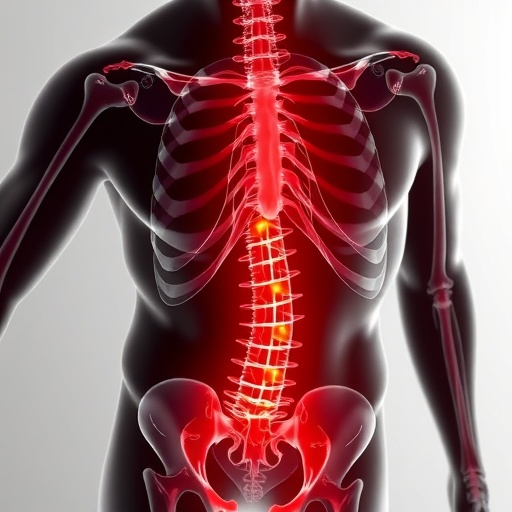
In a groundbreaking study poised to alter the landscape of osteoporosis research, scientists have unveiled a remarkable mechanism by which the hormone irisin exerts protective effects on bone health. Published recently in Cell Death Discovery, the research illuminates how irisin inhibits the adipogenic differentiation of bone marrow mesenchymal stem cells (BMSCs) via a sophisticated signaling cascade involving SIRT1, RANBP2, and FTO. This discovery not only advances the understanding of bone metabolism at a cellular level but also opens new avenues for innovative treatments targeting osteoporosis, a condition afflicting millions worldwide.
Osteoporosis, characterized by decreased bone density and increased fracture risk, has long challenged medical professionals due to its complex pathophysiology. Central to the maintenance of bone integrity is the balance between osteogenesis—the formation of bone—and adipogenesis, the conversion of stem cells into fat cells within the bone marrow. The shift toward adipogenic differentiation leads to reduced bone formation capacity and structural fragility. The current study deciphers how irisin, a muscle-derived hormone traditionally linked to energy metabolism, intervenes in this process to favor osteogenic outcomes.
The researchers identified that irisin fundamentally modulates the differentiation potential of BMSCs by targeting adipogenesis. This action hinges on the activation of the SIRT1/RANBP2/FTO axis, a highly intricate signaling pathway that orchestrates gene expression and cellular differentiation. SIRT1, a well-known NAD+-dependent deacetylase, plays critical roles in longevity, metabolism, and cellular stress responses. Here, it emerges as a pivotal regulator in the repression of bone marrow adiposity, functioning through downstream effectors RANBP2, an E3 SUMO-protein ligase, and FTO, an RNA demethylase linked to metabolic regulation.
Intriguingly, the study demonstrated that irisin administration results in enhanced SIRT1 activity, which directly influences RANBP2-mediated modification of FTO. The consequence is an altered epigenetic landscape at the RNA level, shifting the cellular programming away from adipocyte lineage commitment toward osteoblastogenesis. This reprogramming effect counters the deleterious accumulation of fat within the marrow cavity that typically accompanies aging and osteoporosis progression.
Delving deeper, the researchers provide compelling evidence that this molecular triad (SIRT1, RANBP2, FTO) mediates a novel mechanism of post-transcriptional regulation. By demethylating N6-methyladenosine (m6A) marks on key mRNAs, FTO fine-tunes gene expression involved in lineage specification. The modulation of m6A landscapes represents a rapidly evolving frontier in epigenetics, bringing to light unprecedented layers of control in stem cell fate decisions. Irisin emerges as a bioactive molecule capable of harnessing these modifications to confer skeletal benefits.
Notably, the team conducted extensive in vitro and in vivo experiments, utilizing both cultured BMSCs and osteoporotic animal models. Irisin treatment not only suppressed adipogenic markers but also enhanced osteogenic gene expression profiles, translating to improved bone microarchitecture and mechanical strength. These findings validate the therapeutic potential of irisin as a modulator of bone marrow niche composition and function.
From a translational perspective, this research holds significant promise given the widespread prevalence of osteoporosis, particularly in elderly populations and postmenopausal women. Current treatments largely focus on inhibiting bone resorption or stimulating osteoblast activity, yet many come with limitations or adverse effects. Irisin, with its endogenous origin and multifaceted metabolic roles, represents a tantalizing candidate for a safer and more holistic intervention strategy that addresses underlying cellular dysregulation.
Moreover, the elucidation of the SIRT1/RANBP2/FTO axis introduces potential molecular targets for drug development. Pharmacological agents or biologics designed to enhance this pathway could mimic or potentiate irisin’s effects, offering tailored therapies that promote bone regeneration and reduce marrow adiposity. Such advances could revolutionize osteoporosis management and improve quality of life for patients burdened by skeletal fragility.
The significance of this discovery extends beyond osteoporosis. The interplay between metabolism, epigenetics, and stem cell differentiation illuminated by this study provides new insights into tissue homeostasis and aging processes. It underscores the intricate crosstalk between muscle-secreted factors and bone microenvironment—a critical dimension of musculoskeletal health often overlooked in clinical practice.
Notwithstanding the exciting implications, the researchers acknowledge that further investigation is warranted to fully characterize the regulatory nuances and long-term effects of modulating the SIRT1/RANBP2/FTO pathway. Future studies will be essential to determine optimal dosing regimens, potential off-target impacts, and efficacy across diverse patient populations.
In summary, this seminal work expands the conceptual framework of bone biology by positioning irisin as a key hormonal mediator that safeguards against osteoporosis through epigenetic regulation of stem cell fate. By deciphering the molecular choreography involving SIRT1, RANBP2, and FTO, the study provides a compelling narrative linking metabolic signals to bone health preservation. This discovery is expected to catalyze new research trajectories and accelerate the development of next-generation osteoporosis therapies.
As the global burden of osteoporotic fractures continues to escalate with aging demographics, the search for innovative, mechanism-based treatments becomes ever more urgent. The unveiling of irisin’s protective role represents a beacon of hope, suggesting that harnessing endogenous regulatory pathways can yield effective, physiologically harmonious solutions. The coming years will reveal whether this insight can translate into clinical reality, potentially transforming prevention and intervention paradigms for millions affected by skeletal disease.
This cutting-edge research thus not only advances scientific understanding but also highlights the transformative potential of integrating molecular biology, endocrinology, and regenerative medicine in addressing pervasive public health challenges. By bridging these disciplines, the findings pave the way for breakthroughs that could redefine how bone fragility is confronted globally, driving progress toward healthier aging and improved patient outcomes.
Cite Scienmag News
Lydia K. (February 26, 2026). Irisin Blocks Stem Cell Fat Formation, Fights Osteoporosis. Scienmag. https://scienmag.com/irisin-blocks-stem-cell-fat-formation-fights-osteoporosis/
Lydia K. "Irisin Blocks Stem Cell Fat Formation, Fights Osteoporosis." Scienmag, 26 February 2026, https://scienmag.com/irisin-blocks-stem-cell-fat-formation-fights-osteoporosis/. Accessed 28 August 2026.
Lydia K. "Irisin Blocks Stem Cell Fat Formation, Fights Osteoporosis." Scienmag. February 26, 2026. https://scienmag.com/irisin-blocks-stem-cell-fat-formation-fights-osteoporosis/


