


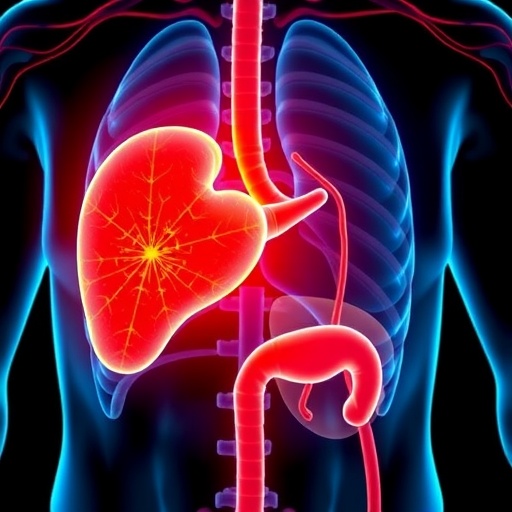
In a groundbreaking collaboration between scientists in India and the United States, researchers have unveiled a set of distinctive chemical signatures in blood plasma that could revolutionize the early detection of gallbladder cancer. This discovery, emerging from a partnership between Tezpur University in Assam, India, and the University of Illinois Urbana-Champaign, marks a significant stride toward addressing one of the deadliest yet often overlooked gastrointestinal malignancies. Unlike many cancers where early symptoms prompt timely diagnosis, gallbladder cancer routinely presents at advanced stages, largely due to the subtlety of its initial clinical signs and the absence of effective screening methods.
The study’s findings, detailed in the Journal of Proteome Research, leverage the power of untargeted serum metabolomics to unravel the complex metabolic landscape of gallbladder cancer patients. By analyzing blood samples from distinct patient cohorts—those with gallbladder cancer without gallstones, cancer patients with gallstones, and individuals bearing gallstones but free of cancer—the researchers have identified discrete metabolic fingerprints unique to each group. This approach not only enhances diagnostic precision but also provides deeper insight into the biological mechanisms underpinning tumor development in the presence or absence of gallstones.
Gallbladder cancer remains a relatively rare diagnosis in the United States, afflicting approximately 12,000 individuals annually and resulting in nearly 2,000 deaths each year. Despite this, the prognosis remains bleak due to the delayed detection of the disease, thwarting opportunities for early therapeutic intervention. Globally, the epidemiology of gallbladder cancer is heterogeneous, with certain regions—most notably Assam in northern India—experiencing markedly higher incidence rates. Factors such as genetic predisposition, lifestyle, and accessibility to medical infrastructure contribute to this geographic disparity, underscoring the need for region-specific diagnostic tools.
At the helm of this innovative research is assistant professor Pankaj Barah and research scholar Cinmoyee Baruah from Tezpur University, who led the clinical and biochemical components of the investigation. The University of Illinois’ contribution was spearheaded by assistant professor Amit Rai, specializing in computational metabolomics. Rai’s expertise was pivotal in deciphering the vast datasets generated from the metabolic profiling, transforming raw spectral information into biologically meaningful patterns that distinguish cancer states with high accuracy.
“Generating raw metabolomic data is just the beginning,” explains Rai. “Our real challenge was translating that complex information into a coherent biological narrative that explains the disease’s progression and heterogeneity, especially given the confounding influence of gallstones.” Metabolomics, which involves the comprehensive analysis of small molecules within biological samples, offers a powerful lens to observe the metabolic perturbations that arise in malignancy. Such detailed molecular characterization is essential for developing minimally invasive, blood-based diagnostics poised to transform clinical cancer care.
The analytical methods deployed by the team involved advanced liquid chromatography-mass spectrometry (LC-MS) techniques, which allowed for the high-resolution detection and quantification of hundreds of metabolites in patient serum. Notably, the research identified 180 altered metabolites in gallstone-free gallbladder cancer cases and 225 in gallstone-associated cancer patients, highlighting the intricate biochemical differences linked to gallstone status. Among these metabolites, many were derivatives of bile acids and amino acids, molecules known to influence tumorigenesis through pathways regulating cell proliferation, apoptosis, and inflammation.
By distinguishing these metabolic signatures, the study provides compelling evidence that gallbladder cancer’s biochemical milieu shifts based on the presence or absence of gallstones, a factor that traditionally complicates diagnosis and management. This differentiation is particularly critical because gallstones, a prevalent condition on their own, can mask or mimic malignant processes, leading to diagnostic ambiguity. The novel blood-based markers discovered could serve as an invaluable tool to streamline patient stratification and facilitate earlier therapeutic intervention.
Beyond diagnostic potential, the study’s integrative approach bridges clinical pathology with cutting-edge metabolomic profiling to elucidate the biological underpinnings of gallbladder cancer. The researchers emphasize that such insights not only aid in detection but also pave the way for identifying new therapeutic targets. Understanding the metabolic alterations driving tumor growth and progression may ultimately inform the development of personalized treatments tailored to the metabolic phenotype of individual patients.
The clinical implications of this research resonate strongly in regions with a high burden of gallbladder cancer, such as Assam, where early diagnosis remains a formidable challenge. Conventional imaging and invasive diagnostics are often hindered by limited healthcare access and asymptomatic early disease. The promise of a simple blood test leveraging metabolic signatures offers a practical and scalable solution, potentially improving outcomes through timely detection.
“This research represents a crucial step toward noninvasive clinical tools that can differentiate gallbladder cancer patients from those suffering from benign gallstone disease,” notes gastrointestinal surgeon Subhash Khanna from Swagat Super Speciality and Surgical Hospital in India, who co-authored the study. He highlights the necessity for broader multicenter trials to validate these findings, particularly across diverse populations, to ensure the robustness and universality of identified biomarkers.
The international nature of this research collaboration exemplifies the increasing trend of cross-border scientific partnerships aimed at tackling complex diseases that manifest variably across populations. By combining molecular biology expertise with advanced computational approaches and clinical acumen, the team has laid a solid foundation for subsequent studies that could ultimately reshape gallbladder cancer diagnosis and management paradigms.
Despite the promising results, the researchers caution that larger cohort studies and longitudinal analyses are essential to firmly establish the clinical utility of these metabolic markers. Factors such as biological variability, coexisting conditions, and environmental influences need to be meticulously accounted for before integrating such tests into routine practice. Nonetheless, the research opens exciting avenues for integrating metabolomics into personalized oncology and could serve as a model for similar studies in other cancer types.
In summary, this pioneering investigation reveals that gallbladder cancer imparts distinct metabolic alterations in the blood, differentiated further by the presence or absence of gallstones. These findings chart a path toward noninvasive, blood-based diagnostic assays capable of detecting gallbladder cancer at earlier, more treatable stages. As the scientific community continues to delve deeper into the metabolomic intricacies of cancer, such advances hold immense promise for improving patient outcomes worldwide.
News Publication Date: [Not provided in the original content]
Web References:
- Journal of Proteome Research: https://pubs.acs.org/doi/10.1021/acs.jproteome.5c00403
- Tezpur University: https://www.tezu.ernet.in/
- University of Illinois Urbana-Champaign: http://illinois.edu/
- Swagat Super Speciality and Surgical Hospital: https://www.swagathospitals.in/
- Carl R. Woese Institute for Genomic Biology: https://www.igb.illinois.edu/
References:
Pankaj Barah et al., “Untargeted serum metabolomics reveals differential signatures in gallstone-associated and gallstone-free gallbladder cancer variants,” Journal of Proteome Research, DOI: 10.1021/acs.jproteome.5c00403.
Cite Scienmag News
Rowan B. (February 26, 2026). Blood Test May Soon Enable Early Detection of Gallbladder Cancer, Study Reveals. Scienmag. https://scienmag.com/blood-test-may-soon-enable-early-detection-of-gallbladder-cancer-study-reveals/
Rowan B. "Blood Test May Soon Enable Early Detection of Gallbladder Cancer, Study Reveals." Scienmag, 26 February 2026, https://scienmag.com/blood-test-may-soon-enable-early-detection-of-gallbladder-cancer-study-reveals/. Accessed 29 August 2026.
Rowan B. "Blood Test May Soon Enable Early Detection of Gallbladder Cancer, Study Reveals." Scienmag. February 26, 2026. https://scienmag.com/blood-test-may-soon-enable-early-detection-of-gallbladder-cancer-study-reveals/


