


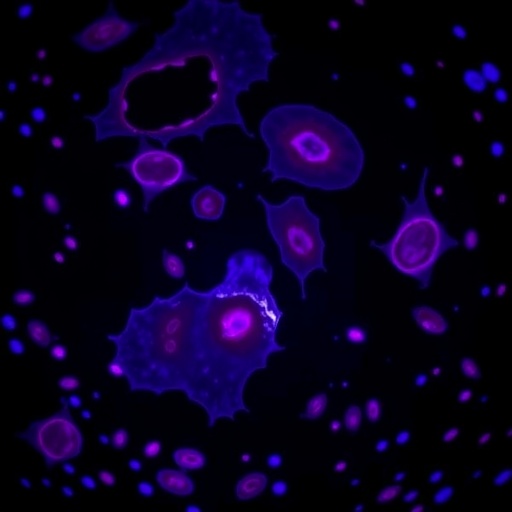
A groundbreaking study recently published in Nature Communications unveils an intricate mechanism by which certain immune cells perpetuate the development of B lymphomas, a form of blood cancer, in mice. Researchers led by Gopalakrishnan, Ward, and Greiff have identified a critical interaction between idiotype-specific CD4+ T cells and autoreactive B cells that drives chronic stimulation, ultimately pushing these B cells toward malignant transformation. This discovery not only deepens our understanding of the immune landscape that fosters lymphoma genesis but also opens new avenues for therapeutic intervention.
B lymphomas originate from B cells, white blood cells essential for humoral immunity, which generate antibodies against pathogens. However, when these B cells become dysregulated, especially those autoreactive to self-antigens, they can undergo clonal expansion and transformation. The study emphasizes a long-suspected but poorly understood link: that chronic immune stimulation by helper T cells can influence the fate of autoreactive B cells, suggesting a cellular dialogue driving oncogenesis.
The focus on idiotype-specific CD4+ T cells is pivotal as these T helper cells recognize unique antigenic determinants, or idiotypes, presented by B cell receptors. Unlike conventional scenarios where T cells help eliminate pathogens, idiotype-specific CD4+ T cells, in this context, sustain the survival and proliferation of B cells that are self-reactive. Persistent activation via this idiotype-driven interaction appears to create a microenvironment conducive to malignant transformation.
Technical evaluation of murine models reveals that the CD4+ T cells engage in a chronic inflammatory crosstalk with autoreactive B cells, exacerbating B cell receptor signaling. This prolonged engagement results in enhanced expression of anti-apoptotic molecules and deregulation of cell cycle controls within B cells. Such molecular alterations are hallmarks of lymphomagenesis and highlight the oncogenic potential rooted in autoimmune mechanisms.
Importantly, the study delineates how the idiotype-specific T-B cell interface manipulates the immune checkpoints that normally maintain self-tolerance. Disruptions in these checkpoints, particularly those governing T cell help and B cell activation thresholds, were shown to precipitate unchecked B cell proliferation. This insight is critical for understanding why conventional immune surveillance fails in the context of idiotype-driven lymphoma development.
The researchers employed advanced single-cell RNA sequencing to profile the transcriptional landscapes of both CD4+ T cells and B cells in the tumor microenvironment. This high-resolution approach revealed signatures of chronic activation, including upregulation of costimulatory molecules and cytokines that enforce a positive feedback loop perpetuating B cell malignancy. These findings underscore the importance of cell-to-cell communication networks in tumor evolution.
Furthermore, the work explores how the cytokine milieu shaped by these T cells alters the tumor microenvironment, fostering the recruitment of additional immune cells that paradoxically support lymphoma growth. Cytokines such as interleukin-21 and interferon-gamma were implicated, highlighting a complex cytokine orchestration that allows tumor-promoting inflammation to persist alongside anti-tumor immunity’s inadequacies.
From a therapeutic standpoint, the delineation of idiotype-specific CD4+ T cells as drivers of lymphoma provides a unique target for intervention. Modulating this specific arm of the immune response, either by blocking the T cell receptor recognition of B cell idiotypes or by inhibiting key costimulatory pathways, could suppress the chronic stimulation that fuels lymphoma progression while sparing broader immune competency.
The study’s implications extend beyond lymphoma, touching on broader immunological disorders where autoreactive B cells play pathogenic roles. Autoimmune diseases frequently involve persistent interactions between T and B cells, suggesting that similar chronic stimulation mechanisms may contribute to disease progression or complications such as lymphoproliferative disorders.
Innovatively, the research team also demonstrated that genetic ablation or inhibition of idiotype-specific CD4+ T cells in murine systems prevented the development of B lymphomas. This causative evidence underscores the non-redundant role of these T cells in initiating and sustaining the malignant process and cements their status as crucial therapeutic targets.
Notably, the researchers discuss how these discoveries challenge existing paradigms in both tumor immunology and autoimmunity. Traditional views often consider autoreactive T cell responses as purely detrimental or protective; this work highlights a nuanced duality where chronic immune engagement paradoxically fosters oncogenesis via sustaining autoreactive B cells.
In addition, the study raises questions about how environmental and genetic factors might influence the emergence of idiotype-specific T cells with pathogenic potential. Understanding these parameters could inform personalized medicine approaches, identifying individuals at heightened risk for lymphoma arising out of autoimmune contexts and tailoring prophylactic measures accordingly.
The researchers emphasize that elucidating the precise molecular checkpoints and signaling pathways governing this T cell-driven chronic activation could reveal biomarkers predictive of lymphoma development. Such biomarkers would be invaluable for early detection and intervention, potentially transforming outcomes for patients predisposed to or suffering from B cell malignancies.
Finally, this work demonstrates a model whereby immune system components traditionally considered regulators of tolerance can, under chronic activation scenarios, morph into facilitators of malignant transformation. This paradigm shift accentuates the delicate balance the immune system must maintain between defense and self-control and the catastrophic consequences when this balance tips.
As research progresses, the potential for translating these findings into clinical therapies focusing on immune modulation is immense. Whether through designing idiotype-blocking antibodies, T cell receptor antagonists, or cytokine environment reprogramming strategies, targeting the idiotype-specific CD4+ T cell and autoreactive B cell axis promises to redefine lymphoma treatment.
This comprehensive investigation by Gopalakrishnan and colleagues not only clarifies a critical mechanism in lymphoma pathogenesis but also exemplifies the power of integrated immunological, genetic, and molecular approaches in unveiling the underpinnings of complex diseases. The ripple effects of this work will undoubtedly influence both basic and translational oncology research for years to come.
Cite Scienmag News
Nathaniel Bowman. (February 25, 2026). Chronic CD4+ T Cell Stimulation Drives B Cell Lymphomas. Scienmag. https://scienmag.com/chronic-cd4-t-cell-stimulation-drives-b-cell-lymphomas/
Nathaniel Bowman. "Chronic CD4+ T Cell Stimulation Drives B Cell Lymphomas." Scienmag, 25 February 2026, https://scienmag.com/chronic-cd4-t-cell-stimulation-drives-b-cell-lymphomas/. Accessed 1 September 2026.
Nathaniel Bowman. "Chronic CD4+ T Cell Stimulation Drives B Cell Lymphomas." Scienmag. February 25, 2026. https://scienmag.com/chronic-cd4-t-cell-stimulation-drives-b-cell-lymphomas/


