


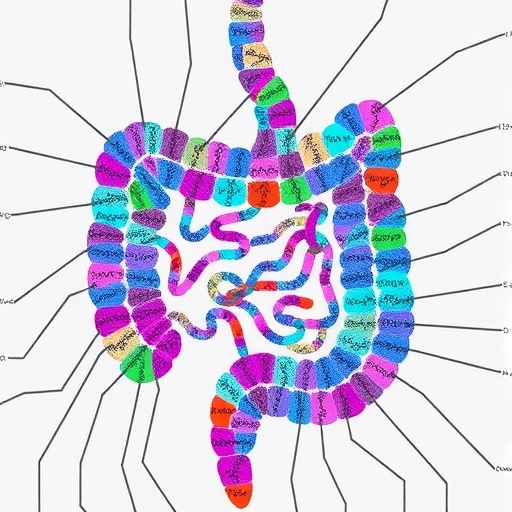
In a profound new study spearheaded by King’s College London alongside the University of Nottingham, compelling evidence has emerged connecting socioeconomic deprivation with alterations in the human gut microbiome. This research illuminates how living in economically disadvantaged neighborhoods within the UK is associated with a markedly less diverse gut bacterial community, a factor increasingly understood to be pivotal in shaping overall health outcomes. The findings herald a significant advance in our understanding of how environmental and social contexts biologically encode health risks through microbial pathways.
Published in the prestigious journal npj Biofilms and Microbiomes, the study meticulously analyzed the gut microbiota of 1,390 female twin participants enrolled in TwinsUK, juxtaposing this data with detailed socioeconomic metrics derived from residential postcodes. Utilizing the robust Townsend Deprivation Index as a quantitative measure of area-level deprivation—which aggregates indicators such as unemployment, housing overcrowding, and vehicle ownership—the researchers sought to map the microbiome’s complexity against social determinants of health. This approach allowed for a granular exploration of how material deprivation correlates with biological changes impacting both mental and physical well-being.
Results pointed to a stark reduction in microbial diversity among individuals residing in more deprived areas, with specific depletion noted in microbial species that generate short-chain fatty acids (SCFAs). SCFAs like butyrate are not mere metabolic byproducts; they serve critical roles in modulating inflammation, enhancing energy metabolism, and maintaining the integrity of the gut-brain axis. The diminished abundance of butyrate-producing bacteria, particularly Lawsonibacter and Intestinimonas massiliensis, correlated strongly not only with socioeconomic deprivation but also with elevated incidences of anxiety and diabetes. These novel microbial linkages suggest that systemic health conditions may, in part, be mediated by gut microbial ecology shaped intricately by social environment.
The mechanistic insights provided by this work bolster a rapidly evolving paradigm that recognizes the gut microbiome as an intermediary between external social stressors and internal physiological responses. Chronic stress, financial insecurity, and limited access to nutritious foods prevalent in deprived neighborhoods could tilt the microbial ecosystem towards dysbiosis—a state characterized by reduced microbial diversity and compromised metabolic functions. This dysbiotic environment undermines gut barrier function, perturbs immune responses, and impairs neurochemical signaling pathways implicated in mood regulation and metabolic homeostasis.
In articulating the public health implications, Dr. Cristina Menni, senior author and molecular epidemiologist at King’s College London, underscores how the microbiome’s impoverished diversity in high-deprivation populations could feasibly exacerbate vulnerabilities to both mental health disorders and metabolic syndromes. She emphasizes the transformative potential of microbiome-targeted interventions, highlighting dietary modifications rich in fermentable fibers that nourish beneficial bacteria, as well as precision probiotics designed to restore butyrate production and microbial equilibrium.
Complementing this perspective, Dr. Yu Lin elucidates the microbiome’s role as a biological interface, translating the socio-environmental adversities intrinsic to deprived settings into metabolic dysregulation and neuropsychiatric manifestations. The intricate crosstalk between microbiota-derived metabolites and host neurological pathways offers an explanatory framework for the observed comorbidities between anxiety, energy imbalance, and other health detriments in socioeconomically disadvantaged individuals. The study advocates for integrating microbiome-focused strategies within broader public health efforts aimed at alleviating health inequities.
Profoundly, Dr. Ana Valdes from the University of Nottingham expounds on the translational potential of unraveling these microbially-mediated biological changes that accompany social deprivation. By identifying actionable targets within the microbiome, including butyrate-producing microbes, researchers have opened doors to designing interventions that can disrupt the entrenched cycle linking poverty with poor health outcomes. Dietary fiber enrichment, probiotic supplementation, and other microbiome-centered therapies emerge as promising avenues warranting rigorous clinical evaluation.
This research resonates significantly as emerging science continues to spotlight the gut microbiome’s extensive influence beyond digestion, implicating it in immune modulation, neurobehavioral regulation, and systemic metabolic control. By situating microbial diversity as a mediator of socioeconomic health disparities, it bridges microbiology with social epidemiology, forging interdisciplinary pathways to innovative health solutions. The findings advocate for holistic public health policies that prioritize environmental and social determinants alongside biological considerations.
Furthermore, this study showcases the utility of twin cohorts, like TwinsUK, in disentangling complex gene-environment interactions. The genetically informative design enables refined attribution of microbiome variation to external social factors rather than hereditary predispositions, solidifying the robustness of the associations reported. Such methodological rigor enhances confidence in potential causative links and strengthens the evidence base for microbiome-targeted health interventions.
In conclusion, this groundbreaking work provides a compelling narrative on how the microbiome embodies the socio-environmental imprint on human biology. Understanding these microbially-mediated pathways facilitates novel perspectives on the biological embedding of social inequalities. Researchers and policymakers alike may harness this knowledge to prioritize gut health through enhanced nutrition and microbial therapeutics as integral components to address mental and metabolic health burdens disproportionately shouldered by socioeconomically marginalized communities. This scientific advance promises to inspire future translational research and targeted public health initiatives that aspire to narrow health disparities via microbiome modulation.
News Publication Date: [Not specified in the provided content]
Web References: [Not specified in the provided content]
References: The study is published in npj Biofilms and Microbiomes.
Cite Scienmag News
Morgan Morrow. (February 25, 2026). Gut Microbiomes Found to Be Less Diverse in Communities with Higher Social Deprivation. Scienmag. https://scienmag.com/gut-microbiomes-found-to-be-less-diverse-in-communities-with-higher-social-deprivation/
Morgan Morrow. "Gut Microbiomes Found to Be Less Diverse in Communities with Higher Social Deprivation." Scienmag, 25 February 2026, https://scienmag.com/gut-microbiomes-found-to-be-less-diverse-in-communities-with-higher-social-deprivation/. Accessed 1 September 2026.
Morgan Morrow. "Gut Microbiomes Found to Be Less Diverse in Communities with Higher Social Deprivation." Scienmag. February 25, 2026. https://scienmag.com/gut-microbiomes-found-to-be-less-diverse-in-communities-with-higher-social-deprivation/


