


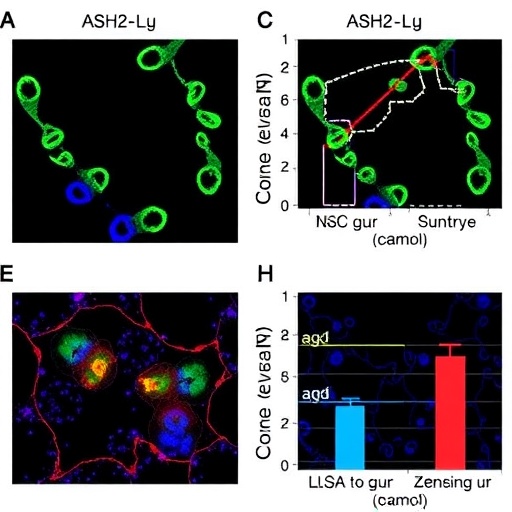
In a groundbreaking discovery that offers new hope and direction in the battle against breast cancer, a multinational team of researchers has unveiled a critical molecular mechanism behind tamoxifen resistance in estrogen receptor-positive (ER+) breast cancer. Published in the prestigious British Journal of Cancer on February 24, 2026, this study sheds light on how the histone modifier ASH2L orchestrates resistance to tamoxifen via an epigenetic axis. The elucidation of this pathway holds promise for the development of targeted therapies capable of reversing therapeutic resistance and improving patient outcomes, a pivotal step forward in precision oncology.
Tamoxifen remains one of the cornerstone therapies for ER+ breast cancer, a subtype representing approximately 70% of all breast cancer cases worldwide. While initially effective, many patients eventually develop resistance to tamoxifen, enabling tumor progression and metastasis despite ongoing treatment. Until now, the molecular underpinnings driving this resistance have been incompletely understood, hindering the inventiveness of targeted countermeasures. The new research spearheaded by Kye, Moon, Cha, and collaborators identifies the histone methyltransferase coactivator ASH2L as a central player in conferring this resistance, opening a novel frontier in cancer epigenetics and hormone therapy.
Histone modifications have long been recognized for their role in regulating gene expression by altering chromatin accessibility. In this study, ASH2L is shown to catalyze the trimethylation of histone H3 on lysine 4 (H3K4me3), a modification classically associated with active transcription. Elevated levels of ASH2L correspond with increased H3K4me3 marks at specific genomic loci that drive the expression of integrin alpha 6 (ITGA6), an adhesion molecule implicated in cancer cell survival, migration, and metastasis. This epigenetic remodeling, the authors reveal, is a vital switch mediating tamoxifen resistance in ER+ breast cancer cells.
The functional consequences of ASH2L-driven H3K4me3 enrichment become apparent as the study delves deeper into downstream signaling pathways. ITGA6 upregulation activates the ERK signaling cascade, a well-characterized mitogen-activated protein kinase pathway known to promote proliferation and inhibit apoptosis. This molecular interplay effectively blunts the antiproliferative effects of tamoxifen by providing alternate survival cues, thereby undermining the drug’s therapeutic efficacy. The discovery of this ITGA6-ERK signaling axis as a resistance mechanism highlights the intricacy of cancer cell adaptation and underscores the potential of targeting this pathway to resensitize tumors.
To elucidate these complex interactions, the researchers employed an array of sophisticated molecular biology techniques, including chromatin immunoprecipitation sequencing (ChIP-seq), RNA sequencing, and functional cell-based assays. CRISPR-mediated gene editing was utilized to manipulate ASH2L levels, revealing that loss of ASH2L sensitized tamoxifen-resistant cells and restored drug responsiveness. Conversely, ASH2L overexpression recapitulated resistance phenotypes. These experimental manipulations reinforced the causative role of ASH2L in tamoxifen resistance, highlighting it as a promising molecular target.
The clinical relevance of these findings was bolstered by extensive analyses of patient-derived tumor specimens. Immunohistochemical staining demonstrated a correlation between elevated ASH2L expression and poor response to tamoxifen treatment in ER+ breast cancer patients. Furthermore, higher ASH2L and ITGA6 levels were associated with decreased progression-free survival, suggesting prognostic utility. Such translational insights underscore the importance of integrating epigenetic profiling in routine clinical assessment to tailor therapeutic strategies more effectively.
This paradigm-shifting research invites a reconsideration of current breast cancer treatment algorithms. The identification of an epigenetic driver of resistance suggests that combining tamoxifen with epigenetic modulators or inhibitors of the ITGA6/ERK signaling pathway could enhance therapeutic efficacy. Indeed, the authors postulate that inhibitors targeting the enzymatic machinery responsible for H3K4me3 modification or integrin signaling may reverse resistance, restoring tamoxifen sensitivity in refractory tumors. Preclinical validation of such combination strategies is poised to catalyze the next wave of clinical trials.
Beyond ER+ breast cancer, these findings may have broader implications across oncology. The epigenetic regulation of integrins and their downstream signaling networks is a prevalent feature in various malignancies, from prostate to pancreatic cancers. Understanding how ASH2L and H3K4me3 dynamics control tumor-stroma interactions and cell survival mechanisms could inform cross-cancer therapeutic strategies. Moreover, this study exemplifies the power of integrative epigenomics in unveiling hidden drivers of drug resistance, a universal challenge in modern oncology.
The study also raises intriguing biological questions about the role of epigenetic regulators in therapeutic adaptation. ASH2L functions within the COMPASS (Complex Proteins Associated with Set1) complex, a multi-protein assembly vital for methylation of H3K4. How the activity and recruitment of this complex are modulated under endocrine therapy pressure remains to be elucidated. The possibility that ASH2L acts as a sensor or effector of resistance signals introduces new avenues for research into the dynamic interplay between cancer epigenome and microenvironment.
Future directions suggested by the authors include screening patients for ASH2L and ITGA6 expression to stratify those at high risk of tamoxifen resistance. Additionally, the development of small molecule inhibitors or monoclonal antibodies targeting components of this axis represents an exciting frontier. Such personalized interventions could mitigate resistance development, providing durable responses and improving survival metrics in what remains a globally dominant cancer subtype.
Furthermore, the research methodology itself sets a benchmark for cancer epigenetics studies. The integration of high-throughput sequencing, rigorous functional validation, and clinical correlation ensures robust conclusions that traverse the spectrum from bench to bedside. This holistic approach exemplifies how multi-disciplinary collaboration can unravel cancer’s biological complexity, fostering innovation in targeted drug development.
The implications for patient management are profound. The ability to predict and overcome tamoxifen resistance could transform therapeutic decision-making, sparing patients ineffective treatments and unnecessary side effects. Moreover, this work reaffirms the conceptual shift towards targeting cancer’s epigenetic landscape alongside genetic alterations, acknowledging the multifactorial nature of drug resistance.
In conclusion, the discovery that ASH2L induces tamoxifen resistance via H3K4me3-dependent ITGA6/ERK signaling elucidates a formidable resistance mechanism in ER+ breast cancer while charting a path forward for precision medicine. This insight not only broadens our understanding of breast cancer biology but also champions novel therapeutic strategies aimed at epigenetic vulnerabilities. As the oncology community grapples with tamoxifen resistance, this study offers a beacon of hope that answers—and better treatments—are on the horizon.
Cite Scienmag News
Nathaniel Bowman. (February 24, 2026). ASH2L Drives Tamoxifen Resistance via ITGA6/ERK. Scienmag. https://scienmag.com/ash2l-drives-tamoxifen-resistance-via-itga6-erk/
Nathaniel Bowman. "ASH2L Drives Tamoxifen Resistance via ITGA6/ERK." Scienmag, 24 February 2026, https://scienmag.com/ash2l-drives-tamoxifen-resistance-via-itga6-erk/. Accessed 1 September 2026.
Nathaniel Bowman. "ASH2L Drives Tamoxifen Resistance via ITGA6/ERK." Scienmag. February 24, 2026. https://scienmag.com/ash2l-drives-tamoxifen-resistance-via-itga6-erk/


