


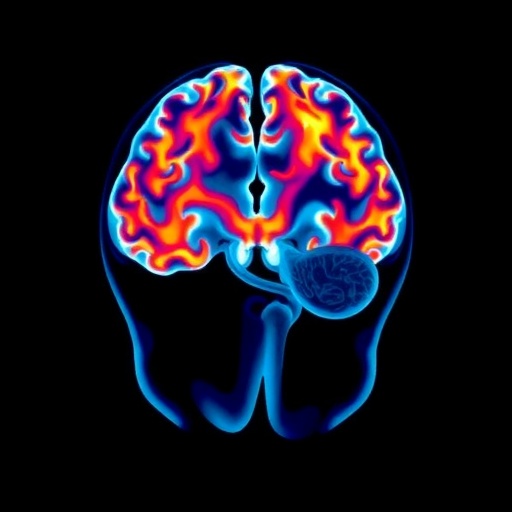
Subtle cerebrovascular dynamics reveal new insights into Alzheimer’s disease risk
Emerging research from the Mark and Mary Stevens Neuroimaging and Informatics Institute (Stevens INI) at the University of Southern California’s Keck School of Medicine is reshaping how scientists understand the early physiological changes that herald Alzheimer’s disease. Moving beyond the classic focus on amyloid-beta and tau protein accumulation, this innovative study highlights the critical role cerebral blood flow regulation and oxygen utilization play in the disease’s progression. By leveraging advanced noninvasive imaging techniques, researchers have uncovered compelling associations between vascular brain health and hallmark neurodegenerative markers.
Published in Alzheimer’s and Dementia: The Journal of the Alzheimer’s Association, the study meticulously examined older adults across a cognitive spectrum—from normal function to mild cognitive impairment and dementia. They discovered that subtle alterations in cerebrovascular function, as measured by novel ultrasound and near-infrared spectroscopy methods, closely corresponded with hallmark Alzheimer’s pathology, including amyloid plaque burden and hippocampal atrophy. These findings bolster a growing recognition that Alzheimer’s is not solely a neuronal disorder but intrinsically linked to vascular health.
At the heart of this study is the innovative use of transcranial Doppler ultrasound and near-infrared spectroscopy (NIRS) to assess brain hemodynamics and oxygenation at rest—procedures that are safer, less expensive, and more patient-friendly than traditional MRI and PET imaging. Transcranial Doppler ultrasound tracks the velocity of blood flow in major cerebral arteries, providing insight into vascular responsiveness to physiological changes. Meanwhile, NIRS quantifies how effectively oxygen is delivered to cortical brain tissue, crucial for maintaining neuronal function and viability.
The integration of sophisticated mathematical modeling enables the distillation of raw hemodynamic data into indices reflecting dynamic cerebrovascular autoregulation—how well the brain adapts blood flow and oxygen delivery in response to fluctuating systemic factors such as blood pressure and carbon dioxide levels. Remarkably, participants demonstrating more robust autoregulatory responses showed significantly lower amyloid load and preservation of hippocampal volume, both of which are protective against cognitive decline.
“These vascular indices provide a meaningful window into brain health beyond what amyloid or tau imaging alone can offer,” explained Amaryllis A. Tsiknia, the study’s lead author and a doctoral candidate at USC. She notes that, in cognitively healthy older adults, brain blood vessels behave in a highly adaptive manner, maintaining consistent perfusion and oxygen supply despite systemic fluctuations—a feature that appears compromised in Alzheimer’s disease.
Senior author Meredith N. Braskie, PhD, assistant professor of neurology at the Keck School of Medicine, emphasized the translational potential: “Our vascular measures align powerfully with MRI and PET findings, indicating a tangible bridge between cerebrovascular function and classical Alzheimer’s disease markers. This could serve as an early biomarker and pave the way for preventative strategies targeting vascular health.”
Notably, those diagnosed with mild cognitive impairment or dementia exhibited impaired cerebrovascular regulation, reinforcing the perspective that Alzheimer’s pathology unfolds along a continuum in which vascular dysfunction is a key contributor. This vascular impairment appears to parallel and possibly exacerbate traditional neurodegenerative processes, suggesting a bidirectional interplay between neuronal and vascular health.
Arthur W. Toga, PhD, director of the Stevens INI, reflected on the broader implications: “By elucidating how cerebral blood flow and oxygen regulation interface with amyloid accumulation and brain atrophy, this research opens new horizons for early detection and intervention. Therapeutic approaches aimed at improving vascular function could fundamentally alter the trajectory of Alzheimer’s disease.”
The advantages of transcranial Doppler and near-infrared spectroscopy extend beyond safety and cost. Because these methods do not require active patient participation, sedation, or exposure to ionizing radiation, they are ideally suited for use in large population screenings, potentially transforming how high-risk individuals are identified decades prior to clinical onset.
While groundbreaking, the study’s authors acknowledge that their findings represent a cross-sectional snapshot. Establishing causality—whether vascular dysregulation initiates amyloid pathology or vice versa—requires longitudinal studies, currently underway. Monitoring how vascular indices evolve over time may clarify whether impaired blood flow regulation is a precursor or a consequence of Alzheimer’s neuropathology.
Long-term, the vision is to integrate these cerebrovascular measures into routine clinical assessments, enabling personalized risk stratification and targeted vascular interventions. “If enhancing blood flow and oxygen delivery can slow or prevent amyloid buildup and neuronal loss, then vascular health could become a cornerstone of Alzheimer’s disease prevention,” Tsiknia asserted.
This paradigm shift towards recognizing vascular contributions alongside classical pathological hallmarks underscores the multifactorial nature of Alzheimer’s disease. It challenges researchers and clinicians to rethink existing diagnostic and therapeutic frameworks, emphasizing a holistic approach that encompasses both neurodegeneration and cerebrovascular integrity.
The study was supported by prestigious grants from the U.S. National Institutes of Health, underscoring the significance and rigor of this research endeavor. As the global burden of Alzheimer’s escalates with an aging population, innovations such as this offer hope for earlier diagnosis and improved outcomes through mechanisms previously underestimated in dementia science.
By marrying cutting-edge imaging technologies with computational modeling, the Stevens INI research team has charted a promising path toward unraveling the enigmatic vascular underpinnings of Alzheimer’s disease. This vascular lens not only broadens scientific understanding but also prioritizes accessible, scalable tools that may revolutionize future clinical practice.
News Publication Date: 13-Feb-2026
References: 10.1002/alz.71146
Cite Scienmag News
Clara W. (February 24, 2026). New Brain Blood Flow and Oxygenation Markers Could Provide Early Warning Signs of Alzheimer’s Risk. Scienmag. https://scienmag.com/new-brain-blood-flow-and-oxygenation-markers-could-provide-early-warning-signs-of-alzheimers-risk/
Clara W. "New Brain Blood Flow and Oxygenation Markers Could Provide Early Warning Signs of Alzheimer’s Risk." Scienmag, 24 February 2026, https://scienmag.com/new-brain-blood-flow-and-oxygenation-markers-could-provide-early-warning-signs-of-alzheimers-risk/. Accessed 29 August 2026.
Clara W. "New Brain Blood Flow and Oxygenation Markers Could Provide Early Warning Signs of Alzheimer’s Risk." Scienmag. February 24, 2026. https://scienmag.com/new-brain-blood-flow-and-oxygenation-markers-could-provide-early-warning-signs-of-alzheimers-risk/


