


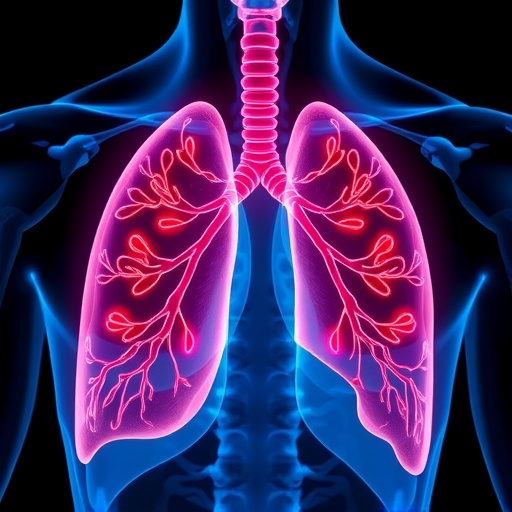
Lung cancer continues to dominate as the leading cause of cancer-related mortality worldwide, casting a grim shadow over global health outcomes. Despite advances in treatment, the persistent challenge lies in early diagnosis, as most patients receive their diagnoses at advanced stages when therapeutic interventions are less effective. This troubling reality has galvanized researchers and clinicians alike to seek innovative early detection and interception strategies that can turn the tide against this devastating disease.
One cornerstone of lung cancer early detection has been low-dose computed tomography (LDCT)-based screening. This imaging modality has demonstrated a clear ability to reduce lung cancer mortality in well-defined high-risk populations—primarily older adults with extensive smoking histories. However, despite the compelling evidence supporting LDCT, its real-world uptake remains disappointingly low. Complex factors such as limited access, patient awareness, and potential screening-related harms have dampened enthusiasm among eligible individuals, undermining the potential public health impact of this valuable tool.
Adding another layer of complexity, epidemiological models paint a sobering picture: nearly half of lung cancer cases develop in people who do not meet the current LDCT screening eligibility criteria. These findings spotlight a critical gap in risk stratification methods that predominantly rely on age and smoking history. As a consequence, countless patients who might benefit from early intervention remain outside the reach of standard screening protocols, highlighting an urgent need to redefine and expand the framework of risk assessment in lung cancer.
The intrinsic limitations of LDCT further complicate its deployment as a widespread screening tool. False-positive results are common with this imaging technique, leading to a cascade of follow-up tests and invasive procedures that can induce patient anxiety, risk complications, and inflate healthcare costs. This high false-discovery rate not only burdens clinical workflows but also poses a significant barrier to scalable, population-wide screening programs. Efforts to refine LDCT’s specificity are imperative to unlock its full preventive potential.
To enhance accuracy and overcome LDCT’s shortcomings, the research community has been fervently exploring novel biomarkers. Radiomic analysis, which extracts quantitative features from imaging data beyond what the naked eye can discern, has emerged as a promising frontier. These radiomic signatures can potentially distinguish benign from malignant nodules with far greater precision, enabling more informed clinical decision-making. Concurrently, liquid biopsy techniques—analyzing circulating tumor DNA, exosomes, or other molecular indicators in blood samples—offer a minimally invasive window into the tumor’s molecular landscape, promising earlier and more accurate detection.
Parallel to refining diagnostic tools, the dramatic rise in detected pulmonary nodules through LDCT and diagnostic CT scans heralds a new paradigm focusing on interception. Many nodules are precancerous or at high risk of malignant transformation, presenting a golden opportunity to intervene before invasive cancer develops. The concept of therapeutic interception in lung cancer—targeting these early lesions to halt progression—represents a potentially transformative approach that could dramatically shift the natural history of this disease.
Implementing effective lung cancer screening programs demands attention not only to scientific innovation but also to disparities and infrastructural realities. Socioeconomic, racial, and geographic factors influence access to screening and quality care. To realize the full promise of early detection and interception strategies, healthcare systems must address these inequities, investing in outreach, education, and infrastructure that facilitate broad, equitable uptake.
Moreover, designing and integrating biomarker-based pipelines for lung cancer risk assessment require harmonized efforts across research disciplines and clinical practice. Sophisticated computational models that synergize clinical data, radiomics, and liquid biopsy results can generate personalized risk profiles, guiding tailored screening intervals and intervention thresholds. Such precision medicine approaches not only enhance diagnostic accuracy but also potentially reduce harms associated with overdiagnosis.
Nonetheless, the path to widespread adoption of innovative screening and interception strategies is fraught with challenges. Standardization and validation of biomarker assays are crucial to ensure reproducibility and clinical utility. Rigorous prospective trials must evaluate the benefits, harms, and cost-effectiveness of these novel tools in diverse populations. Only through such meticulous evaluation can guidelines evolve meaningfully beyond their current parameters.
Looking forward, the integration of artificial intelligence (AI) into lung cancer screening and interception holds transformative potential. Machine learning algorithms can analyze vast datasets from imaging and molecular diagnostics, uncovering subtle patterns predictive of cancer risk and trajectory. AI-driven decision support systems could streamline clinical workflows, reduce false positives, and personalize patient management in real time.
Additionally, preventive strategies must extend beyond detection to encompass therapeutic interception modalities. Targeted therapies and immunomodulatory agents, currently revolutionizing advanced lung cancer treatment, are being explored for their ability to eradicate or stabilize high-risk precancerous lesions. Early-phase clinical trials investigating such approaches are paving the way for a future where lung cancer prevention is proactive, precise, and personalized.
The intertwining of innovative screening tools, biomarker discovery, AI integration, and therapeutic interception heralds an exciting era in lung cancer care. This multifaceted approach has the potential not only to detect lung cancer earlier but to prevent its development altogether, fundamentally altering disease outcomes and survival rates worldwide.
The imperative remains clear: closing the gap between high-risk populations and screening uptake, broadening risk prediction methodologies, and developing scalable, equitable interception strategies form the pillars of progress against lung cancer. With concerted effort from researchers, clinicians, policymakers, and communities, the devastating mortality burden of lung cancer can finally be diminished.
In summary, the evolving landscape of lung cancer detection and interception is characterized by novel biomarker integration, refinement of imaging technologies, and burgeoning therapeutic interventions targeting early disease stages. Together, these advances promise to shift lung cancer management from reactive treatment of advanced disease to proactive prevention—potentially saving countless lives through transformative changes in screening and early intervention.
Cite Scienmag News
Rowan B. (February 23, 2026). Cutting-Edge Strategies for Lung Cancer Screening. Scienmag. https://scienmag.com/cutting-edge-strategies-for-lung-cancer-screening/
Rowan B. "Cutting-Edge Strategies for Lung Cancer Screening." Scienmag, 23 February 2026, https://scienmag.com/cutting-edge-strategies-for-lung-cancer-screening/. Accessed 29 August 2026.
Rowan B. "Cutting-Edge Strategies for Lung Cancer Screening." Scienmag. February 23, 2026. https://scienmag.com/cutting-edge-strategies-for-lung-cancer-screening/


