


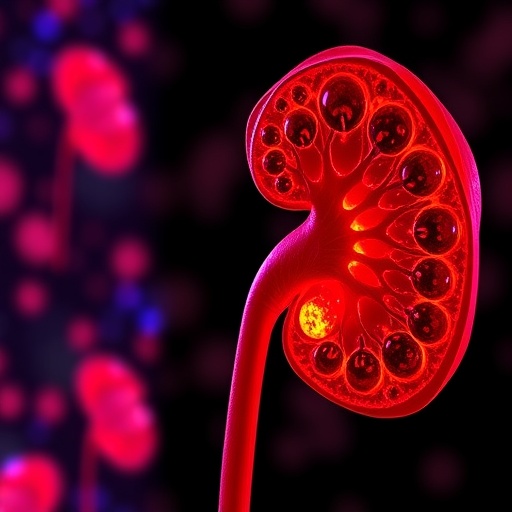
In the realm of metabolic research, obesity continues to stand as a formidable challenge with far-reaching consequences on human health. Beyond the obvious implications related to excess body weight, emerging studies have begun unraveling the intricate cellular and molecular mechanisms that drive obesity-related complications. A recent groundbreaking investigation has shed light on a novel aspect of adipose tissue biology: the role of adipocyte-derived extracellular vesicles (AdEVs) and their systemic impact on distant tissues such as the kidneys and vascular endothelium.
White adipose tissue (WAT), the principal site for energy storage in the form of triglycerides, is not static in its composition. During obesity, this tissue undergoes significant remodeling characterized by hypertrophy (increased cell size) and hyperplasia (increased cell number) of both mature adipocytes and their precursor cells. These morphological changes are accompanied by profound shifts in gene expression profiles and secretory activity within the tissue microenvironment. Traditionally considered primarily an energy depot, WAT has now been recognized as a complex endocrine organ that engages in extensive crosstalk with other organs.
A critical component of WAT’s secretome that has gained attention recently is the release of extracellular vesicles (EVs). These nanosized, membrane-enclosed particles carry a diverse cargo—comprising lipids, proteins, and nucleic acids—that can influence the behavior of recipient cells. The study led by Carrión, Hernández, Pérez, and colleagues highlights the functional effects of adipocyte-derived EVs, or AdEVs, in propagating a proinflammatory and profibrotic state in human renal epithelial and endothelial cells cultured in vitro. This discovery illuminates a previously underappreciated mode by which obesity may exert systemic toxicity beyond simple metabolic disruption.
The research team employed sophisticated isolation techniques to obtain pure populations of AdEVs from cultured human adipocytes modeled under obesogenic conditions. Characterization of these vesicles revealed specific molecular signatures associated with inflammation and fibrosis pathways. Subsequent exposure of kidney and vascular endothelium cell lines to AdEVs induced profound transcriptional activation of genes related to cytokine production, extracellular matrix remodeling, and fibrotic processes. Importantly, these cellular changes mimic early pathological alterations observed in obesity-related kidney disease and vascular dysfunction.
These findings propose an intriguing mechanism by which dysfunctional adipose tissue communicates with distal organs. Traditionally, obesity-associated pathology has been linked primarily to systemic factors such as elevated circulating free fatty acids, insulin resistance, and adipokines. However, the identification of AdEVs as critical mediators underscores the importance of extracellular vesicle biology in metabolic diseases. The capacity of AdEVs to modulate renal and endothelial phenotypes suggests a plausible route for the initiation and progression of obesity-driven chronic kidney disease (CKD) and endothelial injury.
Moreover, the proinflammatory signature induced by AdEVs aligns with the concept of low-grade chronic inflammation as a hallmark of obesity. This inflammatory milieu is believed to perpetuate tissue damage and fibrosis, contributing to organ dysfunction. By transferring bioactive molecules directly to target cells, AdEVs may amplify inflammatory signaling cascades and promote fibrosis independently of classical cytokine pathways. This mechanistic insight may pave the way for novel therapeutic strategies targeting EV production, release, or uptake.
The pathophysiological relevance of these findings extends beyond renal and endothelial cells. Since extracellular vesicles possess systemic dissemination capabilities, AdEVs could potentially influence other critical organs implicated in obesity-related comorbidities, such as the heart, liver, and skeletal muscle. This systemic axis raises the possibility that adipose tissue dysfunction can propagate widespread tissue remodeling and injury, complicating the clinical management of obesity.
From a clinical perspective, the detection and characterization of circulating AdEVs might serve as a biomarker for early diagnosis or progression monitoring of obesity-related organ damage. With advances in nanotechnology and molecular profiling, profiling circulating EVs could become a minimally invasive tool for risk stratification and personalized interventions. Furthermore, inhibiting specific cargo molecules or blocking EV uptake could represent innovative pharmacological avenues to attenuate metabolic disease sequelae.
This revelation also beckons further exploration of the regulatory mechanisms that govern EV biogenesis in adipocytes during obesogenic stress. Understanding the intracellular signaling pathways and environmental cues that drive the enhanced production and pathological cargo loading of AdEVs will be critical in designing targeted interventions. Additionally, discerning how different adipose depots (subcutaneous versus visceral) contribute to EV-mediated organ crosstalk may provide nuanced insights into tissue-specific disease susceptibilities.
It is important to recognize that while this study provides compelling in vitro evidence, the translation of these findings into in vivo models and ultimately human subjects will be paramount. Longitudinal studies investigating the temporal changes in circulating AdEV profiles and their correlation with clinical outcomes in obesity could validate the pathophysiological significance observed here. Such endeavors will require integrative approaches combining molecular biology, systems medicine, and clinical expertise.
The interdisciplinary nature of this research highlights the merging fields of adipobiology, extracellular vesicle science, and organ fibrosis. By bridging these domains, the study advances our comprehension of how cellular communication networks contribute to the systemic manifestations of obesity. It underscores the need to look beyond traditional endocrine factors and appreciate the complexity of intercellular signaling modalities in metabolic diseases.
In conclusion, the identification of adipocyte extracellular vesicles as active players in promoting inflammation and fibrosis in human renal and endothelial cells represents a paradigm shift in our understanding of obesity pathology. These findings emphasize the multifaceted roles of WAT beyond lipid storage, illustrating how its secretory products can propagate deleterious signals systemically. As obesity rates continue to climb globally, unmasking such molecular conduits offers hope for innovative diagnostic and therapeutic modalities aimed at curbing the associated burden of organ dysfunction and disease.
Cite Scienmag News
Arden W. (February 23, 2026). Adipocyte Vesicles Trigger Inflammation, Fibrosis in Kidney Cells. Scienmag. https://scienmag.com/adipocyte-vesicles-trigger-inflammation-fibrosis-in-kidney-cells/
Arden W. "Adipocyte Vesicles Trigger Inflammation, Fibrosis in Kidney Cells." Scienmag, 23 February 2026, https://scienmag.com/adipocyte-vesicles-trigger-inflammation-fibrosis-in-kidney-cells/. Accessed 29 August 2026.
Arden W. "Adipocyte Vesicles Trigger Inflammation, Fibrosis in Kidney Cells." Scienmag. February 23, 2026. https://scienmag.com/adipocyte-vesicles-trigger-inflammation-fibrosis-in-kidney-cells/


