


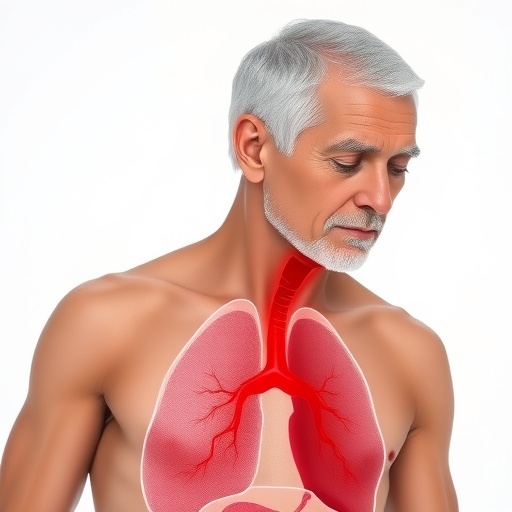
In recent years, the intricate connections between biochemical markers and chronic health conditions have drawn heightened attention from the scientific community. One particularly captivating area of investigation centers on the relationship between serum total bilirubin levels and the prevalence of metabolic syndrome, especially in aging populations. Metabolic syndrome, a constellation of risk factors including central obesity, hypertension, dyslipidemia, and insulin resistance, poses a formidable challenge to global health, particularly among elderly demographics. The study conducted by Di, Liu, Huang, and colleagues delves deeply into this association within a specific cohort: elderly Chinese males. Their findings, published in BMC Geriatrics in 2026, punctuate the complex interplay between endogenous compounds and systemic disease processes, offering intriguing insights with broad implications.
The notion that bilirubin, a yellowish pigment produced by the breakdown of heme in red blood cells, could be a protective biomarker in metabolic conditions disrupts traditional biomedical perspectives. Historically regarded primarily as a waste product implicated in jaundice, bilirubin’s physiological roles are now understood to be far more nuanced. It exhibits significant antioxidant properties and modulates inflammatory pathways, which are both critical in the pathogenesis of metabolic syndrome. The study by Di et al. harnesses this paradigm shift, exploring how varying serum total bilirubin concentrations might correlate with metabolic syndrome prevalence among elderly males, thereby opening the door to potential diagnostic and therapeutic innovations.
Methodologically, the study embraced an observational, cross-sectional design focusing on a well-defined population. Elderly Chinese males were enrolled and stratified based on a spectrum of serum total bilirubin levels, ranging from low to high concentrations. Metabolic syndrome diagnosis adhered to rigorous criteria involving waist circumference, blood pressure measurements, fasting glucose, triglyceride levels, and HDL cholesterol concentrations. By employing robust statistical analyses that adjusted for confounding variables such as age, smoking status, and comorbidities, the researchers fortified the validity and reliability of their findings, ensuring that observed associations were not artifacts of population heterogeneity.
The results revealed a compelling inverse relationship between serum total bilirubin levels and the prevalence of metabolic syndrome. In essence, higher total bilirubin concentrations were associated with a reduced risk of harboring the constellation of metabolic dysfunctions characterizing the syndrome. These observations reinforce the hypothesis that bilirubin’s antioxidative and anti-inflammatory effects might mitigate the oxidative stress and systemic inflammation underpinning metabolic derangements. Such findings align with emerging literature that suggests bilirubin may confer protective cardiovascular effects, which is pivotal given the syndrome’s strong link to increased risk of heart disease and stroke.
One of the study’s groundbreaking aspects lies in its focus on elderly Chinese males, a demographic that epitomizes the global challenges of aging populations and escalating metabolic disorders. Given China’s rapid demographic shifts and increasing prevalence of metabolic syndrome within its elderly cohorts, understanding nuanced biochemical markers such as bilirubin is critical for public health strategies. The specificity of this population underscores the importance of contextual factors including ethnicity, lifestyle, and genetic predispositions in metabolic disease research, suggesting that bilirubin’s role might exhibit population-specific dynamics warranting tailored healthcare approaches.
Beyond epidemiological associations, the study dives into mechanistic interpretations. Bilirubin’s antioxidant capacity is largely mediated by its ability to scavenge reactive oxygen species (ROS), thereby preventing cellular damage and preserving endothelial function — both of which are crucial in maintaining metabolic homeostasis. Furthermore, bilirubin may downregulate pro-inflammatory cytokines such as TNF-alpha and interleukins, key players in the chronic low-grade inflammation observed in metabolic syndrome. This dual action helps to elucidate why individuals with higher bilirubin levels might experience lower incidences of metabolic abnormalities, framing bilirubin as an endogenous molecule with potential therapeutic value.
In addition, the research sheds light on bilirubin’s interaction with lipid metabolism. Dyslipidemia, an integral element of metabolic syndrome, involves imbalances in triglycerides and high-density lipoprotein cholesterol. Bilirubin has been posited to improve lipid profiles by modulating hepatic lipid metabolism and influencing cholesterol efflux pathways. The evidence presented by Di and colleagues supports this hypothesis, as participants exhibiting elevated bilirubin also demonstrated more favorable lipid parameters. This link highlights a multifactorial protective mechanism whereby bilirubin contributes to metabolic resilience in multiple dimensions.
However, the authors prudently acknowledge certain limitations inherent in their study design. The cross-sectional nature precludes definitive causal inferences; it remains ambiguous whether higher bilirubin actively reduces metabolic syndrome risk or if the syndrome itself influences bilirubin metabolism. Moreover, the exclusive focus on elderly Chinese males constrains generalizability, calling for replication studies across diverse ethnicities, ages, and genders. Additionally, external factors such as diet, medication usage, and underlying liver function, which could modulate bilirubin levels, warrant further detailed scrutiny in future investigations.
The translation of these findings to clinical practice could be transformative. Bilirubin measurement is a simple and widely available laboratory test, traditionally employed in hepatological assessments. If validated, bilirubin could serve as a cost-effective biomarker for early metabolic syndrome risk stratification, especially in resource-limited settings. Moreover, leveraging bilirubin’s biochemical pathways might inspire novel pharmacological interventions aiming to elevate protective bilirubin levels or mimic its antioxidative effects, thereby addressing the metabolic syndrome epidemic through innovative strategies beyond conventional lifestyle modifications and drug therapies.
Importantly, this study also prompts a reconsideration of how normal laboratory reference ranges for bilirubin are established, particularly in elderly populations. Historically, bilirubin’s threshold values have focused on detecting pathological levels indicative of liver dysfunction or hemolysis. The demonstration that higher bilirubin within physiological ranges may confer health benefits necessitates a recalibration of “normal” values, emphasizing functional and prognostic interpretations rather than purely diagnostic cutoffs. This conceptual shift highlights the evolving nature of biochemical markers in personalized medicine.
The broader scientific implications of this research resonate with emerging trends investigating the role of endogenous molecules traditionally deemed waste products or toxins in health regulation. Bilirubin’s newly recognized systemic effects underscore a paradigm in which metabolic and oxidative homeostasis intertwines with seemingly unrelated biochemical pathways. Such revelations encourage integrative research approaches combining biochemistry, endocrinology, and geriatrics to holistically address age-associated disease burdens and improve healthspan outcomes.
From a public health perspective, the findings raise awareness about metabolic syndrome prevention strategies targeting biochemical resilience. Identifying modifiable factors or lifestyle interventions that naturally increase bilirubin levels might become a focal point of preventive measures. For example, moderate exercise and dietary constituents influencing heme metabolism or hepatic function could potentially be harnessed to optimize endogenous bilirubin production or activity. This multi-layered intervention framework could complement existing approaches aimed at curbing the morbidity and mortality linked to metabolic syndrome.
Furthermore, the impact of genetic polymorphisms related to bilirubin metabolism emerges as a promising area for future exploration. Variations in genes encoding enzymes like UDP-glucuronosyltransferase (UGT1A1), responsible for bilirubin conjugation and clearance, may influence serum bilirubin levels and thereby susceptibility to metabolic syndrome. Understanding these genetic determinants could pave the way for precision medicine models, allowing individualized risk assessments and therapeutic tailoring based on patients’ bilirubin metabolism profiles.
The study also highlights the importance of including elderly individuals in metabolic research, an age group often underrepresented in clinical studies despite bearing a significant burden of metabolic and cardiovascular diseases. As aging populations burgeon globally, insights derived from such focused cohorts provide vital evidence to shape geriatric healthcare paradigms. By emphasizing biochemical predictors like bilirubin, geriatricians and endocrinologists may better identify high-risk patients and implement earlier, targeted interventions.
In summation, the work by Di et al. represents a milestone in understanding the multifaceted role of bilirubin in metabolic health. The robust association uncovered in elderly Chinese males invites a reevaluation of bilirubin’s biomedical significance beyond its conventional hepatological context. This research not only enriches the scientific narrative around metabolic syndrome but also stimulates innovative concepts in biomarker development, disease prevention, and therapeutic design. As we move forward, integrating bilirubin dynamics into the landscape of metabolic research and clinical practice holds the promise of advancing health outcomes for aging populations worldwide.
Cite Scienmag News
Ophelia Keating. (February 23, 2026). Serum Bilirubin Linked to Metabolic Syndrome in Elderly. Scienmag. https://scienmag.com/serum-bilirubin-linked-to-metabolic-syndrome-in-elderly/
Ophelia Keating. "Serum Bilirubin Linked to Metabolic Syndrome in Elderly." Scienmag, 23 February 2026, https://scienmag.com/serum-bilirubin-linked-to-metabolic-syndrome-in-elderly/. Accessed 31 August 2026.
Ophelia Keating. "Serum Bilirubin Linked to Metabolic Syndrome in Elderly." Scienmag. February 23, 2026. https://scienmag.com/serum-bilirubin-linked-to-metabolic-syndrome-in-elderly/


