


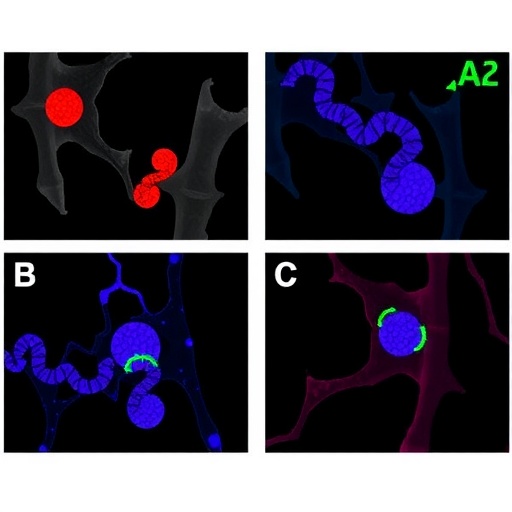
In a groundbreaking advancement poised to revolutionize orthopedic medicine, a team of researchers led by Movérare-Skrtic et al. has unveiled a critical signaling pathway that could serve as a promising target for fracture prevention. Their study, recently published in Nature Communications, identifies the ephrin-A1–EphA2 signaling axis as a fundamental regulator of bone integrity, opening new avenues for therapeutic interventions aimed at reducing fracture risk in vulnerable populations.
Bone fractures represent a significant global health burden, particularly among aging individuals and those suffering from osteoporosis or other bone degenerative diseases. Current treatments largely focus on managing symptoms and enhancing bone density but fall short of addressing the molecular mechanisms that underpin bone fragility. The novel insights into ephrin-A1–EphA2 signaling provide a molecular foothold to develop next-generation therapies that not only strengthen bone but also maintain its resilience against mechanical stress.
Ephrins and Eph receptors constitute a family of membrane-bound proteins typically recognized for their roles in cell positioning, tissue patterning, and angiogenesis during embryonic development. Until recently, their functions in mature bone tissue remained poorly understood. This study elucidates how ephrin-A1 interactions with the EphA2 receptor orchestrate critical cellular communications within the bone microenvironment, profoundly influencing the behavior of osteoblasts and osteoclasts—the primary architects of bone remodeling.
The researchers employed a sophisticated blend of in vivo genetic models, in vitro cellular assays, and advanced imaging techniques to dissect the ephrin-A1–EphA2 pathway’s contribution to skeletal homeostasis. Mice deficient in EphA2 experienced markedly increased susceptibility to fractures under mechanical loading, demonstrating the receptor’s essential role in maintaining cortical bone strength. Conversely, augmenting ephrin-A1–EphA2 interactions enhanced osteogenic activity, facilitating bone repair and formation.
At the cellular level, ephrin-A1 binding to EphA2 initiates a cascade of intracellular signaling events involving the modulation of Rho GTPases, cytoskeletal dynamics, and focal adhesion complexities. These molecular events translate into enhanced osteoblast migration, adhesion, and matrix deposition, collectively reinforcing bone architecture. Meanwhile, the pathway exerts an inhibitory influence on osteoclast differentiation and resorptive function, preventing excessive bone degradation.
The study’s multidisciplinary approach combined cutting-edge gene editing technologies, including CRISPR/Cas9-mediated receptor knockout, with high-resolution micro-computed tomography (micro-CT) to visualize alterations in bone morphology. Histological analyses revealed that disruption of ephrin-A1–EphA2 signaling disorganized trabecular bone networks and compromised mineral density, underscoring the pathway’s integral role in skeletal robustness.
Beyond fundamental biology, the implications for clinical translation are profound. Currently used pharmacological agents for osteoporosis, such as bisphosphonates and denosumab, primarily inhibit bone resorption but do not actively promote osteoblast function. Targeting ephrin-A1–EphA2 signaling could offer a dual mechanism—stimulating bone formation while simultaneously restraining degradation, addressing limitations of existing treatments.
The researchers also highlighted the pathway’s potential to synergize with mechanical stimuli, which are known to promote bone health through mechanotransduction. Ephrin-A1–EphA2 may serve as a molecular nexus translating mechanical forces into biochemical signals, thus enabling adaptive remodeling that preserves bone density under varying physiological demands.
Importantly, the study accentuated the therapeutic potential of small-molecule agonists or biologics designed to modulate ephrin-A1–EphA2 interactions. Such agents could be developed to selectively enhance receptor activation in osteoblasts or inhibit aberrant receptor function in pathological bone loss, providing a precision medicine approach to fracture prevention.
Extensive profiling of gene expression changes associated with manipulation of the ephrin-A1–EphA2 axis revealed upregulation of osteogenic markers such as RUNX2, osteocalcin, and alkaline phosphatase, corroborating the pathway’s stimulatory effect on bone anabolic processes. Intriguingly, downstream signaling involved PI3K/Akt and MAPK pathways, signaling hubs traditionally associated with cell survival and proliferation.
The involvement of ephrin signaling in vascularization of bone was also examined, given the critical role of the vasculature in nutrient delivery and cellular trafficking during bone remodeling. EphA2 expression in endothelial cells of bone marrow sinusoids suggests that modulating this pathway could concurrently enhance bone angiogenesis, further supporting bone repair mechanisms.
Given the multifaceted role of ephrin-A1–EphA2 in diverse cell types within the bone niche, the study raises important questions about possible cross-talk with other signaling pathways, such as Wnt/β-catenin and BMP (bone morphogenetic protein) pathways, which are also central to bone physiology. Understanding these interactions will be key to optimizing therapeutic targeting strategies.
Notably, the paper discusses the safety profile of modulating ephrin-A1–EphA2, as these molecules are expressed in multiple tissues. The researchers advocate for targeted delivery systems or localized activation to minimize off-target effects, a crucial consideration for clinical development.
Beyond osteoporosis, the findings hold promise for conditions characterized by impaired bone healing, such as delayed fracture consolidation and non-unions. By accelerating osteoblast function and regulating osteoclast activity, ephrin-A1–EphA2 agonists could revolutionize post-fracture care and rehabilitation.
The identification of ephrin-A1–EphA2 as a therapeutic axis exemplifies the power of integrative molecular biology and precision medicine in tackling longstanding clinical challenges. It represents a paradigm shift from symptomatic treatment towards molecularly targeted strategies that address the root causes of bone fragility at the cellular level.
Looking forward, the research team is poised to advance preclinical development of ephrin-A1–EphA2 modulators and explore potential synergistic therapies combining pathway modulation with current bone anabolic agents. Clinical trials assessing safety, efficacy, and dosing regimens will be instrumental in translating this promising science into tangible patient benefits.
As the global population ages and the incidence of osteoporotic fractures escalates, breakthroughs like this offer renewed hope for improved quality of life and reduced healthcare burdens through innovative, mechanism-based bone-strengthening treatments.
The comprehensive elucidation of ephrin-A1–EphA2 signaling constitutes a landmark discovery that not only deepens our understanding of skeletal biology but also ignites a new frontier in fracture prevention research—one that could transform orthopedic medicine forever.
Cite Scienmag News
Drew Townsend. (February 21, 2026). Ephrin-A1–EphA2 Signaling: New Fracture Prevention Target. Scienmag. https://scienmag.com/ephrin-a1-epha2-signaling-new-fracture-prevention-target/
Drew Townsend. "Ephrin-A1–EphA2 Signaling: New Fracture Prevention Target." Scienmag, 21 February 2026, https://scienmag.com/ephrin-a1-epha2-signaling-new-fracture-prevention-target/. Accessed 1 September 2026.
Drew Townsend. "Ephrin-A1–EphA2 Signaling: New Fracture Prevention Target." Scienmag. February 21, 2026. https://scienmag.com/ephrin-a1-epha2-signaling-new-fracture-prevention-target/


