


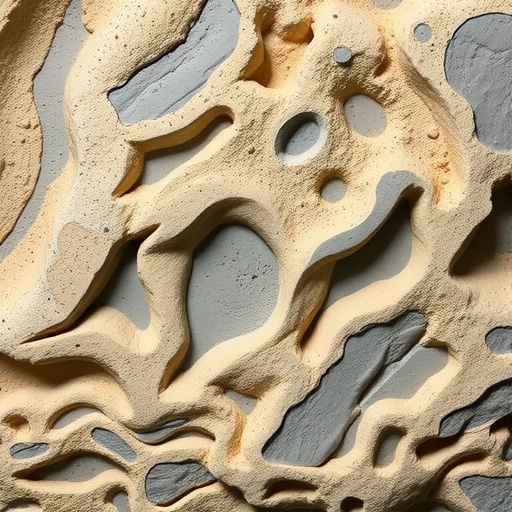
The ocean, covering over 70% of the Earth’s surface, is a vast and dynamic reservoir of chemical elements essential for life and climate regulation. Among the complex interactions within marine systems, the cycling of trace elements stands out as a fundamental process influencing biogeochemical balances. In groundbreaking research published in Nature Communications in 2026, Löhr, Abbott, Baldermann, and colleagues have unveiled new insights into how authigenic clay formation plays a vital role in modulating the marine trace element cycle. This discovery challenges long-standing assumptions and offers transformative perspectives on ocean chemistry, sediment interactions, and global elemental fluxes.
Trace elements, including metals such as iron, manganese, zinc, and rare earth elements, serve as micronutrients vital to marine organisms and act as tracers for environmental changes. Their distribution and speciation in seawater profoundly affect biological productivity and the transport of contaminants. However, the mechanisms by which these trace metals are removed from or returned to the ocean remain incompletely understood. The recent study delves into authigenic clays—minerals that form in situ within marine sediments—as dynamic reactors and sinks for trace metal cycling, providing a powerful lens to reinterpret sediment-water exchange processes.
Authigenic clays emerge through chemical reactions in the sediment porewaters, driven by the local geochemical milieu, including pH, redox conditions, and the availability of metal ions. As these clays precipitate, they can incorporate trace elements into their crystal lattices or adsorb them onto mineral surfaces, effectively scavenging them from the surrounding environment. Löhr and colleagues applied state-of-the-art spectroscopic and microscale analytical techniques to sediment cores from various ocean basins. Their data reveal previously unappreciated complexity in the formation pathways and metal-binding capacities of these mineral phases.
One of the pivotal findings is that authigenic clays preferentially sequester certain trace elements, leading to spatial heterogeneity in sediment composition and influence on the benthic fluxes. For example, iron incorporated into authigenic clays presents a less bioavailable pool compared to dissolved forms, potentially affecting iron limitation in surface waters. Meanwhile, elements like scandium and yttrium show strong affinity for these minerals, suggesting an overlooked sink that may modulate their oceanic residence times. This nuanced understanding revamps the conceptual models of trace element cycling, emphasizing mineralogical transformations as decisive controls.
Importantly, the research highlights the intertwined nature of authigenic clay formation with redox gradients across sediment layers. Under suboxic and anoxic conditions, biogeochemical reactions involving organic matter degradation, sulfate reduction, and metal reduction create chemical microenvironments conducive to clay mineral genesis. The team observed that shifts in these environmental parameters could dramatically alter the rates and extents of authigenic mineral growth. Such dynamics imply that varying ocean oxygenation states—both in modern settings and through geological timescales—directly impact trace element distributions via mineral-mediated pathways.
Moreover, the sediment-water interface emerges as a hotspot for trace element exchange governed by authigenic clay activity. By modulating sorption-desorption equilibria and influencing particulate settling, these minerals serve as active mediators between the ocean and sediments. This finding recalibrates previous estimates of benthic fluxes of trace metals, which often underestimated mineralogical contributions. The authors argue that global biogeochemical models must integrate authigenic clay formation mechanisms to accurately represent elemental cycling and predict responses to environmental change.
Given the complexity unveiled, the authors employed coupled geochemical modeling alongside empirical observations. These models simulated authigenic clay nucleation and growth under variable marine conditions, illustrating how mineral formation acts as a buffer for trace metal concentrations. The buffering capacity has significant implications for ocean nutrient availability and metal toxicity thresholds. Furthermore, these mineral phases may dictate the long-term sequestration of anthropogenic pollutants, highlighting their role in natural attenuation processes within marine sediments.
From a broader perspective, this study also informs paleoceanographic reconstructions. Authigenic clays, preserved in sedimentary records, carry geochemical signatures reflective of past marine conditions. By decoding trace element partitioning within these minerals, scientists can refine interpretations of ancient ocean redox states, productivity cycles, and climate feedbacks. This advancement enhances our ability to link sedimentary archives with global biogeochemical evolution over millions of years.
The interdisciplinary nature of this work, converging mineralogy, oceanography, and geochemistry, underscores the necessity of integrated approaches to unravel marine elemental cycles. The advanced analytical methods such as synchrotron-based X-ray absorption spectroscopy used by Löhr et al. allowed unprecedented resolution of elemental speciation within authigenic phases. Meanwhile, their attention to diverse sediment environments—from continental margins to deep-sea basins—captured the global extent and variability of clay-mediated trace element cycling.
One of the remarkable aspects is the viral potential of this discovery within scientific and environmental communities. Understanding how authigenic clays modulate trace metal bioavailability could reshape environmental management strategies, such as controlling nutrient inputs and mitigating metal pollution in coastal ecosystems. Additionally, the linkage between sediment mineralogy and ocean health may influence conservation policies targeting marine biodiversity hotspots sensitive to trace metal imbalances.
As climate change propels shifts in ocean temperature, oxygen levels, and productivity, the mechanisms highlighted here become increasingly relevant. Alterations in authigenic clay formation rates and compositions could feedback into global nutrient cycles and carbon sequestration pathways. Thus, incorporating these mineralogical processes into Earth system models offers a critical dimension to predict future oceanic responses to anthropogenic pressures.
The implications stretch beyond marine science, intersecting with resource exploration and environmental geochemistry. Trace element enrichment within authigenic clays may inform the genesis of certain marine mineral deposits, including economically relevant metals. Furthermore, these processes might affect the mobility and fate of radioactive isotopes or other hazardous elements in seabed sediments, influencing marine environmental risk assessments.
In summary, the research by Löhr and colleagues marks a paradigm shift in our understanding of marine trace element cycling, spotlighting authigenic clay formation as a foundational process. By marrying meticulous empirical data with robust modeling, they illuminate the mineralogical underpinnings of elemental distributions and fluxes in the ocean-sediment system. This work not only enriches fundamental geochemical theory but also provides a vital framework to tackle pressing environmental challenges in a changing ocean world.
Looking ahead, the study opens fertile avenues for further investigation, including the role of microbial mediation in clay genesis, interactions with organic matter, and the responses of these processes to ocean perturbations. Expanding this research through global sediment sampling campaigns and advanced in situ monitoring will deepen our grasp of these intricate biogeochemical mechanisms. The convergence of mineralogical insights with ecosystem dynamics promises profound impacts on marine science, climate research, and environmental stewardship in the decades to come.
Cite Scienmag News
Eleanor C. (February 21, 2026). Authigenic Clay Shapes Marine Trace Element Cycles. Scienmag. https://scienmag.com/authigenic-clay-shapes-marine-trace-element-cycles/
Eleanor C. "Authigenic Clay Shapes Marine Trace Element Cycles." Scienmag, 21 February 2026, https://scienmag.com/authigenic-clay-shapes-marine-trace-element-cycles/. Accessed 29 August 2026.
Eleanor C. "Authigenic Clay Shapes Marine Trace Element Cycles." Scienmag. February 21, 2026. https://scienmag.com/authigenic-clay-shapes-marine-trace-element-cycles/


