


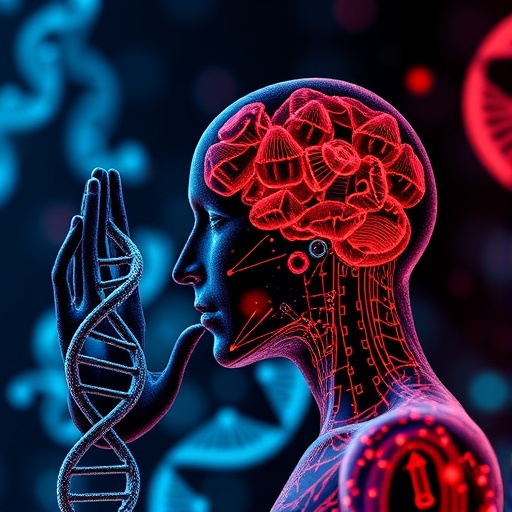
In a groundbreaking study poised to reshape our understanding of human health, researchers have uncovered a profound genetic overlap between psychiatric disorders and physical illnesses. This revelation challenges traditional views that have long treated mental and physical diseases as distinct entities and opens up promising new avenues for integrated healthcare approaches and personalized medicine. The collaborative work led by Lawrence, J.M., Foote, I.F., and Breunig, S., published in the prestigious journal Nature Communications in 2026, presents a comprehensive exploration of the shared genetic architecture that underlies systems of psychiatric and physical illness.
Historically, psychiatric and physical conditions have been studied and treated in isolation, with mental health often stigmatized and physical illnesses primarily approached through somatic symptomatology. However, the recent explosion of genetic research powered by genome-wide association studies (GWAS) has paved the way for a more holistic understanding. This study harnesses cutting-edge genomic technologies and large-scale biobank data, probing millions of genetic variants across diverse populations to identify loci that contribute to multiple disease phenotypes.
At the heart of this research lies the concept of pleiotropy—a genetic phenomenon wherein a single gene influences multiple phenotypic traits. The investigators employed advanced statistical frameworks to uncover pleiotropic risk loci shared between psychiatric disorders such as schizophrenia, bipolar disorder, and major depression, and chronic physical conditions including cardiovascular disease, autoimmune disorders, and metabolic syndromes. The findings suggest that these shared loci may mediate complex biological pathways connecting brain function, immune response, and systemic physiology, challenging the compartmentalized models of illness.
Delving deeper, the team found that many of the implicated genetic regions affect neuroinflammatory processes and immune regulation. This supports emerging theories positing that aberrant immune signaling and chronic inflammation not only contribute to neuropsychiatric pathology but also manifest in peripheral organs. For example, variants within the major histocompatibility complex (MHC) region demonstrated robust associations across multiple conditions, emphasizing the role of antigen presentation and immune surveillance mechanisms in mental and physical health.
Furthermore, epigenetic modifications appeared to modulate the penetrance of shared genetic risks. The researchers observed that environmental exposures, such as stress, diet, and infections, interact with these genetic architectures, potentially influencing disease onset and progression. This gene-environment interplay underscores the necessity of integrating lifestyle and psychosocial factors into genetic risk modeling to accurately predict individual susceptibility.
The analytical approach adopted by Lawrence and colleagues leveraged multi-trait meta-analyses and polygenic risk scoring methods, which aggregate the small effects of numerous genetic variants into composite risk indices. These indices were then validated against clinical phenotypes in independent cohorts, demonstrating strong predictive power for multisystem comorbidities. The ability to forecast the confluence of psychiatric and physical illness could revolutionize early diagnosis and preventive interventions.
Additionally, the study highlights the importance of considering sex differences in genetic liability. Several loci exhibited sex-specific effects, which may partially explain observed disparities in disease prevalence and symptom expression between males and females. Future research targeting these differences could yield tailored therapeutic strategies, optimizing treatment efficacy based on genetic and biological sex.
Importantly, the findings suggest potential targets for pharmacological intervention that transcend traditional disciplinary boundaries. Drug repurposing opportunities emerge from the identification of shared pathways; for instance, immunomodulatory agents developed for autoimmune diseases might hold promise in treating certain psychiatric conditions, and vice versa. Such cross-disciplinary therapeutics could enhance patient outcomes by addressing the interconnected nature of these disorders.
The implications of this study extend beyond clinical practice into public health policy. Recognizing the intertwined genetic underpinnings of mental and physical illness supports integrated health service models that combine psychiatric and medical care. This integration is particularly crucial in resource-limited settings where fragmented care contributes to worsening health disparities. Policymakers might leverage these insights to advocate for more comprehensive screening and intervention programs.
Moreover, the research community stands to benefit from the open availability of large-scale datasets and analytic pipelines generated during this investigation. Sharing these resources accelerates scientific discovery and promotes reproducibility, hallmarks of rigorous genomic science. Collaborative efforts leveraging international consortia and diverse populations will be vital for refining and extending these findings.
In conclusion, the Lawrence et al. study marks an important milestone in genomic medicine by illuminating the shared genetic basis of psychiatric and physical illness. This paradigm shift from siloed investigation to a systems biology perspective promises to transform how we understand, diagnose, and treat complex human diseases. As technological advances enable increasingly detailed characterizations of genetic and molecular networks, the prospect of truly personalized, integrative healthcare comes ever closer to reality.
As clinicians, researchers, and policymakers digest these findings, the broader societal narrative around health may also evolve. Stigma associated with mental illness could diminish as its biological connections to broader bodily systems become clear. Patients may benefit from more empathetic care models that acknowledge the full spectrum of their health challenges. Ultimately, this integrative genetic insight invites us to rethink disease not as isolated malfunctions, but as interconnected disturbances within the intricate web of human biology.
Cite Scienmag News
Juliet Wilcox. (February 21, 2026). Unraveling Shared Genetics Linking Mental and Physical Illness. Scienmag. https://scienmag.com/unraveling-shared-genetics-linking-mental-and-physical-illness/
Juliet Wilcox. "Unraveling Shared Genetics Linking Mental and Physical Illness." Scienmag, 21 February 2026, https://scienmag.com/unraveling-shared-genetics-linking-mental-and-physical-illness/. Accessed 4 September 2026.
Juliet Wilcox. "Unraveling Shared Genetics Linking Mental and Physical Illness." Scienmag. February 21, 2026. https://scienmag.com/unraveling-shared-genetics-linking-mental-and-physical-illness/


