

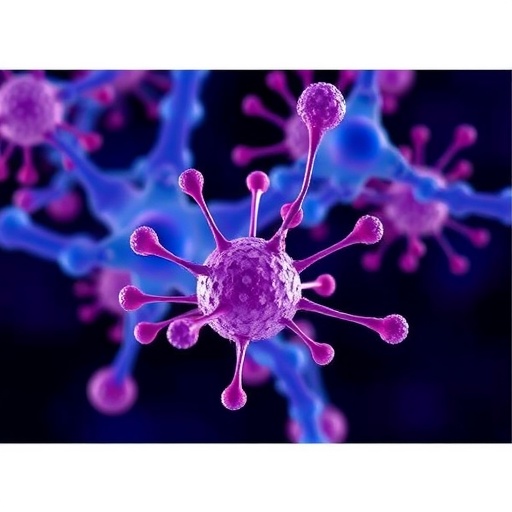
A groundbreaking study conducted by researchers at the Ribeirão Preto Blood Center and the Center for Cell-Based Therapy (CTC) at the University of São Paulo has unveiled novel strategies to enhance the efficacy of chimeric antigen receptor-natural killer (CAR-NK) cell therapy against cancer. By employing the NK-92 cell line, this research delves into the profound impact of integrating specific costimulatory domains—namely 2B4 and DAP12—into CAR constructs. These engineered CAR-NK-92 cells demonstrated markedly enhanced activation and cytotoxicity, suggesting a promising leap forward in the fight against hematological malignancies.
CAR-based therapies, notably CAR-T cells, have revolutionized oncology, particularly in treating blood cancers such as leukemia and lymphoma. However, despite their success, CAR-T therapies face limitations including cytokine release syndrome and graft-versus-host disease. NK cells, innate immune effectors with natural tumor-targeting abilities and lower risk of adverse reactions, are emerging as a compelling alternative. Understanding how intracellular signaling domains modulate CAR-NK activity is crucial for developing next-generation immunotherapies, a challenge this study adeptly addresses.
The essence of this research lies in the meticulous design of chimeric antigen receptors with dual costimulatory signals, 2B4 and DAP12, embedded within the NK-92 cells. 2B4 (CD244) is a known natural killer receptor that delivers activating signals enhancing NK cell-mediated cytotoxicity. DAP12 serves as an adaptor protein transmitting activation signals through immunoreceptor tyrosine-based activation motifs. Their combined incorporation synergistically primes CAR-NK-92 cells, effectively “arming” them to identify and destroy tumor cells with greater potency compared to conventional CAR configurations.
The investigators further explored dynamic modulation of CAR-NK activity through pharmacological means, introducing the kinase inhibitor dasatinib as a reversible on/off switch to transiently dampen cell activation. Pre-treatment with dasatinib allowed precise control over the CAR-NK cell cytotoxic response, facilitating enhanced tumor control in animal models. This strategy not only mitigates the risk of overactivation but also offers clinicians temporal regulation to optimize therapeutic windows, mitigating potential side effects while preserving antitumor efficacy.
Experiments conducted in murine models demonstrated that dasatinib-treated CAR-NK-92 cells co-stimulated with 2B4-DAP12 exhibited superior tumor suppression relative to traditional CAR-NK cells lacking these enhancements. This validates the concept that coupling tailored intracellular signaling domains with pharmacological modulation can substantially amplify the therapeutic index of CAR-NK-based interventions. The reversible nature of dasatinib’s inhibition offers an unprecedented control mechanism, paving the way for safer and more effective cell therapies.
Technically, the researchers employed gene engineering techniques to insert synthetic CAR constructs into the NK-92 cell genome, harnessing lentiviral vectors for stable expression. Functional assays measured cytotoxicity against CD19-positive tumor targets, a clinically relevant antigen expressed on B-cell malignancies. Flow cytometry and cytokine profiling confirmed heightened activation markers and effector molecule release, correlating directly with enhanced tumor cell lysis. Such comprehensive evaluation underscores the translational potential of this methodology.
This study not only deepens understanding of intracellular signaling dynamics in CAR-NK cells but also sets a precedent for integrating pharmacological agents as modulators of immune cell function. By combining biological engineering with chemical modulation, researchers open new frontiers in precision immunotherapy where immune effectors can be finely tuned, minimizing collateral damage and maximizing antitumor activity. This dual strategy is likely to inspire further innovations across various cell-based treatment modalities.
The Ribeirão Preto Blood Center and CTC, backed by the São Paulo Research Foundation (FAPESP), exemplify how collaborative, multidisciplinary research initiatives accelerate breakthroughs in biomedicine. Their coordinated efforts in immunology, molecular biology, and pharmacology showcase how targeted funding and institutional support can translate bench discoveries into potential clinical interventions. The promising results highlight the integral role of academic-government partnerships in driving cancer immunotherapy development forward.
Future research spurred by these findings will explore the applicability of 2B4-DAP12 costimulation combined with reversible pharmacological control across diverse NK cell populations and solid tumor models. Optimization of activation thresholds, dosage regimens of dasatinib, and exploration of additional adaptor molecules remain critical next steps. These avenues promise to refine CAR-NK therapies further, potentially overcoming current therapeutic bottlenecks and enhancing persistence, infiltration, and tumor eradication capabilities.
The transformative potential of this research is underscored by its publication in the peer-reviewed journal Frontiers in Immunology on December 11, 2025. It represents a pivotal advancement toward more controllable, safer, and highly potent cell therapies that could redefine cancer treatment paradigms. Scientists and clinicians alike will closely monitor forthcoming translational studies and clinical trials inspired by this innovative approach.
For those keen to engage deeper with the subject, a detailed video presentation elucidating the experimental journey and mechanistic insights is available on the Ribeirão Preto Blood Center’s official YouTube channel, facilitating broader dissemination and educational outreach. The visibility afforded by such multimedia resources ensures accelerated knowledge transfer within the scientific community and beyond.
In conclusion, this pioneering work demonstrates that strategic co-stimulation via 2B4 and DAP12 in CAR-NK-92 cells combined with the reversible application of dasatinib substantially enhances anti-CD19 cytotoxicity. This dual approach addresses critical challenges in CAR-NK cell therapy, offering a new blueprint for next-generation immunotherapies capable of delivering precise, powerful, yet controllable antitumor responses.
News Publication Date: 11-Dec-2025
Web References:
- Frontiers in Immunology Journal Article
- Ribeirão Preto Blood Center YouTube Channel
- São Paulo Research Foundation (FAPESP)
References: DOI 10.3389/fimmu.2025.1675877
Cite Scienmag News
SCIENMAG. (February 20, 2026). Innovative Approaches Enhance CAR-NK Therapy Efficacy in Cancer Treatment. https://scienmag.com/innovative-approaches-enhance-car-nk-therapy-efficacy-in-cancer-treatment/
SCIENMAG. "Innovative Approaches Enhance CAR-NK Therapy Efficacy in Cancer Treatment." Scienmag, 20 February 2026, https://scienmag.com/innovative-approaches-enhance-car-nk-therapy-efficacy-in-cancer-treatment/. Accessed 28 August 2026.
SCIENMAG. "Innovative Approaches Enhance CAR-NK Therapy Efficacy in Cancer Treatment." Scienmag. February 20, 2026. https://scienmag.com/innovative-approaches-enhance-car-nk-therapy-efficacy-in-cancer-treatment/


