


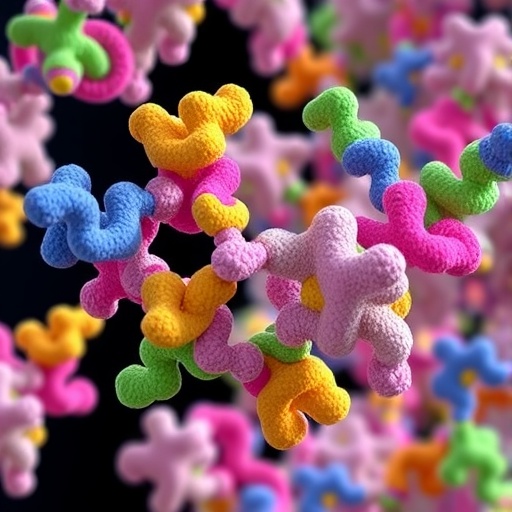
In a groundbreaking advancement that promises to reshape therapeutic strategies targeting protein assemblies, researchers have unveiled a novel pharmacological approach designed to sequester homomeric proteins with unprecedented specificity and efficacy. This pioneering modality, delineated in a recent publication from Livnah, Suss, Rogel, and colleagues in Nature Chemical Biology (2026), introduces a transformative paradigm in drug discovery that may address a plethora of disorders stemming from aberrant protein homomerization.
The intricate architecture of homomeric proteins, which are composed of identical subunits, confers pivotal biological functions across diverse cellular processes. However, dysregulation of homomeric protein assemblies frequently underlies pathogenic mechanisms in neurodegenerative diseases, cancers, and metabolic disorders. Traditional drug development efforts targeting these proteins have often been hampered by challenges in achieving selectivity and sustained modulation without off-target effects. The newly reported strategy circumvents these hurdles by pharmacologically inducing the selective sequestration of homomeric proteins, effectively neutralizing their pathological activity.
Central to the methodology is the design of small molecule agents that exploit unique interfacial binding sites present exclusively within homomeric assemblies. Unlike conventional inhibitors that typically compete at active or allosteric sites, these agents facilitate the aggregation or compartmentalization of homomeric proteins into nonfunctional complexes. This sequestration mechanism effectively reduces the bioavailability of functional protein subunits, arresting pathological signaling cascades that depend on their oligomerization state.
Structurally, the study leveraged cutting-edge crystallography and cryo-electron microscopy to elucidate the precise binding modes by which these pharmacological agents engage their targets. The high-resolution images revealed that the compounds intercalate at repeated contact points between monomers, stabilizing aberrant multimers that are biochemically inert. This structural insight was crucial in guiding iterative medicinal chemistry campaigns that optimized binding affinity and pharmacokinetics, culminating in molecules with exceptional potency and selectivity profiles.
Biochemically, the functional impact of homomeric protein sequestration was validated through an array of in vitro and cellular assays, demonstrating a dose-dependent attenuation of protein activity. Importantly, these compounds exhibited minimal cytotoxicity and did not interfere with heteromeric complexes, underscoring their specificity. Cellular imaging techniques confirmed the relocalization of target proteins into discrete cytoplasmic foci, consistent with the proposed sequestration mechanism.
The therapeutic implications of this modality are vast. By precisely dampening the function of deleterious homomeric proteins, it opens new therapeutic avenues for conditions previously deemed ‘undruggable’ due to the structural complexity of their targets. For neurodegenerative diseases characterized by toxic protein aggregation, such as Huntington’s or certain spinocerebellar ataxias, this approach offers a means to modulate pathogenic assemblies without global proteostasis disruption.
Equally compelling is the potential to target homomeric oncogenic proteins whose sustained oligomerization is critical for tumorigenic signaling. By selectively sequestering these assemblies, the new pharmacological agents could impair cancer cell proliferation with reduced likelihood of resistance development, a persistent challenge in oncology.
Mechanistically, the study proposes that the sequestration-driven inactivation operates via enforced spatial confinement of homomeric complexes, precluding their interaction with downstream effectors or substrates. This represents a departure from traditional competitive inhibition paradigms, embodying a novel class of pharmacodynamics where subcellular localization and oligomeric state modulation define therapeutic outcomes.
Further exploration into the pharmacokinetic properties revealed favorable absorption, distribution, metabolism, and excretion (ADME) profiles, supporting in vivo applicability. Animal models demonstrated significant amelioration of disease phenotypes upon administration of the sequestration agents, with robust target engagement confirmed by biomarker analyses.
The reported modality also illuminates fundamental biological questions regarding protein homeostasis and assembly dynamics. The ability to pharmacologically manipulate the oligomeric equilibria of homomeric proteins provides a powerful investigative tool, potentially unveiling new regulatory nodes in protein function.
Nevertheless, challenges remain in translating these findings into clinical contexts. Long-term effects of sustained sequestration on cellular proteome integrity and compensatory mechanisms warrant thorough investigation. Furthermore, the heterogeneity of homomeric assembly interfaces across protein families necessitates a tailored approach for each therapeutic target, demanding extensive structural characterization.
From a drug development perspective, the modular nature of the sequestration agents promises adaptability, allowing engineering of molecules optimized for diverse homomeric structures, tissue distribution profiles, and therapeutic indices. Integration with biomarker-guided patient stratification could enhance precision medicine applications, ensuring maximal therapeutic benefit with minimal adverse effects.
In summary, the innovative pharmacological sequestration of homomeric proteins unveiled by Livnah et al. signifies a conceptual leap in the manipulation of protein assemblies for therapeutic gain. It merges structural biology, medicinal chemistry, and cellular pharmacology to establish a powerful framework with the potential to revolutionize treatment modalities in currently intractable diseases. Ongoing efforts will undoubtedly expand the scope and refine the application of this modality, heralding a new era in targeted protein therapeutics.
As the scientific community digests this transformative strategy, anticipation builds around its potential to catalyze new clinical interventions and deepen our understanding of homomeric protein biology. The convergence of structural insight and pharmacological innovation embodied in this work underscores the dynamic trajectory of modern chemical biology, poised to unlock novel frontiers in disease treatment and molecular medicine.
Cite Scienmag News
Louis Brooks. (February 19, 2026). New Drug Strategy Targets Homomeric Protein Aggregation. Scienmag. https://scienmag.com/new-drug-strategy-targets-homomeric-protein-aggregation/
Louis Brooks. "New Drug Strategy Targets Homomeric Protein Aggregation." Scienmag, 19 February 2026, https://scienmag.com/new-drug-strategy-targets-homomeric-protein-aggregation/. Accessed 4 September 2026.
Louis Brooks. "New Drug Strategy Targets Homomeric Protein Aggregation." Scienmag. February 19, 2026. https://scienmag.com/new-drug-strategy-targets-homomeric-protein-aggregation/


