


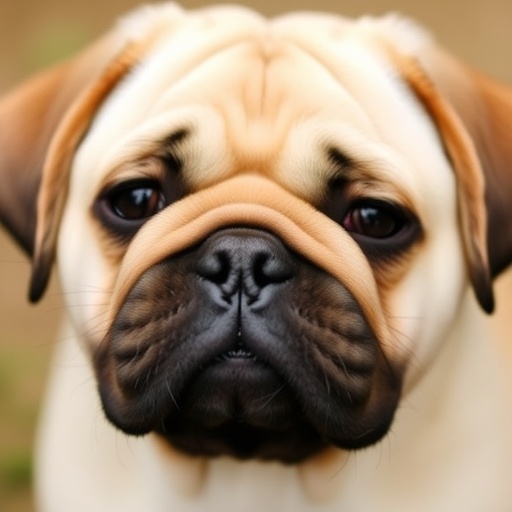
Scientists at the University of Cambridge Veterinary School have unveiled compelling new findings that expand our understanding of Brachycephalic Obstructive Airway Syndrome (BOAS), a chronic respiratory condition that threatens the health and well-being of numerous flat-faced dog breeds. Their groundbreaking research, recently published in PLOS One, reveals that beyond the well-documented French Bulldog, Pug, and Bulldog, twelve additional brachycephalic breeds face significant risks of developing this potentially debilitating disease.
BOAS arises from structural abnormalities in the upper respiratory tract, commonly associated with shortened skulls or flat faces, causing airway obstruction. This results in a spectrum of clinical signs ranging from mild noisy breathing to severe respiratory distress that can impede dogs’ ability to exercise, sleep comfortably, and regulate body temperature during heat or stress. Despite surgical and management interventions, the hereditary nature of BOAS underscores the urgent need for deeper insight into its conformational risk factors.
The Cambridge study meticulously assessed nearly 900 individuals across fourteen breeds including the Pekingese, Shih Tzu, Boston Terrier, Staffordshire Bull Terrier, Cavalier King Charles Spaniel, Chihuahua, and Boxer. Investigators adopted and refined a Respiratory Function Grading Scheme that evaluates breathing before and after exercise, classifying dogs on a scale from unaffected to severely affected. This robust methodology exposed significant variation in both prevalence and severity of BOAS within and between breeds.
Most notably, two breeds emerged as bearing a particularly high burden of respiratory compromise. The Pekingese demonstrated an alarming 89% prevalence of BOAS, with the Japanese Chin following closely at 82%, figures mirroring those historically seen in French Bulldogs and Pugs. Moderate risk was observed in breeds such as the King Charles Spaniel, Shih Tzu, Griffon Bruxellois, Boston Terrier, and Dogue de Bordeaux, with roughly half to three-quarters exhibiting signs of disease. Mild risk was seen in Staffordshire Bull Terriers, Cavalier King Charles Spaniels, Chihuahuas, Boxers, and Affenpinschers, while breeds like the Maltese and Pomeranian appeared largely unaffected.
The study sheds critical light on the complex relationships between head shape and BOAS susceptibility. Traditionally, brachycephaly is defined by shortened muzzles; however, the research highlights that relative skull width compared to length—the craniofacial ratio—is a more nuanced predictor. For instance, the King Charles Spaniel, despite its extremely flat face, had a surprisingly high percentage of unaffected individuals, indicating that other conformational and genetic factors play pivotal roles.
Nostril stenosis, the narrowing of nasal passages, reaffirmed its status as a significant and breed-dependent risk factor. Breeds at high risk, such as the Pekingese and Japanese Chin, exhibited severe nostril narrowing, with only a small fraction having open nostrils. Moderately affected breeds including the Griffon Bruxellois and Boston Terrier also showed a higher incidence of this trait. These findings underscore the importance of nostril patency in maintaining adequate airflow and overall respiratory function.
Beyond craniofacial morphology, the investigation revealed intriguing breed-specific physical attributes linked to BOAS. Tail length emerged as a novel risk marker: in Shih Tzus and Staffordshire Bull Terriers, shorter tails correlated with increased susceptibility. Additionally, greater neck girth was associated with elevated BOAS risk among Boston Terriers and Staffordshire Bull Terriers, a pattern previously observed in Bulldogs and French Bulldogs. These observations may reflect complex interplays between genetic lineage and conformational traits influencing airway dynamics.
Body proportions also influenced disease risk. Chihuahuas and King Charles Spaniels with relatively elongated bodies and shorter stature were more prone to BOAS. Weight played a critical role as well; overweight dogs within the Cavalier King Charles Spaniel, Shih Tzu, and Affenpinscher breeds faced significantly heightened risk, highlighting the potential for weight management as a mitigating strategy.
This comprehensive study not only advances our understanding of BOAS across a broader spectrum of brachycephalic breeds but also challenges dog breeders, veterinarians, and dog show judges to reconsider which conformational traits should be promoted or discouraged. Since anatomical features such as nostril constriction and craniofacial ratio explain only about 20% of the variation in BOAS, ongoing functional assessments remain essential for identifying affected individuals and informing responsible breeding.
Lead researchers emphasize that breed-specific approaches are critical. What places one breed at risk may not hold for another; thus, tailored screening and breeding recommendations are vital in mitigating BOAS prevalence. Additionally, heightened awareness and informed owner engagement can foster better animal welfare outcomes through early intervention and lifestyle management.
As brachycephalic breeds continue to captivate pet owners worldwide, this research serves as a vital call to action. It urges the canine community to prioritize health, functionality, and quality of life over aesthetic preferences. Through scientific rigor and collaborative efforts, it is possible to safeguard future generations from the burdens of BOAS, enabling these beloved breeds to breathe easier and live healthier lives.
Cite Scienmag News
William Thompson. (February 19, 2026). Twelve Dog Breeds, Including Pekingese, Shih Tzu, and Staffordshire Bull Terrier, Identified at Risk for Severe Breathing Disorders. Scienmag. https://scienmag.com/twelve-dog-breeds-including-pekingese-shih-tzu-and-staffordshire-bull-terrier-identified-at-risk-for-severe-breathing-disorders/
William Thompson. "Twelve Dog Breeds, Including Pekingese, Shih Tzu, and Staffordshire Bull Terrier, Identified at Risk for Severe Breathing Disorders." Scienmag, 19 February 2026, https://scienmag.com/twelve-dog-breeds-including-pekingese-shih-tzu-and-staffordshire-bull-terrier-identified-at-risk-for-severe-breathing-disorders/. Accessed 4 September 2026.
William Thompson. "Twelve Dog Breeds, Including Pekingese, Shih Tzu, and Staffordshire Bull Terrier, Identified at Risk for Severe Breathing Disorders." Scienmag. February 19, 2026. https://scienmag.com/twelve-dog-breeds-including-pekingese-shih-tzu-and-staffordshire-bull-terrier-identified-at-risk-for-severe-breathing-disorders/


