


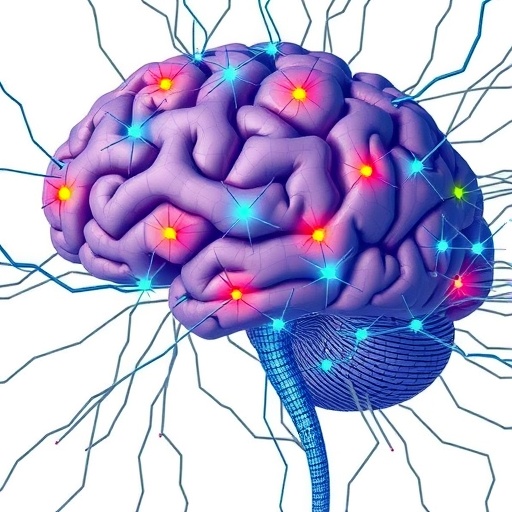
In a groundbreaking advance poised to reshape neurodevelopmental research, scientists have unveiled a simplified human cell model that reveals how coordinated brain rhythms, or nested oscillations, emerge in networks of human neurons grown in vitro. The study, published in Neurobiology of Disease on January 24, 2026, marks a significant stride in understanding the cellular and molecular underpinnings of patient-relevant neural activity patterns, offering a scalable and controllable platform that could accelerate discoveries in brain development and neurological disorder therapeutics.
Electroencephalography (EEG) has long been a cornerstone technique in neuroscience, allowing researchers to capture the brain’s electrical symphony through small electrodes placed on the scalp. These electrodes detect oscillations—rhythmic waves produced by large ensembles of neurons firing in near synchrony. Different frequency bands, such as delta, theta, and alpha, correspond to distinct brain states, including sleep, attention, and pathological conditions like epilepsy. Yet, despite its utility, EEG remains a surface-level measure that cannot directly probe the intricate cellular events that give rise to these oscillations.
To bridge this gap, the collaborative team from Sanford Burnham Prebys Medical Discovery Institute, the University of California San Diego (UCSD), and BioMarin Pharmaceutical developed a two-dimensional (2D) neuronal network derived from human induced pluripotent stem cells (iPSCs). Using multi-electrode arrays (MEAs), which are plates embedded with microscopic sensors, they noninvasively monitored the electrical activity of thousands of neurons growing in interconnected networks over time. This approach circumvents the complexity and scalability challenges posed by three-dimensional organoid models while preserving biologically relevant features critical for rhythmic electrical activity.
One of the remarkable findings of this research is the progressive maturation of nested oscillations within these 2D cultures. These nested oscillations, which consist of slower waves modulated by faster rhythmic components layered within them, mirror brainwave patterns conventionally recorded in human EEG. The emergence of these rhythms across classical frequency bands aligns with developmental trajectories observed in vivo, suggesting the utility of this model for recapitulating key physiological network dynamics in a dish. The reproducibility and robustness of these oscillations enable systematic pharmacological interrogation of neural circuits at unprecedented scale.
Central to the proper formation of these oscillations is inhibitory signaling mediated by gamma-aminobutyric acid (GABA), the brain’s principal inhibitory neurotransmitter. GABAergic neurons act as critical modulators of network excitability and synchronization, fostering stable rhythmic activity by preventing runaway excitation. The study’s authors demonstrated that pharmacological blockade of GABA-A receptors significantly dampens the nested oscillations, mimicking conditions that might promote seizures or other forms of network instability. Conversely, increasing the abundance of GABAergic neurons accelerated the appearance of rhythmic patterns, confirming the pivotal role of inhibitory balance in oscillatory maturation.
Expanding the pharmacological landscape, the team explored potassium channels, integral membrane proteins that regulate neuronal excitability by controlling ion flow. Given that certain mutations in potassium channel genes are implicated in epilepsy and neurodevelopmental disorders, understanding how modulating these channels affects network dynamics is vital. The data revealed that distinct perturbations of potassium channels exerted differential effects on oscillatory architecture, underscoring the complexity of excitability regulation and its nuanced impact on emergent network function.
To deepen insight into these complex signals, analytical tools developed in the lab of UCSD professor Bradley Voytek were employed. This framework dissects neural recordings into oscillatory components—rhythmic peaks of defined frequencies—and a broadband background often dismissed as noise. Interestingly, fluctuations within the broadband component tracked alongside oscillatory changes, challenging the notion of it as mere random noise and suggesting it conveys biologically meaningful information about network state and excitability. This dual analysis enhances the precision of drug effect interpretation by distinguishing changes to specific rhythms from shifts in overall network baseline activity.
In addition to traditional differentiation protocols, the researchers tested a rapid neuron-generation method using induced expression of the transcription factor neurogenin-2 (NGN2) in iPSCs, a technique that drastically shortens experimental timelines. However, neuronal cultures derived via NGN2 induction displayed only rudimentary nested oscillations, indicating the necessity for further refinement of these accelerated differentiation approaches to reliably replicate complex network rhythms essential for modeling diseases and screening therapeutics.
This 2D neuronal network model complements existing 3D brain organoid technologies, which offer superior architectural and cellular diversity but pose increased challenges in scalability and experimental reproducibility. By emphasizing control and throughput, the 2D platform fills a critical gap, making it especially useful for high-throughput drug screening and systematic comparison of genetic or pharmacological perturbations on neural network physiology.
The long-term vision of this work lies in establishing standardized, reproducible benchmarks of neural network maturation and dynamics, facilitating cross-study comparisons and accelerating the identification of biomarkers for neurological and psychiatric diseases. Moreover, the ability to produce patient-derived iPSC neurons in large quantities enables personalized modeling of disease phenotypes and tailored therapeutic assessments, advancing precision medicine in neurology.
Dr. Anne Bang, associate professor at Sanford Burnham Prebys and director of Cell Biology at the Conrad Prebys Center for Chemical Genomics, emphasized the transformative potential of this model: “Our simplified but biologically relevant platform offers a versatile tool to dissect the mechanisms driving brain rhythms, which are fundamental to cognition and health. It provides a scalable means not only to study disease but also to evaluate early-stage therapeutics with rigorous control and throughput.”
Overall, the integration of human stem cell technology, advanced electrophysiological recording, and sophisticated signal analysis heralds a new era of brain research. This study exemplifies how thoughtfully engineered in vitro models can unravel the enigmatic processes underlying neural oscillations and pave the way for innovative treatments of brain disorders characterized by disrupted rhythmic activity.
Cite Scienmag News
Cassandra Pierce. (February 19, 2026). Unraveling Developing Brain Rhythms Using Scalable Human Neuron Networks. Scienmag. https://scienmag.com/unraveling-developing-brain-rhythms-using-scalable-human-neuron-networks/
Cassandra Pierce. "Unraveling Developing Brain Rhythms Using Scalable Human Neuron Networks." Scienmag, 19 February 2026, https://scienmag.com/unraveling-developing-brain-rhythms-using-scalable-human-neuron-networks/. Accessed 4 September 2026.
Cassandra Pierce. "Unraveling Developing Brain Rhythms Using Scalable Human Neuron Networks." Scienmag. February 19, 2026. https://scienmag.com/unraveling-developing-brain-rhythms-using-scalable-human-neuron-networks/


