


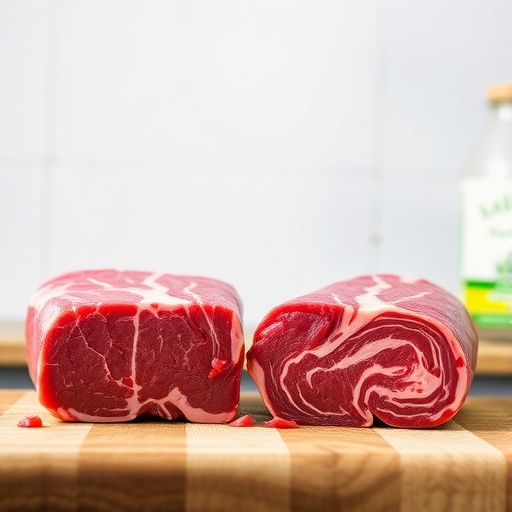
As the horizon of cultivated meat shifts closer to mainstream markets, it becomes imperative to scrutinize the health implications associated with consumption of this novel food. One pressing concern within the scientific community and among consumers alike is the potential allergenic profile of cultured meat relative to conventional animal-derived meat. In a pioneering study published in the Journal of Agricultural and Food Chemistry, researchers led by Renwick Dobson and Laura Domigan embarked on a detailed investigation to assess the allergenic risks posed by cultured beef cells, uncovering a nuanced landscape of immunological responses that could shape future food safety protocols.
Cultivated meat, often referred to as lab-grown or cell-based meat, is generated by harvesting animal muscle cells and nurturing their growth under meticulously controlled laboratory conditions. Unlike traditional meat that develops naturally within a living organism, cultured muscle cells exhibit alterations in protein expression patterns, which could influence both nutritional content and immunogenicity. Although prior studies focusing on cultivated fish cells showed a decrease in certain proteins linked to severe allergies, corresponding data for bovine cultured meat has been absent until now, leaving an important gap in understanding its safety profile.
To bridge this knowledge gap, the research team isolated male bovine myoblasts—a type of primary muscle cell—from cattle and cultivated these cells for variable durations, seeking to replicate the conditions used in the burgeoning cultivated beef industry. Systematic proteomic analyses were then performed to establish the protein composition in these cultured cells vis-à-vis traditional steak samples. Intriguingly, while cultured cells maintained consistent protein compositions regardless of the culture duration, substantive differences emerged when compared against steak, indicating that in vitro muscle cell growth modulates allergen levels and profiles distinctly.
Delving deeper, the study identified a repertoire of known allergenic proteins, many of which were present at similar or diminished concentrations in the cultured cells in comparison to conventional beef. Notwithstanding, three proteins deviated from this trend, displaying elevated levels in the cultured samples. These proteins, although currently unclassified by the World Health Organization (WHO) as classic meat allergens, were observed to bind immunoglobulin E (IgE) antibodies, hallmark mediators of allergic responses, suggesting their potential to elicit immune reactions in sensitized individuals.
The investigation further incorporated immunochemical assessments involving blood samples from individuals diagnosed with acquired meat allergies. These analyses revealed an overall reduced IgE binding to both undigested and enzymatically digested cultured beef cells relative to standard steak, aligning with the lowered abundance of certain allergenic proteins. This finding ostensibly points towards a decreased allergenic risk associated with conventional meat allergens in cultured beef. However, the picture was complicated by responses from individuals with alpha-gal syndrome—a distinct allergy induced by sensitization to the sugar galactose-alpha-1,3-galactose following lone star tick bites.
In these alpha-gal-sensitive subjects, cultured beef cells provoked markedly heightened IgE reactivity compared to traditional steak. This amplified immune response may stem from an increased prevalence of alpha-gal-modified proteins in the cultured samples, raising significant concerns about the safety of cultivated meat for this subset of allergic consumers. As alpha-gal allergy can provoke severe anaphylactic reactions, these novel findings underscore the necessity for tailored allergenicity testing addressing both protein and glycan-based sensitizations in the development of cultivated meat products.
The differential allergen profiles spotlight the complexity intrinsic to cultivated meat products, challenging assumptions that in vitro muscle growth merely replicates natural meat biochemistry. Variations in culture media components, cellular metabolism, and post-translational modifications could collectively influence allergen expression and immune recognition. Accordingly, this study advocates for comprehensive allergen risk assessments encompassing both known proteins and emerging antigenic determinants unique to cultured meat.
Moving forward, the research team emphasizes the imperative to extend these analytical frameworks beyond isolated cell cultures to encompass the final processed cultivated meat products intended for commercial distribution. Such evaluations must holistically examine allergen content, stability following culinary processing, bioavailability, and immunogenic potential in diverse consumer populations, integrating insights from food science, immunology, and clinical allergy disciplines.
The advancement of cultivated meat technology not only promises environmental sustainability and ethical benefits by decoupling meat production from animal husbandry but also necessitates rigorous interdisciplinary collaboration to ensure consumer safety and public trust. Regulatory agencies, scientific researchers, industry stakeholders, and clinical experts must coalesce to establish robust standards and transparent communication strategies that address allergenicity concerns comprehensively.
Renwick Dobson aptly summarizes the overarching challenge, noting that “only through sustained, coordinated efforts across scientific, regulatory, and clinical domains can cultivated meat fulfill its potential as a responsible, viable alternative to conventional meat products.” This study marks a seminal step toward this goal, revealing the complex immunological dimensions of cultured beef and charting a roadmap for future safety evaluations that will underpin consumer confidence.
The research received support from notable entities including the Riddet Institute, Food Transitions 2050 initiative, the Biomolecular Interaction Centre, and the Dutch Ministry of Agriculture, Fisheries, Food Security, and Nature. Additionally, some contributors maintain affiliations with Opo Bio Aotearoa, the biotech company supplying the cultured bovine cells, highlighting the synergy between academic inquiry and industry innovation.
As the cultivated meat sector accelerates, these findings catalyze a paradigm shift in how allergenicity is approached within food safety frameworks, urging a departure from assumptions grounded in traditional meat analogies towards novel evaluative criteria reflective of cultured tissue biochemistry.
News Publication Date: 18-Feb-2026
Web References: http://dx.doi.org/10.1021/acs.jafc.5c10735
References: Published study in the Journal of Agricultural and Food Chemistry, American Chemical Society
Cite Scienmag News
Daisy Hatcher. (February 18, 2026). Allergy-Related Risks in Cultured Beef Versus Conventional Beef: A Comparative Analysis. Scienmag. https://scienmag.com/allergy-related-risks-in-cultured-beef-versus-conventional-beef-a-comparative-analysis/
Daisy Hatcher. "Allergy-Related Risks in Cultured Beef Versus Conventional Beef: A Comparative Analysis." Scienmag, 18 February 2026, https://scienmag.com/allergy-related-risks-in-cultured-beef-versus-conventional-beef-a-comparative-analysis/. Accessed 3 September 2026.
Daisy Hatcher. "Allergy-Related Risks in Cultured Beef Versus Conventional Beef: A Comparative Analysis." Scienmag. February 18, 2026. https://scienmag.com/allergy-related-risks-in-cultured-beef-versus-conventional-beef-a-comparative-analysis/


