


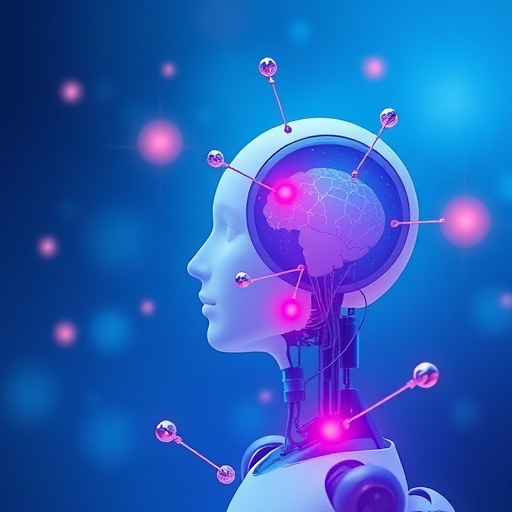
In an era dominated by rapid advancements in artificial intelligence and automation, one critical question remains: what uniquely human skills will endure and thrive in the future workforce? Recent research from Edith Cowan University (ECU) offers compelling insights into this inquiry, highlighting the essential role of emotional literacy—a constellation of what the researchers term “Heart Skills”—in higher education and professional development. These skills encompass empathy, compassion, assertiveness, and self-awareness, forming the intangible yet indispensable core of interpersonal communication and ethical decision-making across a spectrum of human-centered professions.
The study, spearheaded by Dr. Madalena Grobbelaar and Dr. Elizabeth Reid Boyd, delves into innovative pedagogical methods employed to embed emotional literacy within university curricula, notably through the Interpersonal and Helping Skills unit at ECU. This academic unit fosters the cultivation of Heart Skills through reflective, creative writing practices such as composing “love letters to the dear heart.” These exercises serve not merely as literary endeavors, but as methodological tools designed to deepen emotional insight, promote resilience, and nurture self-compassion among students. This approach aligns with emerging educational paradigms recognizing affective competencies as vital components of holistic learning.
Central to this research is the notion that emotional literacy transcends rudimentary social skills or the more stereotypical perceptions of romantic love. As Dr. Grobbelaar articulates, these affective capacities directly influence how students assimilate knowledge, engage with peers, and prepare for careers predominantly characterized by care, communication, and ethical responsibility. In settings ranging from community development and social justice to therapeutic counseling, emotionally literate professionals are better equipped to navigate complex interpersonal dynamics and foster meaningful human connections.
The authors’ initiative, #Love@ECU, established in 2021, serves as a pioneering platform exploring “Love Literacy” as a burgeoning academic field. The initiative conceptualizes love as an authentic care framework starting with the self and radiating outward to others and the wider community. This foundation challenges traditional educational models often centered on cognitive skillsets and technical knowledge, positing that sustainable professional success hinges upon these deeper emotional competencies.
Methodologically, the study employs an observational research design, providing qualitative insights into how positive autoethnographic methods—where individuals systematically reflect on personal experiences—can be harnessed to build these Heart Skills. This technique enables students to critically analyze their own emotional landscapes and social behaviors, fostering self-awareness and a sense of agency. Such reflective practices are instrumental in developing resilience and self-compassion, qualities that buffer the stresses inherent in many human services and socially-oriented professions.
The curriculum’s interdisciplinary nature is notable, as it integrates students from social sciences, human and community services, and counseling backgrounds. This integration facilitates the application of Heart Skills across discipline-specific contexts, encouraging students to practice empathy, assertiveness, and ethical reasoning tailored to their respective fields. This cross-disciplinary approach underscores the universal applicability of emotional literacy in professional settings that depend heavily on relational competence and ethical sensitivity.
Dr. Reid Boyd emphasizes the imperative to embed emotional learning centrally within educational frameworks, especially given the mounting challenges universities face related to student wellbeing, curriculum redesign, and the pervasive influence of AI technologies in learning environments. As cognitive tasks become increasingly automated, the human ability to connect, empathize, and exercise ethical judgment becomes not merely desirable but essential. Emotional literacy, therefore, should be repositioned from a peripheral “soft skill” to a foundational “core skill” within academic and professional training paradigms.
The study’s findings advocate strongly that Heart Skills must be cultivated intentionally and systematically, rejecting their marginalization as elective student options. These skills are pivotal for preparing graduates to enter dynamic workplaces and social contexts characterized by complexity and moral ambiguity. The research contends that such an education fosters not only professional competence but also personal wellbeing and societal contribution.
In envisioning the future trajectories of this research, the authors propose the development of a scalable Heart Skills toolkit. This toolkit aims to operationalize their pedagogical methods into adaptable frameworks that can be embedded across diverse disciplines and institutional settings. By doing so, they offer a replicable model for “heart-led” learning in higher education, positioning emotional literacy as a key driver of academic innovation and social progress.
This evolving discourse adds critical nuance to ongoing debates about the roles of technology and humanity in education. As many institutions grapple with integrating AI tools into their teaching practices, ECU’s research foregrounds the necessity to balance technological efficiencies with the cultivation of deeply human competencies. Teaching Heart Skills is framed not as resistance to technology but as a complementary enhancement—equipping students with uniquely human traits that machines cannot replicate.
The published paper, “Love letters to the self: building heart skills through positive autoethnography,” appears in the International Review of Psychiatry and represents a seminal contribution to social science and educational literature. It challenges educators, policymakers, and employers to reconceptualize emotional literacy as the foundation for responsible, compassionate, and effective professional engagement in the post-AI era.
In summary, this pioneering research underscores the urgent need to embed emotional literacy as a non-negotiable dimension of educational curricula worldwide. Heart Skills—embodied through empathy, compassion, assertiveness, and self-awareness—constitute the human edge in an increasingly digital future. ECU’s innovative teaching model and the forthcoming Heart Skills toolkit could herald a transformative shift toward education that honors the complexities of human social behavior and prepares learners not only to succeed but to thrive with integrity and humanity.
Cite Scienmag News
Courtney Benton. (February 18, 2026). Cultivating the Human Skills Beyond AI’s Reach. Scienmag. https://scienmag.com/cultivating-the-human-skills-beyond-ais-reach/
Courtney Benton. "Cultivating the Human Skills Beyond AI’s Reach." Scienmag, 18 February 2026, https://scienmag.com/cultivating-the-human-skills-beyond-ais-reach/. Accessed 4 September 2026.
Courtney Benton. "Cultivating the Human Skills Beyond AI’s Reach." Scienmag. February 18, 2026. https://scienmag.com/cultivating-the-human-skills-beyond-ais-reach/


