


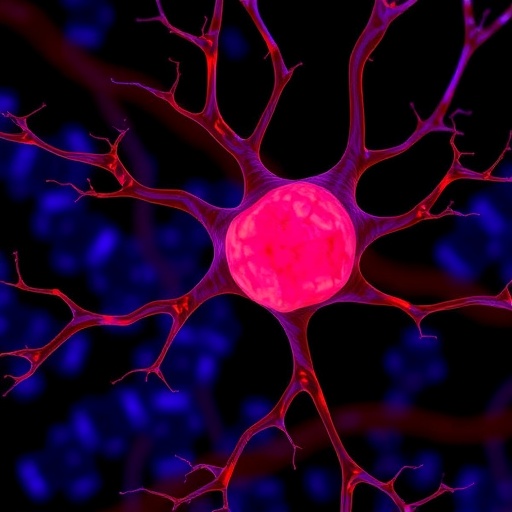
In a groundbreaking study illuminating the intricate dynamics of renal aging, scientists have unveiled the remarkable structural plasticity of podocytes—the specialized cells critical for kidney filtration. Using cutting-edge imaging technology, researchers have reconstructed these cells in three dimensions, revealing their astonishing adaptations to age-related decline. The research published online in the Journal of the American Society of Nephrology on December 17, 2025, offers unprecedented insight into how podocytes cope with cellular loss and maintain function in the aging kidney.
Podocytes are indispensable components of the kidney’s filtration machinery, forming a sophisticated barrier within the glomerulus, the small filtering unit where blood is purified to form urine. These cells, once developed during fetal life, do not regenerate. Therefore, their depletion over time poses a serious threat to kidney health, culminating in the gradual loss of glomerular function. Until now, the mechanisms by which surviving podocytes adjust to these losses have remained elusive.
The research team employed array tomography (AT), an advanced microscopy technique that leverages thousands of ultra-thin serial tissue sections imaged through scanning electron microscopy. This allows for the high-resolution reconstruction of podocytes, capturing their complex three-dimensional architecture within intact glomeruli. Through optimization of the AT workflow, the researchers achieved whole-glomerulus visualization and isolated individual podocytes, enabling precise volume measurements and structural analysis hitherto impossible.
By examining renal samples from rats at various life stages—young (1.5 months), adult (6 months), and aged (24 months)—the team generated detailed 3D models of podocytes. These models could be interactively explored from any angle on a computer, facilitating quantitative assessments. Such an approach transcends traditional two-dimensional histology, providing a comprehensive understanding of the spatial and volumetric transformations undergone by podocytes with aging.
One of the most compelling findings involves the identification of eight distinct age-related structural changes in podocytes. Not only does the cell population dwindle through aging, but podocytes also experience fragmentation. Portions of these cells break away and are lost, further decreasing podocyte density on the glomerular surface. This degradation would typically foreshadow renal failure, yet the kidney demonstrates remarkable resilience through cellular adaptation.
The remaining podocytes undergo pronounced compensatory hypertrophy, expanding their volume to cover areas vacated by lost neighbors. Astonishingly, the study quantified a 4.6-fold increase in podocyte volume within aged rats, indicating a robust hypertrophic response aimed at preserving the filtration barrier’s integrity. This volumetric adaptation appears vital to sustaining glomerular function despite a dramatic reduction in cell numbers.
Complementing hypertrophy, podocytes exhibit a unique repair mechanism through the formation of autocellular junctions—cellular interfaces where one podocyte membrane folds and joins itself. These self-cellular junctions, absent in healthy glomeruli, seem to scaffold the restoration of coverage over fragmented regions. The presence of such junctions serves as morphological hallmarks of injury repair, representing cellular footprints marking ongoing efforts to maintain renal functionality in aging.
Beyond structural alterations, podocytes also demonstrate functional plasticity in cellular waste management. Typically, aging cells suffer a decline in intracellular degradation processes, leading to the accumulation of defective components that contribute to cellular dysfunction. Remarkably, podocytes circumvent this limitation by exporting unwanted materials to the extracellular space rather than attempting to degrade them internally. This extracellular clearance may constitute a protective mechanism against intracellular toxicity in aged kidneys.
The study’s implications extend beyond rodent models. Preliminary analyses of human podocytes suggest an even greater diversity of aging-related changes, likely reflecting humans’ extended lifespan compared to rats. Such findings highlight the complex interplay of age, sex, and comorbid conditions in shaping podocyte morphology and renal health. Expanding this research in human populations will be essential for comprehensively understanding kidney aging and its clinical ramifications.
Leveraging kidney biopsy specimens from clinical sources, the research team is embarking on detailed human podocyte studies. Their objective is to delineate the spectrum of structural transformations and identify distinct aging signatures that may inform diagnostic and therapeutic strategies. By harnessing array tomography’s power, they also plan to scrutinize subtle or focal lesions within entire glomeruli, overcoming limitations of conventional pathology that often overlook such changes.
This pioneering work marks a significant advance in nephrology by providing a cellular and structural blueprint of podocyte aging. Understanding how these cells maintain functionality across decades despite attrition opens new avenues for potential interventions. Therapies targeting podocyte hypertrophy pathways, junction remodeling, or extracellular waste export could emerge as novel approaches to mitigate age-related kidney decline.
Moreover, the methodological innovations of this study set a new standard for renal research. Volume electron microscopy and array tomography collectively empower scientists to move beyond flat tissue slices and into a multidimensional realm of cellular architecture. Such detailed reconstructions pave the way for future explorations into glomerular diseases, regenerative medicine, and personalized nephrology.
In summary, this research uncovers the remarkable resilience and adaptability of podocytes in the aging kidney. By expanding their size, forming unique self-contacts, and externally disposing of cellular debris, these cells orchestrate a delicate balance to sustain filtration barriers. As the burden of kidney disease rises with global aging populations, insights from studies like this one will be invaluable in guiding scientific and clinical efforts to preserve renal health across the lifespan.
News Publication Date: 17-Dec-2025
Web References:
https://journals.lww.com/jasn/abstract/9900/structural_plasticity_of_aged_podocytes_revealed.874.aspx
References:
Authors: Takashi Amari, Takayuki Miyaki, Mami Kishi, Jingyuan Xu, Makoto Sugiura, Hisako Kaneda, Yuta Sakai, Rhianna Imura, Yuri Takeuchi, Juan Alejandro Oliva Trejo, Yuto Kawasaki, Takuya Omotehara, Takako Negishi-Koga, Muneaki Ishijima, Junji Yamaguchi, Soichiro Kakuta, Koichiro Ichimura. DOI: 10.1681/ASN.0000000979.
Cite Scienmag News
Beatrice Stafford. (February 18, 2026). Aging Podocytes: Unveiling Structural Adaptations. Scienmag. https://scienmag.com/aging-podocytes-unveiling-structural-adaptations/
Beatrice Stafford. "Aging Podocytes: Unveiling Structural Adaptations." Scienmag, 18 February 2026, https://scienmag.com/aging-podocytes-unveiling-structural-adaptations/. Accessed 3 September 2026.
Beatrice Stafford. "Aging Podocytes: Unveiling Structural Adaptations." Scienmag. February 18, 2026. https://scienmag.com/aging-podocytes-unveiling-structural-adaptations/


