


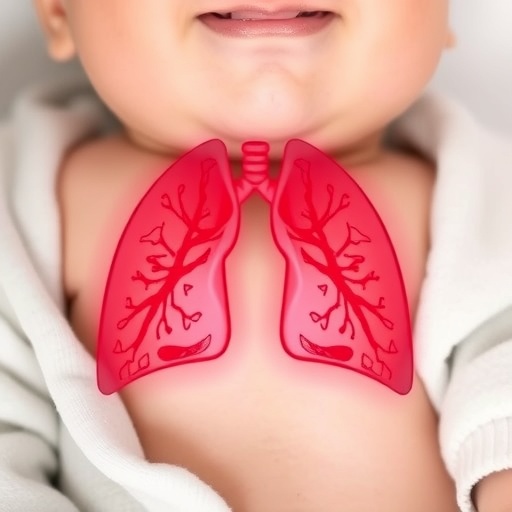
In a groundbreaking advancement poised to reshape neonatal care, researchers have unveiled a sophisticated predictive model aimed at identifying pulmonary hypertension (PH) in infants suffering from bronchopulmonary dysplasia (BPD). This significant stride, reported in the Journal of Perinatology in 2026, harnesses cutting-edge clinical data analytics to anticipate the onset of PH, a serious and often life-threatening complication in this vulnerable population. With pulmonary hypertension contributing to increased morbidity and mortality among premature infants with BPD, the development of reliable predictive tools holds transformative promise for early intervention and improved outcomes.
Bronchopulmonary dysplasia is a chronic lung disease most commonly afflicting preterm infants who require prolonged respiratory support. The ailment results from arrested alveolar development and pulmonary vascular injury, leading to impaired lung function. Among various complications, pulmonary hypertension emerges as a formidable adversary, exacerbating respiratory failure and escalating the risk of death. The intricate pathophysiological mechanisms underlying PH in BPD include abnormal vascular remodeling and endothelial dysfunction, which cumulatively elevate pulmonary arterial pressures. Detecting this complication before clinical symptoms manifest has historically posed significant challenges for neonatologists.
The newly devised model by Foote, Sun, Goldstein, and colleagues circumvents these challenges by integrating a broad spectrum of clinical, demographic, and laboratory parameters into an advanced predictive framework. Utilizing machine learning algorithms trained on large, multi-institutional datasets, the model excels in dissecting complex interdependencies among variables that conventional diagnostic methods often overlook. This represents a pivotal shift from reactive treatment to proactive risk stratification, potentially enabling personalized therapeutic strategies tailored to individual neonatal trajectories.
Central to the model’s success is its multifaceted input matrix, encompassing gestational age, birth weight, oxygen dependency duration, ventilation parameters, echocardiographic indices, and biomarkers indicative of pulmonary vascular stress. By evaluating these variables collectively, the system produces a risk score that quantifies the likelihood of developing pulmonary hypertension. Importantly, the algorithm demonstrated robust predictive accuracy across diverse patient cohorts, underscoring its generalizability and potential for widespread clinical adoption.
Echoing the clinical urgency underpinning this research, the authors contextualize their model within the existing diagnostic landscape. Historically, detection of PH relied heavily on echocardiographic evaluation and clinical suspicion following the onset of symptoms such as hypoxemia and right heart strain. However, these methods often capture the condition at advanced stages, limiting the window for effective intervention. The introduction of a predictive tool capable of flagging at-risk infants days or weeks earlier challenges the status quo, setting a new standard for surveillance and care pathways in neonatal intensive care units.
Beyond its immediate clinical implications, the model also shines a spotlight on the broader application of artificial intelligence in neonatal medicine. The integration of machine learning into patient monitoring signifies a paradigm shift, emphasizing data-driven insights over intuition alone. In this context, the study exemplifies how harnessing computational power can unravel the complexities of neonatal diseases, which are often influenced by multifactorial genetic, environmental, and treatment-related factors. Furthermore, it invites future research to refine predictive frameworks and explore adjunctive biomarkers to heighten precision.
From a translational perspective, the adoption of this model promises to impact treatment decisions profoundly. Early identification of infants at elevated risk allows clinicians to initiate targeted therapies such as pulmonary vasodilators, optimize ventilation strategies, and tailor oxygen supplementation to mitigate pulmonary vascular insult. Moreover, this proactive stance may reduce the incidence of severe PH-related complications, including right ventricular failure and neurodevelopmental impairment, thereby improving both survival rates and quality of life for survivors of BPD.
Crucially, the model’s development process entailed rigorous validation protocols, incorporating both retrospective case-control analyses and prospective cohort testing. The researchers meticulously addressed potential confounding factors and biases, enhancing the model’s reliability. They also ensured interpretability by incorporating feature importance analyses that elucidate how individual parameters influence risk predictions. Such transparency fosters clinician trust and facilitates integration into existing electronic health record systems, paving the way for seamless clinical workflow integration.
Despite its promising performance, the study acknowledges inherent limitations that warrant further exploration. The model’s predictive validity in extremely low birth weight infants and those with comorbidities beyond BPD remains to be definitively established. Additionally, the extent to which different treatment modalities might modulate risk prediction is an active area of inquiry. The authors advocate for multicenter randomized controlled trials to evaluate whether model-guided interventions translate to tangible clinical benefits and cost-effectiveness in neonatal care settings.
This research also contributes to the evolving understanding of pulmonary vascular pathobiology in preterm infants. By correlating clinical parameters with PH risk, the model indirectly informs about disease mechanisms, highlighting the multifactorial nature of vascular remodeling. Such insights may stimulate experimental studies exploring molecular targets for pharmacologic intervention. The dynamic interplay between mechanical ventilation-induced injury, oxidative stress, and inflammatory mediators emerges as fertile ground for translational research aimed at disrupting PH progression.
In extending the conversation to healthcare systems and policy, the model’s integration could enhance resource allocation by stratifying neonates based on risk, thereby prioritizing intensive monitoring and specialized care. Hospitals with limited access to advanced diagnostic modalities might leverage such computational tools to optimize referral patterns and therapeutic timing. Consequently, this innovation underscores the convergence of technology and neonatology as a catalyst for elevating standards of care universally.
The implications of predictive analytics transcending pulmonary hypertension in BPD suggest a broader landscape where machine learning models could be tailored to predict other neonatal morbidities. Sepsis, necrotizing enterocolitis, and intraventricular hemorrhage are potential candidates for similar approaches, eventually leading to comprehensive risk stratification frameworks. However, realizing this vision requires concerted efforts encompassing data standardization, ethical considerations regarding data privacy, and clinician education to foster acceptance and proficiency in using AI-driven tools.
Ethically, the deployment of predictive models in vulnerable populations necessitates a balance between technological progress and patient autonomy. Transparent communication with families regarding the probabilistic nature of risk predictions and potential interventions is imperative. The study highlights the importance of integrating ethical guidelines alongside technological advancements to ensure patient-centered care. This approach safeguards against over-reliance on algorithmic outputs and maintains the primacy of clinical judgment.
Looking ahead, the study by Foote and colleagues sets the stage for a new era in neonatal respiratory medicine, where predictive modeling underpins clinical decision-making. The convergence of robust clinical datasets, machine learning sophistication, and translational research encapsulated in this effort exemplifies the transformative potential of precision medicine in early life. As ongoing studies expand the dataset diversity and refine model parameters, the prospect of preventing pulmonary hypertension—and its devastating consequences—in infants with bronchopulmonary dysplasia becomes increasingly attainable.
In conclusion, this pioneering work delineates a compelling narrative of innovation that marries clinical insight with technological ingenuity. Through its nuanced risk prediction for pulmonary hypertension, the model offers neonatologists a powerful tool to outpace disease progression and tailor interventions intelligently. As this technology integrates into neonatal intensive care units worldwide, it promises to mark a watershed moment in managing one of the most complex and consequential challenges in contemporary perinatal medicine.
Foote, H.P., Sun, M., Goldstein, B.A. et al. Predicting pulmonary hypertension in infants with bronchopulmonary dysplasia.
J Perinatol (2026). https://doi.org/10.1038/s41372-026-02576-2
Cite Scienmag News
Harold Sullivan. (February 18, 2026). Predicting Pulmonary Hypertension in Infant Lung Disease. Scienmag. https://scienmag.com/predicting-pulmonary-hypertension-in-infant-lung-disease/
Harold Sullivan. "Predicting Pulmonary Hypertension in Infant Lung Disease." Scienmag, 18 February 2026, https://scienmag.com/predicting-pulmonary-hypertension-in-infant-lung-disease/. Accessed 4 September 2026.
Harold Sullivan. "Predicting Pulmonary Hypertension in Infant Lung Disease." Scienmag. February 18, 2026. https://scienmag.com/predicting-pulmonary-hypertension-in-infant-lung-disease/


