


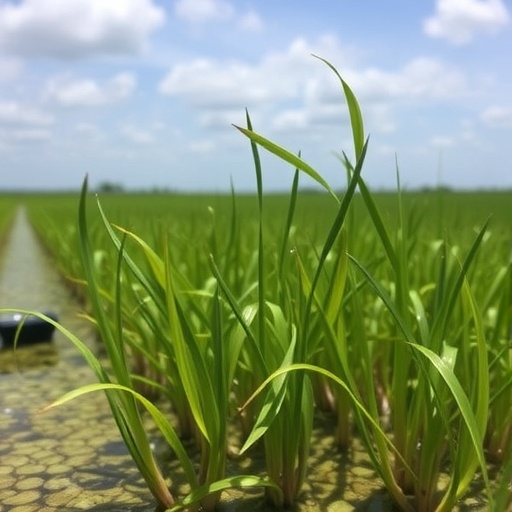
The escalating threat of extreme heat on marine ecosystems has put seagrasses—a fundamental yet often overlooked component of coastal environments—under intense scientific scrutiny. Recent groundbreaking research spearheaded by Edith Cowan University (ECU) promises to redefine conservation and restoration strategies for these critical underwater meadows, with an emphasis on thermal resilience in the face of climate change. The studies, executed across Australia’s west and east coasts, delve deeply into the physiological and ecological impacts of marine heatwaves and prolonged ocean warming on diverse seagrass species, unearthing nuanced insights that could steer future ecological management worldwide.
Seagrasses are pivotal to marine biodiversity, serving as nurseries for myriad species, stabilizing sediment, and sequestering considerable amounts of carbon. Yet, despite their ecological importance, these submerged flowering plants are exceptionally vulnerable to temperature fluctuations, particularly heat stress induced by climate anomalies. Edith Cowan University’s recent investigations stem from a necessity to understand species-specific thermal tolerances and adaptive capacities, which are crucial for crafting effective conservation interventions in a warming global ocean.
Professor Marnie Campbell, Executive Dean at ECU’s School of Science and a leading figure in marine plant ecology, directed key segments of this research during her tenure at Central Queensland University. Her work focuses on elucidating the physiological thresholds and survival mechanisms of intertidal seagrass species under extreme heat events—a phenomenon increasingly common as ocean temperatures soar. Such insights are indispensable, as they underpin efforts to preserve these habitats whose loss would precipitate severe disruptions in marine food webs and carbon cycling.
The studies reveal an intricate mosaic of heat vulnerability across seagrass species and populations. Notably, research led by PhD candidate Nicole Said at ECU’s Centre for Marine Ecosystem Research examined six distinct seagrass species along the extensive west coast of Australia, spanning a gradient from temperate to tropical waters. This geographic breadth provided a rare opportunity to quantify thermal optima and resilience on both local and broader scales. One pivotal finding is that seagrasses inhabiting tropical zones exhibit heightened vulnerability to marine heatwaves compared to their temperate counterparts, a conclusion that challenges previous assumptions about uniform species resilience.
Furthermore, Said’s research highlights remarkable variability even within species at microgeographic scales. Populations separated by mere kilometers displayed significantly different heat tolerance levels, suggesting that naturally occurring genetic or phenotypic adaptations confer localized resilience. This discovery has profound implications for restoration ecology; it suggests that sourcing seagrass propagules from heat-tolerant populations—potentially located in proximate but thermally distinct environments—could enhance the thermal robustness of restored meadows.
This nuanced understanding disrupts the prevailing paradigm of one-size-fits-all conservation and restoration frameworks. Instead, it advocates for precision-driven interventions that incorporate climatic constraints and evolutionary histories to fortify seagrass ecosystems against future warming scenarios. By integrating thermally resilient genotypes into restoration projects, managers can implement “climate-smart” solutions that anticipate and mitigate the impacts of rising ocean temperatures.
On Australia’s east coast, complementary research conducted by Professor Campbell investigated the effects of prolonged ocean warming on five intertidal seagrass species in the subtropical region of Gladstone, Queensland. The methodology involved meticulous in situ monitoring of intertidal pools, where seagrasses experience acute thermal stress due to tidal emersion combined with ambient heat. Remarkably, water temperatures in these isolated pools occasionally exceeded 40 degrees Celsius for extended periods—a thermal regime that poses severe physiological challenges to marine flora.
The study’s granular data elucidates distinct thermal thresholds among species, informing targeted restoration practices. For instance, species demonstrating higher thermal tolerance may be prioritized for transplantation in warming hotspots, while heat-sensitive species could be conserved in microhabitats offering thermal refugia or cooler substrates. This approach optimizes restoration success by respecting the ecological and thermal niches that each species occupies, underscoring the necessity to tailor interventions to species-specific vulnerabilities and environmental conditions.
Professor Campbell’s work underscores the broader ecological ramifications of seagrass loss under climate change. Beyond their direct role as habitat engineers, seagrasses influence nutrient dynamics, coastal protection, and carbon sequestration. Their degradation not only threatens marine biodiversity but also diminishes ecosystem services upon which human communities depend. By advancing a mechanistic understanding of seagrass responses to thermal extremes, this research equips scientists and policymakers with critical tools for safeguarding these vital ecosystems.
The implications of these studies reverberate beyond Australia, offering a blueprint for global seagrass conservation amid intensifying climate pressures. Given that many seagrass species studied have widespread distributions, the identification of heat-tolerant populations and species-specific thermal sensitivities holds universal relevance. This proactive, evidence-based management could help reverse declines and foster resilient coastal ecosystems worldwide.
In summary, the detailed investigations from ECU illuminate the complex interplay between seagrass biology, thermal stress, and climate dynamics. By identifying species and populations most at risk, as well as those exhibiting natural resilience, this research pioneers a shift towards adaptive restoration strategies tailored to the realities of a warming ocean. As marine heatwaves grow in frequency and intensity, such science-driven frameworks will be indispensable for preserving the structural and functional integrity of seagrass meadows—a cornerstone of marine ecological health.
The emerging paradigm calls for conservationists and restoration practitioners to harness local thermal adaptations in seagrasses, strategically sourcing plant material from resilient populations to establish meadows capable of withstanding future climatic stressors. This approach signifies a critical evolution in environmental management, blending ecological theory with applied restoration science to confront one of the most pressing challenges of our time.
Finally, this body of work exemplifies how integrative, location-specific research can inform scalable, globally relevant solutions for marine ecosystem conservation. Its insights will inspire ongoing efforts to mitigate the cascading effects of climate change on vital coastal habitats, ensuring that seagrass meadows continue to sustain biodiversity and buffer climate impacts in an uncertain future.
—
News Publication Date: 1-Dec-2025
Web References:
https://nph.onlinelibrary.wiley.com/doi/epdf/10.1111/nph.70742
https://aslopubs.onlinelibrary.wiley.com/doi/10.1002/lno.70156
Cite Scienmag News
Violet Maxwell. (February 18, 2026). Can Seagrasses Endure Extreme Heat? Investigating How Various Species Cope with Rising Water Temperatures. Scienmag. https://scienmag.com/can-seagrasses-endure-extreme-heat-investigating-how-various-species-cope-with-rising-water-temperatures/
Violet Maxwell. "Can Seagrasses Endure Extreme Heat? Investigating How Various Species Cope with Rising Water Temperatures." Scienmag, 18 February 2026, https://scienmag.com/can-seagrasses-endure-extreme-heat-investigating-how-various-species-cope-with-rising-water-temperatures/. Accessed 3 September 2026.
Violet Maxwell. "Can Seagrasses Endure Extreme Heat? Investigating How Various Species Cope with Rising Water Temperatures." Scienmag. February 18, 2026. https://scienmag.com/can-seagrasses-endure-extreme-heat-investigating-how-various-species-cope-with-rising-water-temperatures/


