


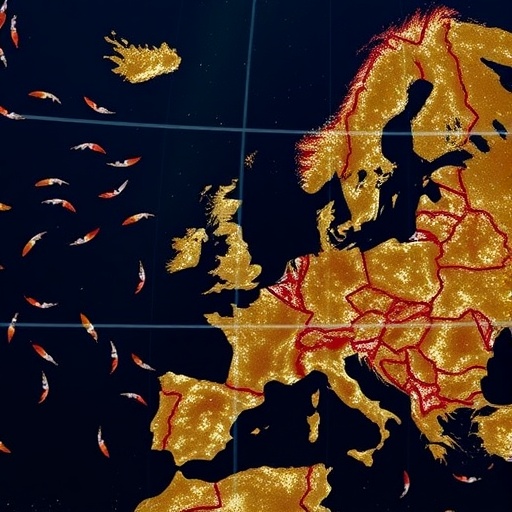
In the rapidly changing tapestry of Earth’s biodiversity, countless species are vanishing at unprecedented rates, a silent crisis escalating under the weight of climate change, habitat destruction, and invasive species. Particularly vulnerable are understudied groups such as marine annelids—segmented worms that inhabit nearly all marine environments but remain enigmatic to science. In a groundbreaking initiative, researchers from the University of Göttingen, the Leibniz Institute for Biodiversity Change Analysis (LIB), and the Senckenberg Society for Nature Research have launched the EuroWorm project, a pioneering effort aimed at revolutionizing our understanding of European marine annelid diversity through integrative genomic and morphological analysis.
Marine annelids, including diverse families like the venom-injecting Glyceridae or bloodworms, are ecological linchpins in marine habitats worldwide. They contribute critically to sediment mixing, nutrient cycling, pollution indication, and form integral components of marine food webs. Despite their ecological prominence, many species remain poorly described or undiscovered, leaving significant gaps in evolutionary biology and conservation science. EuroWorm seeks to bridge this gap by establishing an extensive, open genomic and morphological database that charts the genomic architectures and phenotypic characteristics of European marine annelids.
The project’s methodology is meticulous and multifaceted. Sampling expeditions will revisit historically significant European marine sites—biological hotspots where hundreds of annelid species were first catalogued. Specimens will be morphologically analyzed to unravel species boundaries and subtle physical distinctions. High-resolution photogrammetry will document the animals’ morphology with exceptional detail, enabling comparative anatomical studies. But the project transcends traditional taxonomy; it harnesses cutting-edge genomic sequencing technologies to decode the genetic blueprints of these annelids, revealing evolutionary relationships obscured in conventional classification systems.
Integrating genome data with morphological observations facilitates a holistic approach to phylogenetics—the reconstruction of species’ evolutionary histories. This genomic inventory is expected to elucidate complex questions about lineage divergence times, adaptive morphological traits, reproductive strategies, and lifestyle variations that have emerged over millions of years. The resultant high-resolution evolutionary tree will significantly refine the taxonomic framework of marine annelids, which has long been hindered by morphological convergence and cryptic speciation.
Beyond academic insights, EuroWorm is conceived as a democratizing force in biodiversity research. Specimens, images, and genomic datasets will be deposited at renowned institutions like the Museum of Natural History Hamburg and the Senckenberg Natural History Museum. These collections will be openly accessible through digital portals including the LIB and the Global Biodiversity Information Facility (GBIF). This open-access model ensures that researchers globally, especially those from underrepresented regions in the Global South, can leverage this data to accelerate species discovery, comparative studies, and conservation strategies.
The devastating notion of “silent extinction,” whereby species disappear unnoticed by science, underscores the urgency of this endeavor. By enabling rapid species identification through integrated morphological and molecular data, EuroWorm hopes to stem the tide of biodiversity loss, facilitating timely conservation interventions. In doing so, the project also reaffirms the vital role of natural history museums, transforming them from mere repositories into dynamic research hubs equipped to tackle modern biodiversity challenges.
Academic voices leading this visionary project stress the synergy between historical specimens and modern technology. Dr. Maria Teresa Aguado Molina describes museum collections as “scientific time capsules” that, when analyzed with contemporary genomic tools, unlock previously hidden dimensions of biodiversity. This fusion of classic and cutting-edge approaches epitomizes the innovative spirit driving EuroWorm. Meanwhile, Professor Christoph Bleidorn highlights Göttingen’s rich legacy in annelid evolution research, underscoring the unique opportunity to expand foundational knowledge within a distinguished scientific tradition.
The collaboration also exemplifies the benefits of interdisciplinary research. Dr. Conrad Helm emphasizes that EuroWorm’s comprehensive approach provides a robust platform for detailed biodiversity documentation while strategically shaping future research priorities. The integration of taxonomy, genomics, ecology, and evolutionary biology within this project offers a blueprint for biodiversity studies in other taxonomic groups and regions, promoting a holistic understanding of ecosystem dynamics in the age of anthropogenic change.
As the project progresses, the anticipated expansion of genomic resources for marine annelids will empower a range of downstream applications, from environmental monitoring to biomedical research, given some annelids’ venomous adaptations and biochemical potentials. Furthermore, comprehensive genomic databases can fuel machine learning algorithms to predict species’ responses to environmental stressors, refine ecological models, and guide molecular conservation efforts.
EuroWorm’s trajectory represents a vital step toward preserving Earth’s marine biodiversity heritage. By decoding the genetic and morphological secrets of segmented sea worms, the project not only enriches evolutionary theory but also provides essential tools for confronting biodiversity loss on a planetary scale. This endeavor stands as a testament to the power of collaboration, innovation, and open science in unraveling the complexities of life beneath the waves—life that, though often overlooked, sustains the balance of marine ecosystems essential to human wellbeing.
For further information and data access, the EuroWorm project invites the global scientific community to engage with their growing repositories and collaborative networks, fostering an inclusive environment that transcends geographical and disciplinary boundaries. The success of this initiative will depend on the sustained commitment to open data, interdisciplinary synergy, and the nurturing of biodiversity knowledge as a shared global resource.
News Publication Date: Not specified.
Web References:
– University of Göttingen EuroWorm project page: http://www.uni-goettingen.de/en/623758.html
– Professor Christoph Bleidorn profile: http://www.uni-goettingen.de/en/577460.html
– Dr Conrad Helm profile: http://www.uni-goettingen.de/en/577461.html
Cite Scienmag News
Gavin Prescott. (February 18, 2026). Rich Repository of Data Unveils Insights on Worms in Europe’s Seas. Scienmag. https://scienmag.com/rich-repository-of-data-unveils-insights-on-worms-in-europes-seas/
Gavin Prescott. "Rich Repository of Data Unveils Insights on Worms in Europe’s Seas." Scienmag, 18 February 2026, https://scienmag.com/rich-repository-of-data-unveils-insights-on-worms-in-europes-seas/. Accessed 4 September 2026.
Gavin Prescott. "Rich Repository of Data Unveils Insights on Worms in Europe’s Seas." Scienmag. February 18, 2026. https://scienmag.com/rich-repository-of-data-unveils-insights-on-worms-in-europes-seas/


