


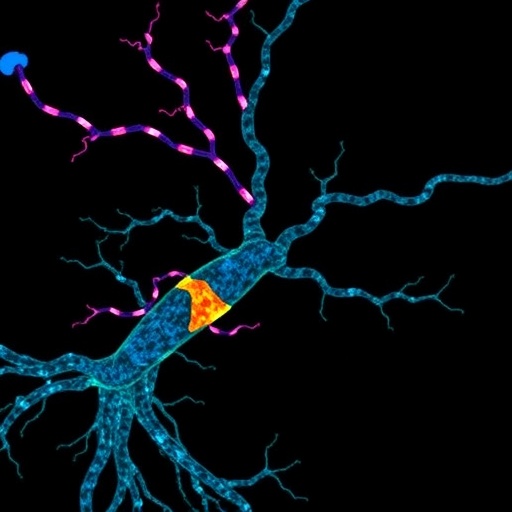
In a groundbreaking study destined to reshape the understanding of hereditary neurodegenerative disorders, researchers have identified loss-of-function variants in the CAPN1 activator gene CD99L2 as a critical cause of X-linked spastic ataxia. This novel discovery, published in Nature Communications in 2026, illuminates a previously uncharted molecular pathway that underlies a debilitating neurological condition, offering fresh insights that could spur the development of targeted therapeutic interventions.
Spastic ataxia is a complex neurological disorder characterized by progressive loss of motor coordination, spasticity, and gait abnormalities. Its genetic underpinnings have remained incompletely understood, particularly in cases attributed to X-linked inheritance, where males are predominantly affected, and the precise causative genes have been elusive. The identification of mutations in CD99L2, an activator of CAPN1 protease, fills a significant gap in the genetic map of this disease and highlights the intricate molecular crosstalk involved in maintaining neural integrity.
The research team led by Menden, Incebacak Eltemur, Demidov, and colleagues employed a comprehensive genomics approach, integrating whole-exome sequencing with functional assays, to identify and validate pathogenic variants in CD99L2. Their study population comprised several families exhibiting X-linked patterns of spastic ataxia, enabling robust genetic linkage and segregation analysis. This approach secured compelling evidence that loss-of-function mutations in CD99L2 are not merely associated but causative of the disease phenotype.
CAPN1, a calcium-dependent cysteine protease, plays a fundamental role in neuronal plasticity, synaptic remodeling, and cytoskeletal dynamics. It is tightly regulated by intrinsic activators and inhibitors to preserve neuronal homeostasis. The discovery that CD99L2 acts as an essential activator of CAPN1 presents a crucial insight into the proteolytic pathways that sustain neuronal function. Variants impairing CD99L2 abolish CAPN1 activation, disrupting cellular proteostasis and culminating in neurodegeneration marked by spastic ataxia.
Detailed biochemical assays demonstrated how loss-of-function variants compromise CD99L2’s capacity to interact with CAPN1, effectively silencing its protease activity. This mechanistic defect leads to the accumulation of substrates normally processed by CAPN1, triggering cellular dysfunction and neuronal death. Moreover, histopathological evaluation in patient-derived neuronal cells and animal models revealed hallmark features of neurodegeneration, including axonal swelling, demyelination, and Purkinje cell loss in cerebellar circuits integral to coordinated motor control.
The study also underscores an intriguing X-linked pattern of inheritance, whereby hemizygous males harboring deleterious CD99L2 mutations manifest severe, early-onset spastic ataxia, while heterozygous females may experience milder or subclinical phenotypes. This gender disparity highlights the need for further exploration into X chromosome inactivation patterns and their impact on phenotypic variability within affected families.
Beyond establishing genetic causality, this pioneering work opens avenues for novel therapeutic strategies. Targeted gene editing tools such as CRISPR-Cas9 might one day restore normal CD99L2 function in affected neurons, while small molecule drugs could be engineered to compensate for lost CAPN1 activation. Furthermore, screening for CD99L2 mutations in patients with idiopathic spastic ataxia may facilitate early diagnosis and personalized clinical management.
The broader implications of these findings extend into understanding protease regulation in neurodegenerative disease at large. CAPN1 has been implicated in various conditions, including amyotrophic lateral sclerosis (ALS) and Alzheimer’s disease, but its regulation by CD99L2 represents a previously unrecognized layer of biological control. Unraveling this axis could therefore enhance our comprehension of multiple neurodegenerative pathways and inspire cross-disease therapeutic innovation.
By focusing on a novel molecular actor in the CAPN1 regulatory network, the study sheds light on the complexity of neurodegenerative disease genetics beyond classic gene-by-gene paradigms. It exemplifies how dissecting protein-protein interactions and enzymatic cascades can reveal new pathogenic mechanisms, moving the field toward a systems biology perspective. As neurogenetics continues to evolve, such integrative approaches will be pivotal in tackling diseases previously deemed too enigmatic for effective treatment.
This seminal research also highlights the importance of collaborative, multidisciplinary efforts combining clinical neurology, molecular genetics, protein biochemistry, and computational biology. The integration of these diverse methodologies was paramount to decode the intricate role of CD99L2 and CAPN1, illustrating how cutting-edge science can decode the molecular scripts of inherited diseases that significantly impact human health.
Looking forward, ongoing studies aim to delineate the full spectrum of CD99L2 variants and their phenotypic consequences, expanding our understanding of genotype-phenotype correlations and disease modifiers. These efforts promise to refine diagnostic criteria, enhance genetic counseling, and identify at-risk individuals for early intervention.
Moreover, the study promotes awareness of rare genetic causes of spastic ataxia, often overlooked in clinical practice due to their complexity and phenotypic overlap with more common disorders. Improved genetic testing protocols integrating CD99L2 screening could significantly reduce diagnostic odysseys, which burden patients and families.
In sum, the discovery of CD99L2 loss-of-function variants as a cause of X-linked spastic ataxia represents a landmark advance in neurogenetics. It redefines the molecular landscape of hereditary ataxias, challenges existing paradigms of protease regulation in neuronal health, and sets the stage for future therapeutic breakthroughs. As this work garners attention and inspires further research, it underscores a critical frontier in neuroscience: unlocking the mysteries hidden within the genome to unravel the complexities of human brain disorders.
The ripple effects of this discovery promise to extend beyond spastic ataxia, enriching the broader field of neurodegeneration and invigorating efforts to combat diseases that currently have no cure. With the synergistic collaboration of geneticists, neurologists, and molecular biologists, the quest to translate these findings from bench to bedside ignites hope for patients afflicted with these challenging and devastating neurological conditions.
Cite Scienmag News
Juliet Wilcox. (February 14, 2026). Loss-of-Function CD99L2 Variants Trigger X-Linked Ataxia. Scienmag. https://scienmag.com/loss-of-function-cd99l2-variants-trigger-x-linked-ataxia/
Juliet Wilcox. "Loss-of-Function CD99L2 Variants Trigger X-Linked Ataxia." Scienmag, 14 February 2026, https://scienmag.com/loss-of-function-cd99l2-variants-trigger-x-linked-ataxia/. Accessed 3 September 2026.
Juliet Wilcox. "Loss-of-Function CD99L2 Variants Trigger X-Linked Ataxia." Scienmag. February 14, 2026. https://scienmag.com/loss-of-function-cd99l2-variants-trigger-x-linked-ataxia/


