


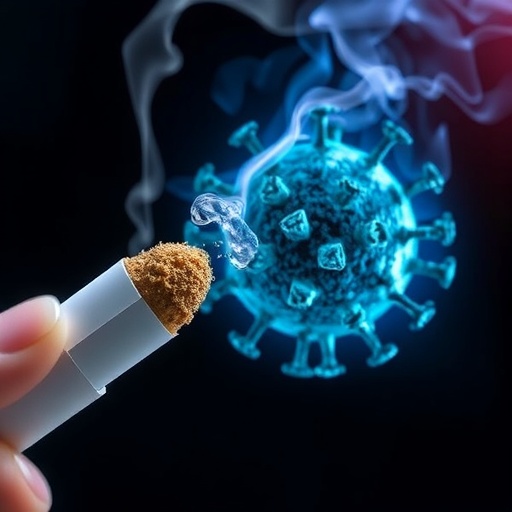
In a striking scientific breakthrough poised to redefine antiviral therapeutics, researchers have unveiled a novel class of compounds derived from nicotine that exhibit remarkably potent efficacy against SARS-CoV-2 and a wide range of coronaviruses. This groundbreaking discovery opens promising new avenues for the development of broad-spectrum antiviral agents, an advancement that could significantly enhance our preparedness against current and future viral pandemics. The study, spearheaded by Khatua, Atla, Coleman, and their colleagues, delves deep into the molecular transformation of nicotine—a well-known alkaloid—into antiviral molecules capable of exerting robust inhibition on coronavirus replication in vivo.
The genesis of this research lies in the enduring quest to identify effective antiviral agents that can target not only the notorious SARS-CoV-2 virus responsible for the COVID-19 pandemic but also other coronaviruses that pose persistent threats to global health. Nicotine, despite its infamous association with tobacco use and addiction, has long intrigued scientists for its complex pharmacological properties. This study harnesses those properties, chemically repurposing nicotine’s molecular framework to engineer a series of antiviral compounds that uniquely disrupt viral lifecycles at multiple stages. This approach represents a paradigm shift from traditional strategies that often focus narrowly on viral enzymes or entry processes.
Employing sophisticated medicinal chemistry techniques, the researchers systematically modified nicotine’s structure to optimize its interaction with viral proteins essential for replication and assembly. These modifications involved subtle alterations to functional groups that enhanced the compounds’ binding affinity to critical coronavirus enzymes such as the RNA-dependent RNA polymerase and proteases. Detailed structural analyses presented in the investigation revealed how these derivatives effectively lock onto enzymatic pockets, thereby halting enzymatic activity required for viral genome replication and polyprotein processing. Importantly, these interactions were confirmed through high-resolution crystallographic studies and molecular dynamics simulations, providing mechanistic insights into the compounds’ inhibitory effects.
Preclinical evaluation of these nicotine-derived antivirals involved rigorous in vitro assays across multiple human cell lines infected with diverse coronavirus strains. The results indicated exceptional antiviral potency, with EC50 values far surpassing those of existing approved COVID-19 therapeutics. Notably, the compounds displayed broad-spectrum activity—not only neutralizing infectious viral particles efficiently but also suppressing the emergence of resistant mutations, a common problem in antiviral treatment. Toxicity assessments further demonstrated a favorable safety profile, underscoring the feasibility of these molecules as viable drug candidates without eliciting cytotoxicity or undesirable off-target effects.
Transitioning into in vivo models, the research team conducted studies using established animal models susceptible to SARS-CoV-2 infection. Treatment regimens with the nicotine-derived antivirals significantly reduced viral loads in pulmonary tissues, ameliorated pathological lung damage, and improved overall survival rates relative to untreated controls. These findings validate the compounds’ therapeutic potential and emphasize their ability to confer effective antiviral protection in complex physiological environments. Additionally, pharmacokinetic evaluations indicated strong bioavailability and suitable metabolic stability, key features necessary for clinical translation.
One of the most compelling aspects of this research is the demonstration that these novel antivirals maintain efficacy against emerging viral variants of concern, including those harboring mutations that have undermined the effectiveness of many existing therapies. This broad-spectrum characteristic is critical given the rapid evolution of coronaviruses and the constant threat of future zoonotic spillovers. By targeting conserved enzymatic sites resistant to mutational changes, the nicotine-derived compounds function as reliable antiviral agents capable of addressing both current and prospective outbreaks.
Beyond therapeutic implications, this study challenges prevailing perceptions of nicotine, traditionally demonized as a harmful substance due to its addictive properties. The researchers underscore that through careful chemical modification, the molecular backbone of nicotine can be repurposed to serve as a foundation for life-saving drugs. This not only redefines nicotine’s role in biomedical research but also exemplifies how re-examining known molecules can unveil unexpected benefits when approached with innovative scientific creativity.
The investigation also highlights the integrative nature of modern antiviral drug development, combining insights from virology, structural biology, medicinal chemistry, and pharmacology. By leveraging cutting-edge technologies such as CRISPR-based screening, high-throughput compound synthesis, and advanced imaging modalities, the research team created a pipeline capable of rapidly identifying and optimizing therapeutic candidates. This multidisciplinary strategy proven effective against SARS-CoV-2 may serve as a blueprint for accelerating drug discovery against diverse viral pathogens.
Importantly, the study sparks hope for a future where effective, orally administrable antivirals derived from simple molecular scaffolds can be deployed globally with minimal logistical burden. Given the pandemic’s disproportionate impact on resource-limited settings, developing easily producible and stable antivirals is crucial. The demonstrated potency of these nicotine derivatives combined with their straightforward synthesis pathways suggests they could fill this critical gap, improving accessibility and equity in antiviral treatment distribution worldwide.
While these findings represent a significant milestone, the researchers caution that further clinical development and human trials are essential before these antivirals can enter the market. Detailed investigations into long-term safety, optimal dosing regimens, and potential interactions with other medications will be necessary to confirm their clinical utility. Nonetheless, this study lays a robust foundation, suggesting that nicotine-derived compounds may soon constitute a new front in the global fight against coronavirus diseases.
In summary, this research not only delivers a novel class of potent, broad-spectrum antiviral agents derived innovatively from nicotine but also exemplifies the power of translational science bridging chemistry and virology. By unlocking nicotine’s hidden antiviral potential, scientists have opened pathways toward more effective responses to viral pandemics, creating hope for improved therapeutic options against SARS-CoV-2 and beyond. The implications extend far beyond COVID-19, potentially reshaping antiviral drug design paradigms for years to come.
As the global population continues to grapple with recurrent waves of coronavirus infections and the looming threat of new variants, discoveries such as this are indispensable in bolstering our biomedical arsenal. The unprecedented global impact of COVID-19 underscored critical gaps in our ability to rapidly counter emergent viruses; thus, the development of broadly effective antivirals stands as a vital component of pandemic preparedness strategies. This study’s success in repurposing a molecule traditionally associated with harm into a therapeutic hero epitomizes the innovative spirit necessary to overcome complex biomedical challenges.
Future research building on these findings will likely explore optimizing the pharmacodynamics and formulation of nicotine-derived antivirals, advancing toward regulatory approval, and possibly extending their application against other RNA viruses with similar replication machinery. Furthermore, insights gained from this work may inspire investigation into other alkaloid-based scaffolds, encouraging a renaissance of natural product-based drug discovery in antiviral research. The interplay of structural modifications and biological testing showcased here exemplifies an effective model for rapid antiviral innovation.
Ultimately, this pioneering research not only enriches the scientific understanding of coronavirus inhibition but also resonates with the universal imperative to transform existing knowledge and resources into tangible health solutions. By converting nicotine from a controversial chemical into a beacon of antiviral promise, Khatua and colleagues have charted a compelling path forward—one that could ultimately save millions of lives in the face of ongoing and future coronavirus threats.
Cite Scienmag News
Kristina Jarvis. (February 14, 2026). From Nicotine to Broad-Spectrum SARS-CoV-2 Antivirals. Scienmag. https://scienmag.com/from-nicotine-to-broad-spectrum-sars-cov-2-antivirals/
Kristina Jarvis. "From Nicotine to Broad-Spectrum SARS-CoV-2 Antivirals." Scienmag, 14 February 2026, https://scienmag.com/from-nicotine-to-broad-spectrum-sars-cov-2-antivirals/. Accessed 4 September 2026.
Kristina Jarvis. "From Nicotine to Broad-Spectrum SARS-CoV-2 Antivirals." Scienmag. February 14, 2026. https://scienmag.com/from-nicotine-to-broad-spectrum-sars-cov-2-antivirals/


