

Saturday, February 14, 2026
Science
No Result
View All Result
  • Login
  • HOME
  • SCIENCE NEWS
  • CONTACT US
  • HOME
  • SCIENCE NEWS
  • CONTACT US
No Result
View All Result
Scienmag
No Result
View All Result
Home Science News Chemistry

Palladium-Catalyzed Cascade Cyclization Enables Modular Construction of Chiral Nitrogen-Bridged Rings with High Diastereo- and Enantioselectivity

February 13, 2026
in Chemistry
Reading Time: 4 mins read
0
65
SHARES
591
VIEWS
Share on FacebookShare on Twitter
ADVERTISEMENT

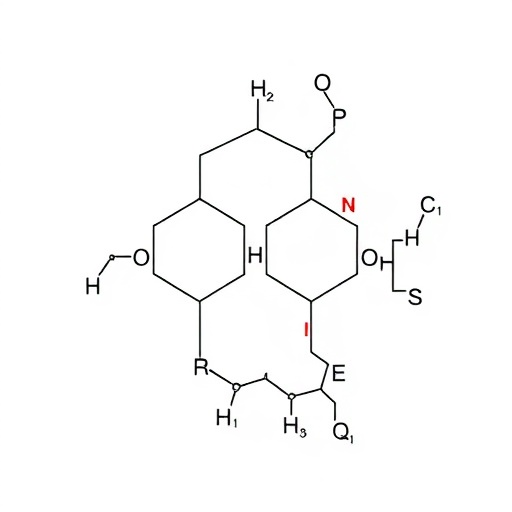
In a groundbreaking advancement that could redefine synthetic methodologies in medicinal chemistry, researchers at the University of Science and Technology of China, spearheaded by Hanmin Huang and Bangkui Yu, have unveiled a highly innovative palladium-catalyzed cascade cyclization process that constructs chiral nitrogen-bridged oxazobicyclic compounds with exceptional stereochemical precision. This pioneering approach strategically harnesses readily available salicylaldehyde and aminodienes as starting materials and ingeniously exploits the in situ formation of three-membered palladium intermediates arising from aldehydes and amines. This novel pathway represents a monumental leap forward from classical synthetic routes that depend heavily on preformed cyclic precursors, often limiting structural diversity and efficiency.

The team’s approach revolves around a seamless, palladium-catalyzed diastereo- and enantioselective sequential cyclization reaction that directly forges complex chiral bridged architectures, overcoming the inherent synthetic challenges posed by topological strain and conformational rigidity common in bridged heterocycles. Unlike traditional methods that struggle to balance yield, diastereoselectivity, and enantioselectivity, this cascade cyclization process consistently delivers bridged oxazole bicyclic frameworks with enantiomeric excesses reaching up to an impressive 96%, coupled with high diastereomeric purity. Such precision is critical, as the three-dimensional configuration of these compounds profoundly influences their biological activity, stability, and pharmacokinetic profiles.

Bridged heterocycles have long been coveted in drug design due to their distinctive three-dimensionality and capacity to engage biological targets with heightened specificity. However, their synthesis is notoriously complicated by the intricate strain energies and spatial constraints introduced by the bridged ring systems, which frequently cause suboptimal yields and poor stereocontrol. Most conventional syntheses require laborious preparation of cyclic intermediates, severely limiting the versatility of accessible scaffolds. The catalytic strategy devised by Huang’s group circumvents these pitfalls by initiating the cascade from simple acyclic building blocks, vastly expanding the accessible chemical space of chiral bridged nitrogen heterocycles.

Central to the breakthrough is the palladium catalyst’s ability to generate reactive three-membered ring palladium intermediates in situ through condensation of aldehydes and amines, a step that forms the cornerstone for subsequent selective cyclizations. This unique reactivity has permitted the continuous formation of bridged ring systems in a one-pot fashion, streamlining synthesis and mitigating the need for intermediate isolations or chiral auxiliaries. This elegantly orchestrated cascade embodies an exquisite balance of kinetics and thermodynamics controlled by subtle ligand and reaction condition tuning, achieving remarkable control over stereochemical outcomes.

Moreover, this method demonstrates formidable substrate scope, accommodating a broad spectrum of substituted salicylaldehydes and aminodienes without sacrificing stereoselectivity or yield. This versatility not only affirms the robustness of the catalytic system but also facilitates access to a diverse array of bridged heterocyclic structures, significantly enriching the chemical library available for pharmaceutical exploration. The structural diversity attainable via this platform offers medicinal chemists new scaffolds for probing structure-activity relationships and optimizing lead compounds for central nervous system indication and beyond.

Importantly, the synthetic potential of these chiral bridged oxazobicycles extends beyond their initial formation. The research team showcased the facile transformation of these scaffolds into spirocyclic frameworks—an increasingly important motif in drug discovery due to its unique conformational rigidity and biological implications—through strategic chiral transfer methodologies. This adaptability not only underscores the utility of the synthesized frameworks as versatile intermediates but also hints at their potential role in the late-stage diversification of pharmacophores.

Additionally, the inherent chemical reactivity of the formed compounds enables a wide range of post-cyclization functionalizations. Capitalizing on the presence of unsaturated carbon-carbon bonds within the bridged ring systems, the researchers demonstrated efficient derivatization reactions, including epoxidation and hydroboration-oxidation. Such transformations open avenues for further molecular complexity enhancement, tailored functionality, and the design of novel drug candidates with optimized physicochemical properties, thereby broadening the practical scope and applicability of the initial synthetic approach.

This study not only propels the field of asymmetric synthesis forward by delivering an unprecedented, modular, and efficient construction of chiral bridged nitrogen heterocycles but also provides vital mechanistic insights. Understanding the delicate interplay of palladium catalysis, intermediate formation, and stereocontrol within this cascade cyclization informs future catalyst and reaction system design, enabling broader applications and improved synthetic performance for other challenging molecular architectures.

Looking ahead, the catalytic platform developed here holds significant promise for application in complex natural product synthesis and the expedited discovery of lead compounds in medicinal chemistry. The ability to rapidly assemble three-dimensional, chiral, bridged frameworks with high stereochemical fidelity is anticipated to accelerate synthetic campaigns aimed at enriching molecular libraries with structurally sophisticated and biologically relevant entities. Such advancements are vital to overcoming current limitations in drug development pipelines, particularly for central nervous system disorders and other therapeutic areas requiring precise molecular configurations.

This robust and innovative methodology demonstrates a visionary synthesis strategy that aligns with the increasing demand for efficient, selective, and sustainable synthetic transformations. The transition from relying on preformed cyclic precursors to the direct construction of intricate bridged systems from simple acyclic units epitomizes a paradigm shift in synthetic organic chemistry, poised to influence both academic research and industrial drug discovery workflows substantially.

The findings of this research, published as an open-access Communication in the flagship journal CCS Chemistry of the Chinese Chemical Society, exemplify the high-impact innovations emerging from Chinese scientific institutions in contemporary catalysis and drug synthesis. Supported by major national scientific programs and foundations, this work reflects a cohesive effort to tackle some of the most challenging aspects of asymmetric synthesis through meticulous mechanistic exploration and inventive catalyst design.

The research not only expands the frontiers of chiral bridged heterocycle synthesis but also serves as a testament to the increasingly globalized and interdisciplinary nature of modern chemical sciences. Through integrating organometallic catalysis, molecular design, and synthetic strategy, the study lays a robust foundation for next-generation methodologies that combine efficiency, selectivity, and functional versatility, ultimately shaping the future landscape of chemical synthesis and drug development.

Subject of Research: Not applicable

Article Title: Modular Assembly of Chiral Bridged Oxazobicycles via Palladium-Catalyzed Diastereo- and Enantioselective Sequential Cyclization

News Publication Date: 1-Jan-2026

Image Credits: Credit: CCS Chemistry

Keywords

Asymmetric synthesis

Tags: bridged heterocycles in drug designchiral nitrogen-bridged oxazobicyclic compoundsdiastereo- and enantioselectivity in synthesishigh enantiomeric excess in synthesisinnovative synthetic methodologiesmedicinal chemistry advancementsovercoming synthetic challenges in medicinal chemistrypalladium-catalyzed cascade cyclizationsalicylaldehyde and aminodienes in reactionsstructural diversity in organic synthesissynthesis of complex chiral architecturesthree-dimensional configuration of compounds
Share26Tweet16
Previous Post

Amazon Deforestation Drives Surface Temperatures Up by 3°C in Dry Season

Next Post

Mitochondrial Translation: Mechanisms and Disease Impact Explained

Related Posts

blank
Chemistry

Breakthroughs in Porous Materials Spotlighted by 2025 Nobel Prize in Chemistry

February 13, 2026
blank
Chemistry

New Technique Boosts 3D Object Image Quality by Five Times

February 13, 2026
blank
Chemistry

Unexpected Magnetoresistance Discovered in Antiferromagnetic Kagome Semimetal

February 13, 2026
blank
Chemistry

HKU Astrophysicists Help Decipher Potential First-Ever Einstein Probe Detection of a Black Hole Devouring a White Dwarf

February 13, 2026
blank
Chemistry

Innovative Metal–Organic Framework Enables Real-Time Fluoride Removal and Detection in Water

February 13, 2026
blank
Chemistry

Innovative Measurement Technique Advances Real-Time Verification of Quantum Technologies

February 13, 2026
Next Post
blank

Mitochondrial Translation: Mechanisms and Disease Impact Explained

  • Mothers who receive childcare support from maternal grandparents show more parental warmth, finds NTU Singapore study

    Mothers who receive childcare support from maternal grandparents show more parental warmth, finds NTU Singapore study

    27612 shares
    Share 11041 Tweet 6901
  • University of Seville Breaks 120-Year-Old Mystery, Revises a Key Einstein Concept

    1018 shares
    Share 407 Tweet 255
  • Bee body mass, pathogens and local climate influence heat tolerance

    662 shares
    Share 265 Tweet 166
  • Researchers record first-ever images and data of a shark experiencing a boat strike

    529 shares
    Share 212 Tweet 132
  • Groundbreaking Clinical Trial Reveals Lubiprostone Enhances Kidney Function

    516 shares
    Share 206 Tweet 129
Science

Embark on a thrilling journey of discovery with Scienmag.com—your ultimate source for cutting-edge breakthroughs. Immerse yourself in a world where curiosity knows no limits and tomorrow’s possibilities become today’s reality!

RECENT NEWS

  • To give you the best rewrite, I have categorized these by the “vibe” of your magazine post. Since it is for February 2026, these titles lean into the future of oncology and proactive health.

    The “Cutting Edge” Approach (Best for Tech/Research focused feeds)

    • The Next Frontier in Oncology: Sylvester’s February 2026 Breakthrough Brief
    • Precision and Prevention: New Cancer Insights from Sylvester (Feb ‘26)
    • Future-Proofing Your Health: The Sylvester Cancer Center Research Update
    • Decoding Cancer: Advanced Strategies from Sylvester’s 2026 Tip Sheet

    The “Actionable & Health” Approach (Best for General Wellness readers)

    • Smart Moves: Your February Guide to Cancer Prevention & Care
    • Sylvester Cancer Center: Essential Health Takeaways for February 2026
    • Living Proactively: New Cancer Prevention Standards for the Year Ahead
    • The Cancer Fighter’s Toolkit: Sylvester’s Latest Expert Recommendations

    The “Punchy & Modern” Approach (Best for Social Media/Newsletters)

    • Sylvester’s Top Cancer Tips for Feb 2026
    • The February Edit: Innovations in Cancer Care
    • Cancer Care 2026: What You Need to Know This Month
    • Sylvester Intelligence: New Guidelines for Cancer Prevention

    The “Science Journalism” Approach (Best for a formal magazine header)

    • Monthly Briefing: Breakthroughs in Clinical Oncology from Sylvester
    • Current Trends in Cancer Research: The Sylvester February Report
    • Reporting from Sylvester: New Paradigms in Early Detection and Treatment

    Which one should you choose?

    • If your magazine is high-tech: Use “The Next Frontier in Oncology.”
    • If your magazine is lifestyle-oriented: Use “Your February Guide to Cancer Prevention.”
    • If your magazine is a quick news digest: Use “Sylvester’s Top Cancer Tips for Feb 2026.”
  • Here are several ways to rewrite that headline, depending on the “vibe” of your magazine:

    The “Cutting Edge” Approach

    • Bridging the Gap: How Telehealth is Revolutionizing Genetic Care for Childhood Cancer Survivors
    • The Virtual Clinic: Virtual Consults Break Down Barriers to Genetic Testing for Adult Survivors

    The Human-Interest Approach

    • Lifesaving Connections: Telehealth Brings Expert Genetic Counseling to Childhood Cancer Survivors Everywhere
    • No Specialist Nearby? No Problem. How Remote Care is Protecting the Future of Cancer Survivors

    Short & Punchy (Best for Social Media/Web)

    • Virtual Genetics: A New Lifeline for Childhood Cancer Survivors
    • Webcam Consults are Narrowing the Care Gap for Adult Survivors
    • Telehealth: The New Frontier in Post-Cancer Genetic Screening

    Academic/Serious

    • Overcoming Geographical Barriers: The Rise of Telegenetics in Long-Term Survivorship Care
    • Closing the Access Gap: Telemedicine’s Vital Role in Genetic Services for Adult Survivors

    Which one should you choose?

    • If your magazine is scholarly, go with the “Academic” options.
    • If your magazine is consumer-facing/lifestyle, go with the “Human-Interest” options.
    • If you need to drive clicks, go with the “Short & Punchy” options.
  • Here are a few ways to rewrite that headline for a science magazine, depending on the tone and focus you want to take:

    Focus on Urgency & Accuracy

    • Outdated Famine Metrics are Failing the Hungry: Why Modern Data is Critical to Saving Lives
    • The Deadly Lag: How Obsolete Mortality Benchmarks Mask the Onset of Mass Starvation
    • Why Using Old Death Rate Models Means We’re Identifying Famines Too Late

    Focus on the Scientific/Analytical Aspect

    • The Science of Starvation: Rethinking How We Measure Famine in a Changing World
    • Beyond the Threshold: Why Current Mortality Benchmarks Underestimate Modern Crises
    • Calibration Crisis: The Need for Real-Time Metrics in Humanitarian Science

    Short & Punchy (Social Media Friendly)

    • When Metrics Fail: The Hidden Reality of Modern Famine
    • Is Our Definition of Famine Costing Lives?
    • Famine Detection is Broken. Here’s How to Fix It.

    Narrative / Provocative

    • Waiting for the Bodies: The Dangerous Flaw in How We Declare Famine
    • The Math of Survival: Why Famine Recognition Lags Behind Reality

    Main Recommendation:

    “The Deadly Delay: Why Outdated Mortality Benchmarks Miss the Early Signs of Famine”

    Why this works for a science magazine: It highlights a specific technical flaw (benchmarks) while emphasizing the real-world consequence (delay/mortality).

  • Here are several ways to rewrite the headline, depending on the “voice” of your magazine:

    The “Skeptical & Sharp” Approach (Focus on the Gap)

    • The Age of the Archetype: Why Seniors Are Misinformation’s Biggest Target
    • Not All Scrolls Are Equal: Older Adults Bear the Brunt of Medical Myths
    • The Digital Divide of Deception: Why Medical Misinformation Hits Seniors Hardest

    The “Action & Solution” Focused Approach

    • Stemming the Tide: Addressing the Surge of Medical Myths Among Older Generations
    • Media Literacy for All: Why We Need to Close the Senior Misinformation Gap
    • Vaccinating against Lies: How Medical Misinformation Is Concentrating Among Older Adults

    The “Curiosity & Study-Driven” Approach (Best for research deep-dives)

    • Who Swallows the Bait? Study Finds Seniors at Ground Zero for Medical Fake News
    • Beyond the Click: The Social Dynamics Behind Seniors and Health Misinformation
    • Data Deep Dive: Why Older Adults Are Disproportionately Exposed to Medical Myths

    Short & Punchy (Social Media Friendly)

    • Seniors: The Unintended Audience for Online Medical Myths
    • The Growing Threat of Health Misinformation in Older Age Groups
    • Why Medical Myths Travel Faster Among Older Adults

    My Top Recommendation:

    “The Gray Area of Truth: Why Online Medical Misinformation Is Concentrating Among Older Adults” (It uses a clever play on words while remaining professional and descriptive of the study findings.)

Categories

  • Agriculture
  • Anthropology
  • Archaeology
  • Athmospheric
  • Biology
  • Biotechnology
  • Blog
  • Bussines
  • Cancer
  • Chemistry
  • Climate
  • Earth Science
  • Editorial Policy
  • Marine
  • Mathematics
  • Medicine
  • Pediatry
  • Policy
  • Psychology & Psychiatry
  • Science Education
  • Social Science
  • Space
  • Technology and Engineering

Subscribe to Blog via Email

Enter your email address to subscribe to this blog and receive notifications of new posts by email.

Join 5,190 other subscribers

© 2025 Scienmag - Science Magazine

Welcome Back!

Login to your account below

Forgotten Password?

Retrieve your password

Please enter your username or email address to reset your password.

Log In
No Result
View All Result
  • HOME
  • SCIENCE NEWS
  • CONTACT US

© 2025 Scienmag - Science Magazine

Discover more from Science

Subscribe now to keep reading and get access to the full archive.

Continue reading
