

Saturday, February 14, 2026
Science
No Result
View All Result
  • Login
  • HOME
  • SCIENCE NEWS
  • CONTACT US
  • HOME
  • SCIENCE NEWS
  • CONTACT US
No Result
View All Result
Scienmag
No Result
View All Result
Home Science News Medicine

SerpinB2 Regulates Macrophage Survival via Mitochondria

February 13, 2026
in Medicine
Reading Time: 4 mins read
0
65
SHARES
590
VIEWS
Share on FacebookShare on Twitter
ADVERTISEMENT

In a groundbreaking study published in Nature Communications, a team of researchers has unveiled a critical link between mitochondrial function and the survival of tissue-resident macrophages during chronic inflammation—a discovery that could revolutionize our understanding of immune regulation and chronic disease pathology. The research highlights the pivotal regulatory role of the protein SerpinB2, providing novel insights into how these immune cells sustain their functions in inflammatory environments that traditionally promote cellular stress and death.

Tissue-resident macrophages are sentinel immune cells that reside permanently in tissues and play essential roles in maintaining homeostasis, detecting pathogens, and orchestrating inflammatory responses. Unlike their circulating counterparts, these macrophages must navigate the arduous landscape of localized inflammation, often persisting in hostile environments laden with reactive oxygen species and pro-inflammatory cytokines. The durability and functionality of these cells under chronic inflammatory conditions have long puzzled scientists, given the harsh milieu they endure.

Central to this newly discovered cellular resilience is the mitochondrion—a dynamic organelle well-known as the cell’s powerhouse but also a critical regulator of apoptosis and immune signaling. The study meticulously dissects how mitochondrial integrity and function are intricately tied to macrophage longevity in inflamed tissue. The authors employed a combination of sophisticated imaging, gene editing techniques, and metabolic assays to demonstrate that SerpinB2 is a key modulator ensuring mitochondrial health and, by extension, the survival of these innate immune cells.

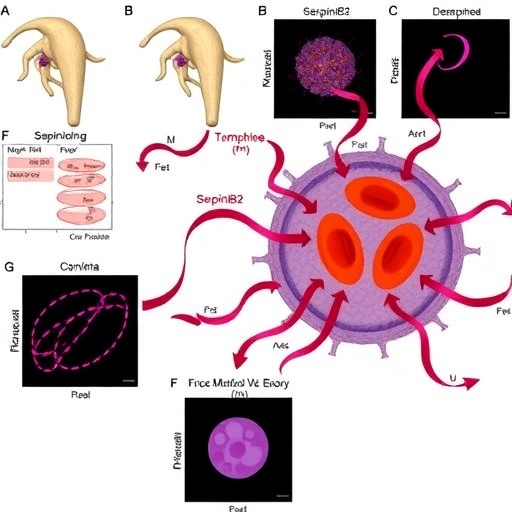
SerpinB2, traditionally acknowledged as a serine protease inhibitor involved in inflammatory processes, emerges here as a mitochondrial guardian. The protein’s expression surges in chronically inflamed tissues, correlating strongly with enhanced mitochondrial respiration and reduced apoptotic signaling in macrophages. This suggests that SerpinB2 acts as a molecular shield, safeguarding mitochondria from dysfunction-induced cell death pathways, a phenomenon confirmed by experiments showing that SerpinB2 deficiency triggers mitochondrial collapse and macrophage apoptosis.

The researchers’ approach to elucidating this mechanism was exhaustive. By genetically ablating SerpinB2 in murine models, they observed a stark decrease in tissue macrophage populations during sustained inflammation. These macrophages exhibited diminished mitochondrial membrane potential, increased mitochondrial fragmentation, and a rise in reactive oxygen species, all hallmarks of compromised mitochondrial function. Single-cell RNA-sequencing further revealed a transcriptional shift toward pro-apoptotic gene programs, underscoring the catastrophic impact of SerpinB2 loss.

This discovery throws light on the intricate balance macrophages maintain between metabolic demands and survival signals within inflamed tissues. Mitochondria are not only energy suppliers but also pivotal nodes in signaling cascades that dictate cell fate. SerpinB2’s modulation of mitochondrial pathways effectively equips macrophages with the resilience required to sustain tissue surveillance amidst chronic inflammatory insults, highlighting a nuanced layer of immune regulation previously poorly understood.

Moreover, the study expanded its analysis into human pathological contexts, exploring tissue samples from patients with chronic inflammatory diseases such as rheumatoid arthritis and atherosclerosis. Remarkably, SerpinB2 expression patterns mirrored those observed in experimental models, reinforcing the translational relevance of the findings. The correlation between SerpinB2 levels and macrophage density in inflamed human tissues suggests potential for therapeutic targeting to bolster macrophage survival and tissue repair in chronic diseases.

Beyond immune cell survival, the implications of preserving mitochondrial function via SerpinB2 intersect with broader metabolic and inflammatory pathways. Mitochondrial dysfunction is increasingly recognized as a cornerstone in the pathophysiology of chronic diseases, including neurodegeneration, metabolic syndrome, and cancer. By identifying the regulatory axis of SerpinB2 and mitochondrial health in macrophages, this research opens up new avenues for modulating immune responses without compromising cellular vitality.

The researchers also delved into the molecular interactions underpinning SerpinB2’s mitochondrial protective effects. Biochemical assays revealed that SerpinB2 directly interacts with components of the mitochondrial permeability transition pore (mPTP), a critical regulator of mitochondrial-mediated apoptosis. This interaction appears to inhibit mPTP opening, thereby preventing mitochondrial depolarization and release of pro-apoptotic factors—a sophisticated mechanism ensuring macrophage endurance under chronic stress.

Notably, the study differentiated the effects of SerpinB2 from classical antioxidant pathways. Although reactive oxygen species generation was elevated in SerpinB2-deficient macrophages, the protective protein’s role extended beyond simple ROS scavenging. Instead, SerpinB2 functions as a sentinel modulating mitochondrial dynamics—fission and fusion events critical for maintaining mitochondrial network integrity, which is vital for cell survival and function.

The research team also explored potential therapeutic strategies. By artificially enhancing SerpinB2 expression in macrophages, both in vitro and in animal models, they demonstrated improved cell survival rates and functional maintenance in chronically inflamed tissues. This raises the exciting prospect of developing SerpinB2-based therapies or small molecules that can mimic its mitochondrial protective effects, offering novel treatment modalities for chronic inflammatory disorders.

Furthermore, these findings challenge the existing paradigms of macrophage plasticity. The metabolic adaptations facilitated by SerpinB2 suggest that mitochondrial function is not merely a background process but a decisive driver in determining macrophage phenotype and longevity. This reshapes how scientists perceive immune cell metabolism in the context of tissue microenvironments and disease progression.

In the broader landscape of immunology and cell biology, the elucidation of SerpinB2’s role adds a vital piece to the puzzle of immune homeostasis. It underscores the importance of metabolic regulation in immune cell fate decisions and highlights the potential for targeting mitochondrial pathways to fine-tune immune responses, especially in chronic inflammatory states where conventional anti-inflammatory drugs often fall short.

As chronic inflammation underlies a multitude of diseases affecting millions worldwide, understanding cellular survival mechanisms has profound clinical implications. This study not only provides a molecular blueprint for maintaining immune cell viability but also offers a promising scaffold for developing next-generation interventions aimed at resolving chronic inflammation without impairing host defense.

In conclusion, the work by Vasamsetti and colleagues propels the field forward by delineating a hitherto unrecognized mitochondrial safeguard mechanism mediated by SerpinB2. Their comprehensive characterization of this pathway enriches our comprehension of immune resilience and opens new therapeutic horizons. Future research expanding on these findings could transform the management of chronic inflammatory diseases, potentially leading to more effective and targeted therapies that bolster tissue-resident macrophage function at the mitochondrial level.

Subject of Research: Tissue-resident macrophage survival and mitochondrial function regulation by SerpinB2 in chronic inflammation.

Article Title: Tissue-resident macrophage survival depends on mitochondrial function regulated by SerpinB2 in chronic inflammation.

Article References:
Vasamsetti, S.B., Sadaf, S., Uddin, M.A. et al. Tissue-resident macrophage survival depends on mitochondrial function regulated by SerpinB2 in chronic inflammation. Nat Commun 17, 1493 (2026). https://doi.org/10.1038/s41467-026-69196-4

Image Credits: AI Generated

DOI: https://doi.org/10.1038/s41467-026-69196-4

Tags: apoptosis regulation in macrophagescellular resilience in inflammationchronic inflammation and macrophagesimmune regulation in chronic diseaseinflammatory responses and immune cellsmitochondrial function in immune cellsmitochondrial integrity and immune signalingNature Communications study on macrophagesnovel insights in immune researchreactive oxygen species in macrophagesSerpinB2 role in macrophage survivaltissue-resident macrophage longevity
Share26Tweet16
Previous Post

Professor Krystal Tsosie Advocates for Indigenous-Led Science at AAAS Conference

Next Post

AMS Science Preview: Slowing Hurricanes and Snow Day Predictions

Related Posts

blank
Medicine

Here are a few ways to rewrite that headline for a science magazine, depending on the tone and focus you want to take:

Focus on Urgency & Accuracy

  • Outdated Famine Metrics are Failing the Hungry: Why Modern Data is Critical to Saving Lives
  • The Deadly Lag: How Obsolete Mortality Benchmarks Mask the Onset of Mass Starvation
  • Why Using Old Death Rate Models Means We’re Identifying Famines Too Late

Focus on the Scientific/Analytical Aspect

  • The Science of Starvation: Rethinking How We Measure Famine in a Changing World
  • Beyond the Threshold: Why Current Mortality Benchmarks Underestimate Modern Crises
  • Calibration Crisis: The Need for Real-Time Metrics in Humanitarian Science

Short & Punchy (Social Media Friendly)

  • When Metrics Fail: The Hidden Reality of Modern Famine
  • Is Our Definition of Famine Costing Lives?
  • Famine Detection is Broken. Here’s How to Fix It.

Narrative / Provocative

  • Waiting for the Bodies: The Dangerous Flaw in How We Declare Famine
  • The Math of Survival: Why Famine Recognition Lags Behind Reality

Main Recommendation:

“The Deadly Delay: Why Outdated Mortality Benchmarks Miss the Early Signs of Famine”

Why this works for a science magazine: It highlights a specific technical flaw (benchmarks) while emphasizing the real-world consequence (delay/mortality).

February 14, 2026
blank
Medicine

How hnRNPM and BCAS2 Control Oocyte Development

February 14, 2026
blank
Medicine

Lactate From Macrophages Fuels Skin Scarring

February 14, 2026
blank
Medicine

What Drives Senior Hunger? New Evidence From Thailand

February 14, 2026
Medicine

Depending on the tone of your magazine, here are several ways to rewrite the headline, categorized by “hook” style:

The “Curiosity” Hook (Focus on the mystery)

  • The Missing Link: Scientists Uncover the Secret Source of Nitrogen Choking Fragile Lake Basins
  • Hidden in Plain Sight: The Unexpected Culprit Behind Alpine Nitrogen Pollution
  • The Invisible Threat: Researchers Identify a Major New Source of Nitrogen in Sensitive Watersheds

The “Punchy & Modern” Hook (Short and direct)

  • Found: The Hidden Driver of Nitrogen Pollution in Remote Lakes
  • Crisis in the Basin: A New Source of Atmospheric Nitrogen Revealed
  • Mystery Solved: Where All That Nitrogen in Our Lakes Is Actually Coming From

The “Academic & Authoritative” Hook (Serious and informative)

  • A New Frontier in Ecology: Unmasking the Major Missing Source of Nitrogen Pollution
  • Beyond the Expected: Study Reveals Significant Geologic Nitrogen Loading in Fragile Basins
  • Mapping the Pollution: New Research Pinpoints Hidden Atmospheric Nitrogen Sources

The “Dramatic/Urgent” Hook (Focus on the environmental impact)

  • The Silent Choking of Our Lakes: A Major New Pollution Source Revealed
  • A Hidden Danger: Scientists Find Untracked Nitrogen Threatening Vulnerable Ecosystems
  • The Missing Piece of the Carbon-Nitrogen Puzzle: New Discovery Warns of Increased Lake Fragility

Which one should you choose?

  • Go with “The Invisible Threat” if your audience likes a bit of suspense.
  • Go with “Found” if your layout is very visual and you want a bold, minimalist look.
  • Go with “Mystery Solved” if the article explains a scientific breakthrough.

February 14, 2026
blank
Medicine

Can Testosterone Gel Boost IVF Success for Women?

February 13, 2026
Next Post
blank

AMS Science Preview: Slowing Hurricanes and Snow Day Predictions

  • Mothers who receive childcare support from maternal grandparents show more parental warmth, finds NTU Singapore study

    Mothers who receive childcare support from maternal grandparents show more parental warmth, finds NTU Singapore study

    27612 shares
    Share 11041 Tweet 6901
  • University of Seville Breaks 120-Year-Old Mystery, Revises a Key Einstein Concept

    1018 shares
    Share 407 Tweet 255
  • Bee body mass, pathogens and local climate influence heat tolerance

    662 shares
    Share 265 Tweet 166
  • Researchers record first-ever images and data of a shark experiencing a boat strike

    529 shares
    Share 212 Tweet 132
  • Groundbreaking Clinical Trial Reveals Lubiprostone Enhances Kidney Function

    516 shares
    Share 206 Tweet 129
Science

Embark on a thrilling journey of discovery with Scienmag.com—your ultimate source for cutting-edge breakthroughs. Immerse yourself in a world where curiosity knows no limits and tomorrow’s possibilities become today’s reality!

RECENT NEWS

  • To give you the best rewrite, I have categorized these by the “vibe” of your magazine post. Since it is for February 2026, these titles lean into the future of oncology and proactive health.

    The “Cutting Edge” Approach (Best for Tech/Research focused feeds)

    • The Next Frontier in Oncology: Sylvester’s February 2026 Breakthrough Brief
    • Precision and Prevention: New Cancer Insights from Sylvester (Feb ‘26)
    • Future-Proofing Your Health: The Sylvester Cancer Center Research Update
    • Decoding Cancer: Advanced Strategies from Sylvester’s 2026 Tip Sheet

    The “Actionable & Health” Approach (Best for General Wellness readers)

    • Smart Moves: Your February Guide to Cancer Prevention & Care
    • Sylvester Cancer Center: Essential Health Takeaways for February 2026
    • Living Proactively: New Cancer Prevention Standards for the Year Ahead
    • The Cancer Fighter’s Toolkit: Sylvester’s Latest Expert Recommendations

    The “Punchy & Modern” Approach (Best for Social Media/Newsletters)

    • Sylvester’s Top Cancer Tips for Feb 2026
    • The February Edit: Innovations in Cancer Care
    • Cancer Care 2026: What You Need to Know This Month
    • Sylvester Intelligence: New Guidelines for Cancer Prevention

    The “Science Journalism” Approach (Best for a formal magazine header)

    • Monthly Briefing: Breakthroughs in Clinical Oncology from Sylvester
    • Current Trends in Cancer Research: The Sylvester February Report
    • Reporting from Sylvester: New Paradigms in Early Detection and Treatment

    Which one should you choose?

    • If your magazine is high-tech: Use “The Next Frontier in Oncology.”
    • If your magazine is lifestyle-oriented: Use “Your February Guide to Cancer Prevention.”
    • If your magazine is a quick news digest: Use “Sylvester’s Top Cancer Tips for Feb 2026.”
  • Here are several ways to rewrite that headline, depending on the “vibe” of your magazine:

    The “Cutting Edge” Approach

    • Bridging the Gap: How Telehealth is Revolutionizing Genetic Care for Childhood Cancer Survivors
    • The Virtual Clinic: Virtual Consults Break Down Barriers to Genetic Testing for Adult Survivors

    The Human-Interest Approach

    • Lifesaving Connections: Telehealth Brings Expert Genetic Counseling to Childhood Cancer Survivors Everywhere
    • No Specialist Nearby? No Problem. How Remote Care is Protecting the Future of Cancer Survivors

    Short & Punchy (Best for Social Media/Web)

    • Virtual Genetics: A New Lifeline for Childhood Cancer Survivors
    • Webcam Consults are Narrowing the Care Gap for Adult Survivors
    • Telehealth: The New Frontier in Post-Cancer Genetic Screening

    Academic/Serious

    • Overcoming Geographical Barriers: The Rise of Telegenetics in Long-Term Survivorship Care
    • Closing the Access Gap: Telemedicine’s Vital Role in Genetic Services for Adult Survivors

    Which one should you choose?

    • If your magazine is scholarly, go with the “Academic” options.
    • If your magazine is consumer-facing/lifestyle, go with the “Human-Interest” options.
    • If you need to drive clicks, go with the “Short & Punchy” options.
  • Here are a few ways to rewrite that headline for a science magazine, depending on the tone and focus you want to take:

    Focus on Urgency & Accuracy

    • Outdated Famine Metrics are Failing the Hungry: Why Modern Data is Critical to Saving Lives
    • The Deadly Lag: How Obsolete Mortality Benchmarks Mask the Onset of Mass Starvation
    • Why Using Old Death Rate Models Means We’re Identifying Famines Too Late

    Focus on the Scientific/Analytical Aspect

    • The Science of Starvation: Rethinking How We Measure Famine in a Changing World
    • Beyond the Threshold: Why Current Mortality Benchmarks Underestimate Modern Crises
    • Calibration Crisis: The Need for Real-Time Metrics in Humanitarian Science

    Short & Punchy (Social Media Friendly)

    • When Metrics Fail: The Hidden Reality of Modern Famine
    • Is Our Definition of Famine Costing Lives?
    • Famine Detection is Broken. Here’s How to Fix It.

    Narrative / Provocative

    • Waiting for the Bodies: The Dangerous Flaw in How We Declare Famine
    • The Math of Survival: Why Famine Recognition Lags Behind Reality

    Main Recommendation:

    “The Deadly Delay: Why Outdated Mortality Benchmarks Miss the Early Signs of Famine”

    Why this works for a science magazine: It highlights a specific technical flaw (benchmarks) while emphasizing the real-world consequence (delay/mortality).

  • Here are several ways to rewrite the headline, depending on the “voice” of your magazine:

    The “Skeptical & Sharp” Approach (Focus on the Gap)

    • The Age of the Archetype: Why Seniors Are Misinformation’s Biggest Target
    • Not All Scrolls Are Equal: Older Adults Bear the Brunt of Medical Myths
    • The Digital Divide of Deception: Why Medical Misinformation Hits Seniors Hardest

    The “Action & Solution” Focused Approach

    • Stemming the Tide: Addressing the Surge of Medical Myths Among Older Generations
    • Media Literacy for All: Why We Need to Close the Senior Misinformation Gap
    • Vaccinating against Lies: How Medical Misinformation Is Concentrating Among Older Adults

    The “Curiosity & Study-Driven” Approach (Best for research deep-dives)

    • Who Swallows the Bait? Study Finds Seniors at Ground Zero for Medical Fake News
    • Beyond the Click: The Social Dynamics Behind Seniors and Health Misinformation
    • Data Deep Dive: Why Older Adults Are Disproportionately Exposed to Medical Myths

    Short & Punchy (Social Media Friendly)

    • Seniors: The Unintended Audience for Online Medical Myths
    • The Growing Threat of Health Misinformation in Older Age Groups
    • Why Medical Myths Travel Faster Among Older Adults

    My Top Recommendation:

    “The Gray Area of Truth: Why Online Medical Misinformation Is Concentrating Among Older Adults” (It uses a clever play on words while remaining professional and descriptive of the study findings.)

Categories

  • Agriculture
  • Anthropology
  • Archaeology
  • Athmospheric
  • Biology
  • Biotechnology
  • Blog
  • Bussines
  • Cancer
  • Chemistry
  • Climate
  • Earth Science
  • Editorial Policy
  • Marine
  • Mathematics
  • Medicine
  • Pediatry
  • Policy
  • Psychology & Psychiatry
  • Science Education
  • Social Science
  • Space
  • Technology and Engineering

Subscribe to Blog via Email

Success! An email was just sent to confirm your subscription. Please find the email now and click 'Confirm Follow' to start subscribing.

Join 5,190 other subscribers

© 2025 Scienmag - Science Magazine

Welcome Back!

Login to your account below

Forgotten Password?

Retrieve your password

Please enter your username or email address to reset your password.

Log In
No Result
View All Result
  • HOME
  • SCIENCE NEWS
  • CONTACT US

© 2025 Scienmag - Science Magazine
