


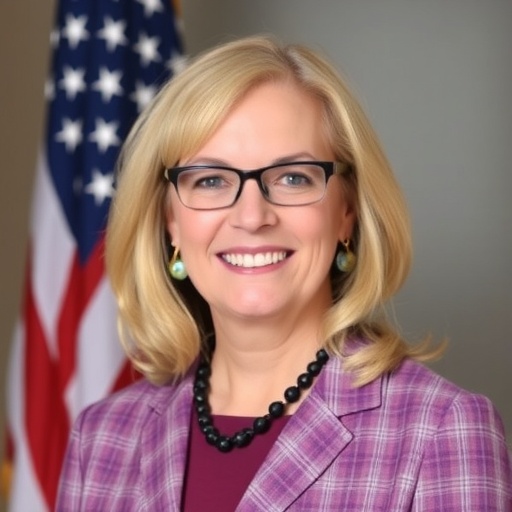
Sandra Bond Chapman, PhD, a distinguished cognitive neuroscientist and founder of the Center for BrainHealth at The University of Texas at Dallas, recently achieved a landmark honor by being inducted into the prestigious Texas Philosophical Society. This accolade, bestowed during the Society’s 188th annual meeting themed “Exploring the Mysteries of the Brain,” places Dr. Chapman among an elite cadre of Texas intellectuals, reflecting her transformative contributions to the field of brain science. As a pioneer in cognitive neuroscience, she has profoundly influenced our understanding of human cognition and brain health through an extensive body of research.
With over fifty competitively funded grants and more than 250 peer-reviewed scholarly publications to her name, Dr. Chapman’s work has significantly advanced the study of cognitive capacity throughout the human lifespan. Her research uniquely integrates functional and structural neuroimaging modalities to elucidate neurobiological mechanisms underpinning cognition, social connectedness, and psychological well-being both in health and disease. This multidisciplinary approach facilitates the continuous mapping of brain function and offers insights into how the brain adapts and evolves over time.
Under Dr. Chapman’s visionary leadership, the Center for BrainHealth has emerged as a global leader in brain health innovation, combining rigorous scientific inquiry with translational applications. The Center’s development of the BrainHealth Index—a proprietary composite metric—provides an unprecedented, validated measure to chart individual trajectories of brain health across various domains. This holistic framework encapsulates cognitive, emotional, and social parameters, enabling personalized assessment and targeted interventions aimed at enhancing brain performance.
Moreover, the Center’s Strategic Memory Advanced Reasoning Tactics (SMART™) program embodies Dr. Chapman’s commitment to translating scientific knowledge into practical tools. This evidence-based cognitive training system, refined over three decades, is designed to improve complex reasoning and adaptive thinking skills. It has been systematically evaluated in multiple longitudinal studies, demonstrating efficacy in both healthy populations and those affected by neurological conditions. Such interventions underscore the potential of science-driven strategies to extend cognitive vitality and resilience.
Dr. Chapman’s work transcends academic boundaries, as she actively collaborates with policymakers, humanitarian organizations, and thought leaders worldwide to democratize access to brain health science. Her advocacy highlights the societal imperative of proactive brain health maintenance, emphasizing early detection of cognitive decline and the promotion of lifelong cognitive enrichment. This global outreach aims to shift public health paradigms toward brain-centric models that foster human flourishing.
The Texas Philosophical Society’s recognition of Dr. Chapman is not only a celebration of her illustrious career but also an endorsement of the critical role that cognitive neuroscience plays in contemporary science and public policy. The Society, established in 1837, has a storied tradition of fostering intellectual development in Texas through the preservation and dissemination of knowledge. Dr. Chapman joins the ranks of historic figures such as Sam Houston and prominent contemporary leaders, underscoring the interdisciplinary importance of brain science in shaping cultural and scientific discourse.
Scientifically, Dr. Chapman’s research paradigm represents a synthesis of neuroimaging, cognitive science, and behavioral psychology. Employing state-of-the-art MRI protocols, diffusion tensor imaging, and functional connectivity analyses, her team maps intricate brain networks responsible for executive functions, memory consolidation, and adaptive learning. These methodologies have elucidated neural plasticity mechanisms inherent in both normative aging and recovery post-brain injury, advancing the field’s understanding of rehabilitative potential.
The translational nature of the Center for BrainHealth’s work facilitates rapid application of these scientific insights into community-based programs and clinical interventions. Their model bridges the gap between laboratory research and real-world outcomes, incorporating longitudinal population studies and randomized controlled trials. This commitment to evidence-based practice ensures that innovations are both scientifically robust and practically relevant, enhancing public health impact.
Furthermore, Dr. Chapman’s leadership has fostered interdisciplinary research that includes psychology, neuroscience, social sciences, and philosophy of science. This expansive vision allows for a comprehensive exploration of cognition not merely as a biological phenomenon but as an adaptive, socially embedded process. The Center’s projects incorporate behavioral data, neurocognitive assessments, and socio-emotional metrics, positioning brain health within a socio-cultural framework that informs more nuanced intervention strategies.
The Center also develops educational outreach and training programs aimed at empowering diverse populations to engage in brain health enhancement. These programs underscore the malleability of cognitive functions and provide scalable frameworks for cognitive training in schools, workplaces, and communities. By integrating cutting-edge research findings with accessible training modules, the Center exemplifies how scientific knowledge can catalyze societal transformation.
In sum, Sandra Bond Chapman’s induction into the Texas Philosophical Society represents a milestone reflecting decades of rigorous scientific achievement and societal engagement. Her pioneering research, innovative assessment tools, and dedication to translational science collectively elevate brain health to a forefront position in contemporary neuroscience and public health. This honor not only recognizes her individual contributions but also signals the increasing importance of proactive brain care as an essential component of human development and well-being.
As brain science continues to evolve at an unprecedented pace, Dr. Chapman’s work offers a robust framework for understanding and optimizing cognitive function throughout life. Through a combination of empirical research, technological innovation, and broad-based advocacy, she champions a future where brain health is accessible, measurable, and improvable for all individuals. This vision redefines the boundaries of neuroscience and exemplifies the transformative power of science in enhancing the human condition.
News Publication Date: February 6, 2026
Web References:
– Center for BrainHealth, The University of Texas at Dallas: https://centerforbrainhealth.org/
– BrainHealth Index: https://centerforbrainhealth.org/science/brainhealth-index
– SMART™ Brain Health Training: https://centerforbrainhealth.org/training/smart
Cite Scienmag News
Cassandra Pierce. (February 13, 2026). Sandra Bond Chapman Honored with Induction into the Esteemed Philosophical Society of Texas. Scienmag. https://scienmag.com/sandra-bond-chapman-honored-with-induction-into-the-esteemed-philosophical-society-of-texas/
Cassandra Pierce. "Sandra Bond Chapman Honored with Induction into the Esteemed Philosophical Society of Texas." Scienmag, 13 February 2026, https://scienmag.com/sandra-bond-chapman-honored-with-induction-into-the-esteemed-philosophical-society-of-texas/. Accessed 3 September 2026.
Cassandra Pierce. "Sandra Bond Chapman Honored with Induction into the Esteemed Philosophical Society of Texas." Scienmag. February 13, 2026. https://scienmag.com/sandra-bond-chapman-honored-with-induction-into-the-esteemed-philosophical-society-of-texas/


