


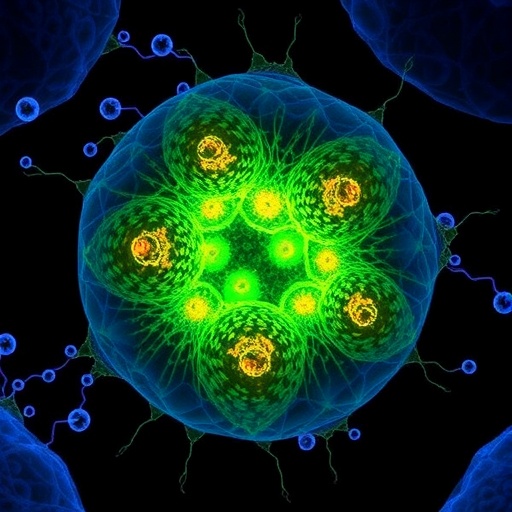
A team of scientists led by Professor Kenward Vong, an Assistant Professor in the Department of Chemistry at The Hong Kong University of Science and Technology (HKUST), has pioneered a novel glycan-targeting therapeutic strategy named lectin-directed protein aggregation therapy (LPAT). This breakthrough leverages a bioengineered system to selectively inhibit the progression and metastasis of breast cancer in murine models, marking a significant stride in targeted cancer treatment.
In the complex landscape of oncology, targeted therapies hold immense promise due to their ability to differentiate cancerous cells from healthy counterparts, thereby reducing the harsh systemic toxicity commonly associated with conventional chemotherapy. Among these, monoclonal antibodies have emerged as a cornerstone technology, designed to recognize and bind to unique or overexpressed biomarkers on the surface of malignant cells. However, a longstanding challenge remains in their inability to effectively discriminate between cancer-associated glycans—which frequently exhibit aberrant expression patterns—and structurally similar glycans present on normal tissue. This limitation has led to the disappointing clinical failure of many glycan-targeting antibody therapies, despite the well-documented involvement of glycans in tumor progression and metastasis.
Addressing this unmet challenge, Prof. Vong’s research team adopted an innovative approach focusing on hypersialylation, the augmented presence of sialic acid residues on glycan structures, a hallmark modification observed in many metastatic breast cancers. This approach is detailed in a recent publication in the journal Biomaterials, where the team presents a bioengineered protein agent that exploits the tumor microenvironment’s intrinsic proteolytic activity to induce in situ activation. The therapeutic protein remains in an inactive state until encountering proteases secreted by highly metastatic cancer cells, triggering its assembly into a hexameric complex.
This hexameric configuration remarkably enhances the molecule’s avidity for sialic acid-rich glycans, facilitating robust and selective binding to hypersialylated cancer cells. In contrast, non-cancerous cells such as erythrocytes do not provide the necessary biochemical environment to activate the therapy, thereby mitigating off-target effects and preserving healthy tissue integrity. This elegant design embodies a significant leap forward in achieving glycan specificity unattainable by conventional antibody modalities.
Functionally, LPAT acts by disrupting the adhesive, invasive, and migratory capabilities of metastatic breast cancer cells, core processes underpinning tumor dissemination and secondary colonization. In vitro experiments demonstrated a marked reduction in cellular behaviors that promote malignancy, affirming the therapy’s potential to incapacitate metastatic competence. Moreover, in vivo studies using murine models revealed a profound capacity to suppress the formation of metastatic lung tumors, effectively arresting disease progression at preclinical stages.
The mechanistic foundation of LPAT underscores a sophisticated interplay of molecular engineering and tumor biology. By harnessing endogenous cancer-secreted proteases as molecular triggers, the therapy achieves spatiotemporal precision, ensuring activation exclusively at pathological sites. This strategy not only enhances therapeutic index but also opens new avenues for designing smart biologics responsive to tumor-specific biochemical cues.
Comparatively, antibody-based therapeutics have struggled with glycan targeting due to the subtle structural differences between malignant and normal glycan epitopes. The poor selectivity has resulted in limited clinical translation and adverse off-target effects. LPAT’s self-assembly and protease-activated mechanism bypass these constraints and illustrate a modular platform potentially adaptable to other glycan hallmarks in different cancer subtypes.
Professor Vong emphasized the transformative nature of this technology, stating that the glycan discrimination achieved far surpasses that of existing antibody technologies. He expressed enthusiasm for the ongoing research, underscoring the untapped potential to develop metastasis prevention therapies that could revolutionize oncologic treatment paradigms.
This pioneering research underscores the critical importance of glycobiology in cancer therapeutics and signals a paradigm shift toward exploiting glycan modifications as viable, druggable targets. The modular platform devised by the team can be envisioned as a foundation for next-generation biotherapeutics, offering precision treatment tailored to the intricate molecular fingerprint of metastatic tumors.
Further investigations are warranted to evaluate LPAT’s efficacy and safety profiles in more complex in vivo scenarios and eventually in clinical trials. The scalability of this protein engineering approach and its integration with existing treatment regimens are additional crucial factors that will dictate its translational success.
In summary, the advent of lectin-directed protein aggregation therapy heralds a new chapter in targeted cancer therapy, embodying the convergence of bioengineering, molecular oncology, and glycobiology. As metastasis remains the leading cause of cancer mortality, innovative strategies like LPAT provide hope for effective interventions that can prevent metastatic spread and improve patient outcomes significantly.
News Publication Date: 27-Dec-2025
Web References:
Cite Scienmag News
Nathaniel Bowman. (February 12, 2026). HKUST Scientists Pioneer Metastasis Prevention Therapy Through Glycan Targeting. Scienmag. https://scienmag.com/hkust-scientists-pioneer-metastasis-prevention-therapy-through-glycan-targeting/
Nathaniel Bowman. "HKUST Scientists Pioneer Metastasis Prevention Therapy Through Glycan Targeting." Scienmag, 12 February 2026, https://scienmag.com/hkust-scientists-pioneer-metastasis-prevention-therapy-through-glycan-targeting/. Accessed 3 September 2026.
Nathaniel Bowman. "HKUST Scientists Pioneer Metastasis Prevention Therapy Through Glycan Targeting." Scienmag. February 12, 2026. https://scienmag.com/hkust-scientists-pioneer-metastasis-prevention-therapy-through-glycan-targeting/


